
 Apple Podcasts
 Spotify
 YouTube
  RSS Feed
 Author Who Used Her Pain To Make Something Beautiful with Alexis Leigh | 341
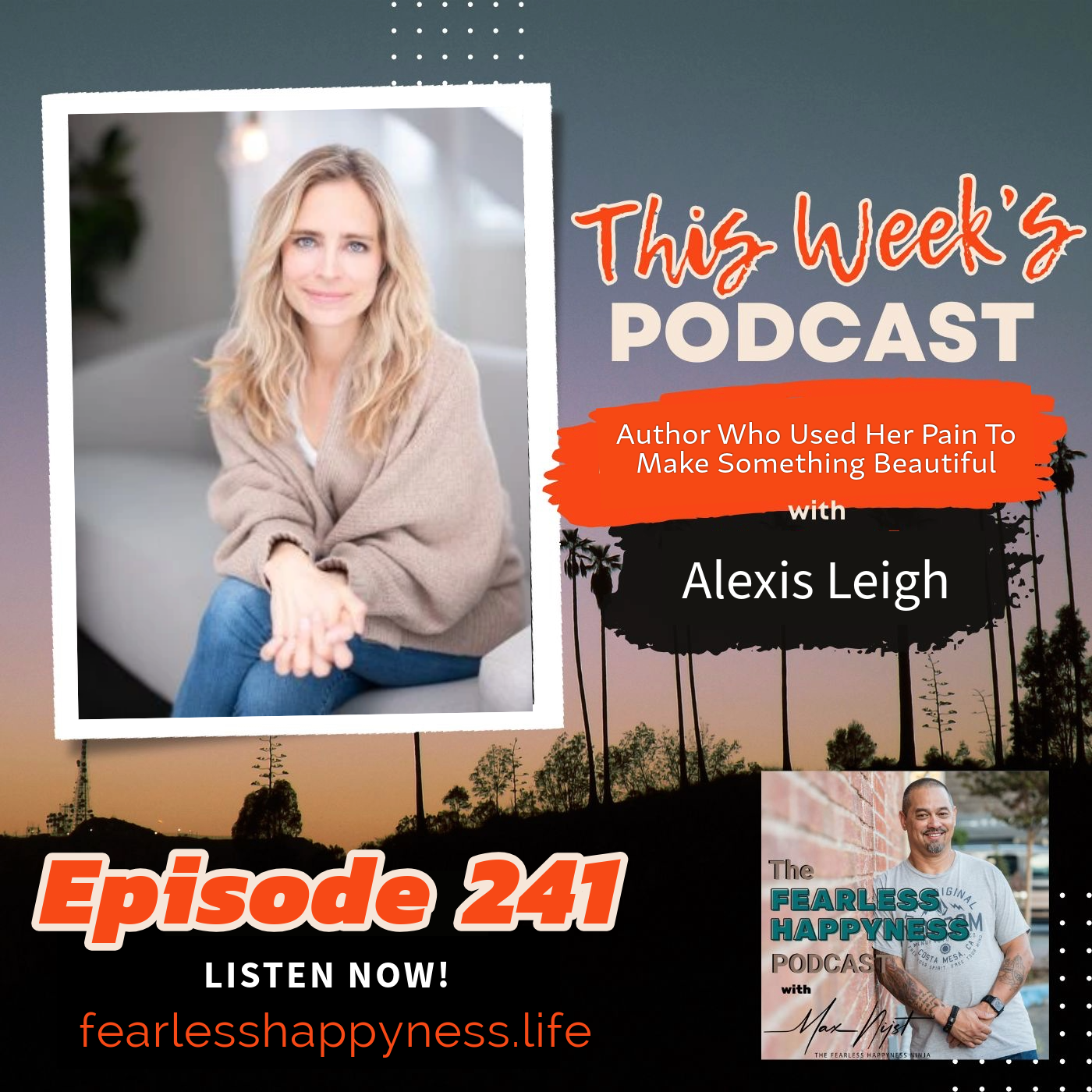
In this episode of the Fearless Happiness Podcast, host Max speaks with Alexis Leigh, author of 'Pain is a Portal to Beauty'. Alexis shares her journey through grief, trauma, and healing, discussing how her childhood experiences shaped her life. She explores the role of therapy, nature, and psychedelics in her healing process, emphasizing the importance of embracing pain and emotions. Alexis also discusses her writing journey and the lessons learned along the way, ultimately highlighting the power of self-acceptance and personal growth.
For more from Alexis:
For More From Sober Coach/Substance Abuse Counselor Max Njist, visit MaxNijst.org
speaker-0: Welcome to the Fearless Happiness Podcast, where we showcase phenomenal individuals who have overcome serious traumas, life obstacles and challenges to find their own path to fearless happiness. Listen as Max Naste invites guests from all around the world to share their experiences and spread strength, hope and faith. This is the Fearless Happiness Podcast and this is Max Naste. Good morning, good afternoon or good evening wherever you are in this world. This is Max on the Fearless Happiness Podcast coming to you again today with another amazing and special guest. So I have Alexis Lee with me, but what I like to do Alexis is introduce, have you introduce yourself to my audience like who you are, what it is you do. And then you and I, like I said, we're gonna rock and roll.
speaker-1: Well, I am an author. I've just published my first book, is called Pain is a Portal to Beauty. And this has been a really fun surprise for me. I was always a numbers person and thought I was terrible with words. And as I was going through a really difficult grieving period, I woke up one day and this book just started coming out of me. So it's been a really lovely surprise, a lovely example of how when we go toward our grief, we can find things we didn't know about ourselves. That's me.
speaker-0: I love it, right? I mean, unfortunately, sometimes like you said, like I wish you didn't take like a strong event or let's just say a challenging event to have stuff come flow, right? Because when we're having a good time, when you like to just have that stuff flow and go, â cool, I'm having a great time. This is going to be great. But so let's talk about, let's go back a little bit and give the audience some. that story, like what are those challenges and stuff that you have been through that helped shape who you are today and then led to the book.
speaker-1: Yeah, I mean, for me, my greatest challenges were as a kid and my mother was depressed and then became addicted to prescription drugs and ultimately went away to rehab, was supposed to go for a few weeks and come home and then she died a year and a half later. They found her body in a field. So was a really tragic demise over time and a very confusing loss for me as a kid. And I didn't have the resources to process it. So I buried it all and I went through life, you know. thinking I was okay. I lost my mom, that's sad, but I'm okay. And it wasn't until I was 38 and I was walking in the woods one day and I heard a voice that said, if you die today, your life will have been a tragedy. And that helped me realize that I gotta go excavate this stuff. I need to bring this to the surface because it was causing me to live a life that was quite sad and lonely, even though I didn't understand why until I started unpacking my grief.
speaker-0: And grief can be debilitating, right? I mean, you've been through it, I've been through it. I lost a brother to addiction. So I totally understand, right? Where you're coming from, because you and I know the grief doesn't go away. once you, it's not like you grieve and then it's dying, you move on, right? Like sometimes you're, like we were talking about, we could be in a totally good place and something happens that triggers that memory. And we're like, almost feel like we're right back where that event happened, you know? Right. And, as a kid, I mean, that's traumatic, you know, as a child or teens or I don't know how old you were, but
speaker-1: was 11 when she left home. But she was sick and then addicted while she was home. So it was really quite a bit of my childhood that was defined by that.
speaker-0: Right. And you see you're a perfect example. Like it does affect the family. know, addiction isn't just the individual who says, well, I'm to go over here. I'm not going to bother anyone. That's as you know, from your lived experience, that's not the case. And right. I believe when, when, when the individual gets sober, like myself, right. Like I had counselors and my sponsor and stuff go, you know, the people around you are in recovery too. we don't expect. them to jump when you say jump because you're sober now, right? Because that's not going to happen. So, you know, being 11 and that's such, I mean, that's just the age right there, right? Because you're getting ready to head into your teens and you lose your mother. What was that like at that time? You know, like what help did you get and where did you think? I wish I had the help back then to help me unpack this stuff.
speaker-1: You know, looking back, there's all... Everybody did as everybody does, the best they could, right? I we all just did what we could do for where we were. And the family wasn't resourced in that way. And I don't just mean our nuclear family, but the extended family. know, people didn't step in to help, I think they could, partly because it was confusing. You know, she went away over time. It wasn't like overnight I lost my mom and people go, no, how do we rally around it? It was a long, exhausting illness and drain on the whole family. And I think also, you know... there's a legacy of pain in our family. Like my mother's father â died by suicide. And there are things that if you don't feel equipped to deal with them, then you don't deal with them. And then more tragedies pile up and you're still not equipped to deal with them. like we have a picture on the day of my mother's funeral where we're all standing around smiling like it was a family reunion. And I look back on that and I go, what the heck? But I can be angry for a moment and I get to be, right? I think there's part of... the young kid in me that needs to go back and say, I didn't get what I needed. So I get to be angry about that. But I also have compassion for everybody. You know, nobody was malicious. just people just didn't know what to do or didn't have the capacity to do it. When a parent dies, there's no one to step in. No one could have been my mother. So even if I wished I'd had more support, no one could have filled that hole. You know, other people had their lives to live and they were, you know, they didn't live in the same town as us. So I don't hold any of that with, you know, a continuing feeling of resentment and I didn't get what I needed. And so that's why, you know, at some point my body just stopped feeling because it knew I couldn't get through, I couldn't feel all of it and get through it. So I had to numb to get through it. And that's why I was really unaware of how much trauma I experienced because I had so, you know, craftily stored it away and it took and... a crisis when I was nearly 40, you know, when I kind of hit a rock bottom moment to say, now it's time. You got to it away, you needed to store it away, but now you have the resources to look at it, so it's time.
speaker-0: And see, and which is understandable, right? We know that the human brain is a very powerful, let's say operating system, right? And if it understands that a certain trauma is too much for you, it will hide it. That's why, as you know, as you were probably growing up, like your trauma showed up in different areas of your body, right? Like for me, I know when I'm having those difficult times, my lower back. That's just where I think my trauma is stored, right? I'm like, â my gosh, right? And, and right. We understand now through science and stuff like that, that the brain, it's, it's just, it's way of protecting you, right? And, but at least dude on this journey, right? You got to a point where, which happens to all of us, you know, at different time, but you know, where that moment comes and it's like, you got two choices, right? You can go down this path and it's going to get worse. Or you can face your fears, face this, you know, this challenge, find the resources so you don't have to do it alone and get the help you need. know, will it go away? We know that it doesn't go away, but then we learn once we understand it and we can deal with it, then we can get those tools right. And how was that process for you? Did you seek therapy? I mean, we talk about the woods, right? Being on that journey. when you heard that voice, which It sounds like it was pretty loud because you were like, okay, I better listen to this, right? We all have those moments where that voice is like, boom, like you better pay attention. So after that happened, what was that process or what did that process look like for you?
speaker-1: Well, I think part of why that voice worked so well is that it just told me what I knew deeply but couldn't admit to until that moment. I had all the things in my life. I had a lovely family and a son and my husband was wonderful and good friends and good relationships with my family. I had a great career. I had everything that I thought would bring me to a happy life. I wasn't, I didn't feel fulfilled. didn't feel, I didn't have all the connection I wanted in my life. So when I heard that voice, it gave me permission. I think my experience is that if you have all the things, you should be happy. And so I felt almost like shame for what's wrong with me, that I can't find happiness when I have everything that should make you happy. So this voice gave me permission to finally feel what I actually felt underneath all of that, which was a ton of sadness and loneliness. So for me, there was a, like you were saying, it was a choice for me. It kind of felt like. It wasn't a choice, or maybe it was a choice, but it just felt like the natural place, like, â finally I get to be free, right? Like instead of feeling like I'm contorting myself to feel gratitude that I didn't actually have, I got to be free to feel what I felt. And I didn't have, you know, this is where it's like, I don't know how our body's just no stuff, right? My body knew to numb me. Then I had this voice that came from within my body that said it was time to wake up. And then I just knew it was time to unpack my childhood trauma. Like there was no, there was no clear message around that, but I just knew it was time. So I was in therapy and I continued to go to therapy, but I would say my most impactful moments were just walking in the woods to sorrowful music. And I just grieved and grieved and grieved. And I would then have some big aha moment, like when I saw the trajectory from my grandfather who died by suicide to my mother who had this tragic ending to me and my life of loneliness and sadness to my son. And I just saw this trajectory and I was like, of course I'm the outgrowth of that. And of course, my son will then be the outgrowth of that unless I make a big change here. So for me, there was a lot of time of just going toward the pain, just feeling sad and crying and crying and crying. And then ultimately, I randomly got in touch with psychedelics, with psychedelic guides. I was doing a project for a school that trained psychedelic guides. And when my life was really falling apart after The Voice in the Woods, â someone recommended that I might try it. You know, I tried everything else and it wasn't working, so I was willing to take a look at it and ultimately did decide to do that and it was really an impactful experience. That's an understatement if it's hugely impactful in my life.
speaker-0: Right. And I've heard that, right. I'm a person in recovery, right. So there's a lot of my friends would think when we talk about this on my show, right. â they're talking about going and getting high, which is that they paid attention. That's not the case, right. Because it's it's controlled. But I have to tell you, right? Like hearing your story and having other people like Tara that we talked about before the show and, and, know, seeing their transformations because of psychedelics, right? Done in a controlled environment, right? With guidance, right? Right. Cause for me, it's like recovery. I used to be that old counselor, right? When I first got sober and it was like, cause I did the, I, â I still do the 12 steps where I'm a 12 stepper. â And trust me, everybody, I'm not pushing anything, but I used to be that guy like the old timers. Well, if you don't do it my way and don't work steps, you're going to die. And I can't even work with you. you know, I'd have clients look at me like this, like, you need to, are you okay? Like you need to relax, right? Like this, but then I've realized over time, right? Like everybody's recovery journey is different and whatever they find. is what if it works and it ain't broken, don't fix it, right? And I've had many guests who may not have been in addiction, but have some serious traumas where the psychedelics help them over, right? Not overcoming and get rid of it, but open their minds to new ways of handling it and dealing with it. And, know, how do you re-put it? It's like EMDR therapy, right? Where they re- they re put it somewhere else instead of those places in your body, which if you've done, like I'm sure you did everybody like they tell us trauma is stored in our body, right? From the time where our first trauma happens to anything after that, the brain stores it in different. That's why you'll ask some people like, yeah, it's their lower back. They're going through a stressful situation or it's their shoulders or whatever. They get a headache. But talk about that experience a little bit. for the audience so they can understand what like that process looks like and then how that had helped you and how it continues to help you. Not that you're going back, but you know how that opening of your mind helps you, you know, stay, I would not, I don't want to say stay in the well zone, let's say, you know what I mean? Stay focused on what you have to do to be well and be your authentic self, let's say.
speaker-1: Yeah, I mean, there's so much to say about them. And I will say, because my mother was addicted to drugs, I was very hesitant. I was always very anti-drugs and substances. But I asked all the questions, which psychedelics aren't addictive. They're just not in that same category of the things that would have been a risk to me as someone with a mother who was addicted. â after kind of doing all the due diligence, I did a... I did my first journey was with with MDMA, which is ecstasy. And it is â a psychedelic that lowers the fear response so that you can look at some of these emotions that might be feel too scary or overwhelming. So the medicine kind of becomes a companion and lowers that fear so that you have a chance to actually look at some of these things. Because for me, psychedelics, all of this stuff is about there's pain in my body. And if I keep avoiding it, it stays there, right? And frankly, I'll I'll add to it because I'll do things to avoid the pain that will add more pain. I'll treat my body badly. I'll, you know, get into more traumatic experiences. It's just going to build on itself. But as soon as you look at it, it actually does start to shift and transform. And for me, I have had the experience where the more I've gone toward my pain, and that's really what psychedelics did for me is they went... The second journey I did was psilocybin. And the whole message was you have more grief to process. And at that time, I thought I had done so much work and I should be done. And the mushrooms were like, nope, not close. So for me, these journeys, that was not a very happy journey. was really actually quite painful, but it was so useful to be shown that, right? And then basically what they say is for psychedelics, the medicine shows you what you need to see. So I needed to know that I had pain to go toward. And then afterward, I go do that grief work and I go do that pain and then my life started to open up. Like I would go outside and the colors were more vibrant and everything felt more alive. Like there was more beauty everywhere. So for me, unlocking this pain in the psychedelic journeys and also afterward when I did this intentional grief work really changed my experience of the world. And then I ultimately found my way to Ayahuasca, which is an Amazonian. â psychedelic that is done more in a kind of like a tribal setting with a group of people and a number of healers there. you know, it's the way it just shifts the way you see the world. And when you let go of some of these, you know, all about unlearning. And so you let go of this stuff the way you've held it and then you can go, you you go out into the world with more awareness of your own strength. You know, for a long time, I really needed the world to be a certain way because I wasn't safe. And so I needed people to treat me a certain way. And in my marriage, I needed my husband. For example, he was always late. And his being late, I didn't know it. But the reason why it bothered me so much was because my mom left and didn't come home. So if somebody's late, my hypervigilant alarm system starts going off and saying, uh-oh, there's a crisis. So I needed him to stop being late so I would stop hurting. But really, his being late was helping me see. there's something you actually need to look at here, right? It was my buried pain that was trying to get my attention. So psychedelics over and over have just told me to, you know, go toward the pain, go have so much love for yourself, feel those feelings. And then once you feel them, then they actually get to move through and you don't have to, like for me, it is about, don't, you're not stuck where you are. For so long, I felt stuck and I was stuck because I was refusing to look at the stuff. And now that I'm willing to feel every feeling that comes through me, things move through and You have days where you have the depression or the anger or sadness or whatever it is. But if I feel it, if I really let myself sink into it, it moves on. And then I find, for me, I found all these incredible gifts along the way. I realized I was a writer, like I said initially, and I found out I was a singer and a dancer. All these creative outlets were also locked up with that pain. So there's so much. like these incredible discoveries, not only just so get to kind of know yourself more and what a gift that is, but you also, these creative outlets start to open up and that's so much fun after being locked up.
speaker-0: Because that's exactly what trauma does to you. like it it imprison you're like your own prison because you can't Right and from like what I just heard from you and other guests that have gone through similar, you know Journeys like yours were and that's what they like one told me it was like My life was black and white and once I did this and my mind opened up it became Technicolor right?
speaker-1: how it feels.
speaker-0: I can see colors differently. I can actually see the colors and feel things. right, the world, just like the world, like you said, opened up for them. Right. And I kind of liken that to my journey of recovery, right? Where when in my addiction, know, black and white, you know, just horrible. And then I get sober and I start working on myself, you know, physically, mentally, spiritually. And now I notice things that I've never noticed before and I've come to believe, because some of my guests, we talked about it, right? That we're spiritual beings having a human experience, right? So when we can get back to that spiritual side of us, that really authentic side of us, which whatever you want to call it, I call it God, right? The universe, whatever, right? Then you see life. in such a different way. And like you and I were parents, right? And I'm a grandparent now, right? I love living in that realm instead of like, you know, that sense of impending doom that's always with me when, you know, like I don't know if it's the peanuts cartoon, but the one character, you know, with the clouds over him and he's always kind of like, you know what I mean? That used to be me. And
speaker-1: Miss you.
speaker-0: You know, and life starts to take on new meaning and you know, and that's why I love having guests like yourself, right? Cause you can share that journey. You're not sharing like, oh yeah, you know, I went and did all kinds of psychedelics and you know, I hate to say it, right? But if people look at the history of AA, right? And one of its founders, he even tried it because of his depression was so bad. He was so depressed. He's like, I gotta find something, right? And he did try it with. Timothy Larry back in the day, know, and it helped open his eyes. did he see people don't realize he didn't stay on it and go, â I found LSD. I'm going to keep doing it. Right. But it opened his mind to more of the spiritual aspect of his side of the life. So he could write, help others recover from that hopeless, like we say in the meanings, right? That hopeless state of mind and body, which
speaker-1: Right.
speaker-0: Like I wouldn't wish that on my worst enemy anymore, like going through that. Cause I too, I lost a brother to addiction and who took his own life. And right. There was nine years ago where I lost my sister, then my brother. And then six months of the day on Thanksgiving day was my mom, right. Who literally died of a broken heart. And, â and then my youngest.
speaker-1: So sorry.
speaker-0: daughter, put her into treatment that following Monday. Right. So it was quite a eventful year, a little over a year, but I thank God that, you know, I was willing to do some work and get, or cause I might not even be here speaking with you about, right. About, um, psychedelics and how they can help people, you know, six, I'm going to say six, their trauma, but you know what I mean? Not fix it, but help them deal with it in a much healthier way. Right. Cause You said it perfectly, right? It opened your mind and you could see colors differently. You could see the world in a different, right? with a new pair of glasses, I like to say, I'm stealing that from a book I read, which is the title. But when I read it, I understood it, right? I went from one way of looking at life, started working on myself, got well. And now I could see, you know, even in the bad times now, right? Like I don't think... And I'm sure you know it too, right? If things get tough, don't think about, I'm not saying you're, I don't think about going, picking up a drink or a drug and going, â this is going to fix me. Right? What I do is I look forward to interviews like this, where I get to hear your story and go, you know, because you're, you're a wife, you're a mother, you're, know, and, and now you're helping people, at least in my audience, see things from a different perspective. Right? So as you're going,
speaker-1: â I gonna say it's interesting because you're talking about the changing the glasses. I mean, I have a sentence in my book where I actually said I wanted to change from... It was actually the... After reading Codependent No More by Melody Beattie, who was very much involved with Alcoholics Anonymous, that I needed to stop sugarcoating things. needed to stop wishing things were better than they were. I needed to find more honesty. So in one of these chapters, I actually say I took... I changed my lenses from rose color to clear. So it's interesting because you actually just hearing you talk to that, it's like I had to get, I had to take off the fake rose colored lenses to look at things really. And then I found my way to actually seeing things as they are, which was incredible. So it is almost almost like, you know, for me, I had to take away these false comforts that were helping me get through, right? And that's what coping mechanisms do. They help us get through. And I find actually coping mechanisms to be very valuable because we need them. I needed sugar as a kid because I could not get through without having some numbing, right? So I can be really grateful for coping mechanisms, but ultimately I want to remove them when I can so that I can look at the stuff and then you free it and find that the world is more beautiful than you knew. Because we're kind of seeing it in this fake happy world and it's not, right? There's real love and light, I think there's so much, we gotta be happy, we gotta make, you know, don't worry about the pain, get away from the pain. If you're hurting, you're doing something wrong, like all of this stuff that actually tells us to run from our pain. That when we actually get comfortable, just whatever is, it doesn't mean we need to be in pain all time, but if we're there, we can be there. Then you get to experience the world in this very alive way, which is just extraordinary.
speaker-0: Right. And I agree with you, right? Because if you think about it, right, we're not supposed to run from the pain, right? We're supposed to face it, figure out what is causing this pain, and then learn the lesson and then grow from it. Right. Because like, I'm sure you've read books and you know, the books I've read, like David Goggins, right? Which he says, his one of his famous quotes is learn to get comfortable being uncomfortable, because that's where the growth happens. Right. But I know you were there at one time. I was there at one time. And if you would have said, face your pain out of now, no, I'm going over here. Catch me later. I'll see you later because it's too uncomfortable. Right. But like, you know, you're sharing with us right now today is I get you faced it and you're not saying it wasn't uncomfortable. It was quite uncomfortable, but you faced it and you said, look,
speaker-1: Hmm.
speaker-0: Right, because we understand, and I'm sure you do too, we understand that feelings are not necessarily gonna kill us, right? They may be uncomfortable, right? But we have to learn, I think, to face those uncomfortable feelings, whether it's sadness or anger, and go and ask ourselves, Why am I feeling this way? What happened? What can I do to change this? â Right, because I'm... I know for me, like getting sober and I knew I couldn't do drugs and alcohol anymore. was like anger was my new go-to, right? And people would, right? Cause I'm figuring, well, I can get angry. They're not going to get mad because it's normal, right? Well, my anger obviously wasn't normal. And I like to tease and I've said this on other, you know, podcasts and with guests, my guests and it happened today. I got cut off on the freeway, right? And I chased the guy home. I was angry. Like you took my lane position. And I remember he pulled in the driveway. pulled, you know, straight behind him. And I proceeded to watch this gentleman get out of his car, right? And as he was getting out of his car, I was doing this, right? And he was like blocking out the sign. I'm like, I'm going to die today. This guy's huge. So I rolled down the window. Sorry, sir. I think I got the wrong person. Right. And he just kind of looked at me like, okay. And I told my sponsor, my mentors, they're like, dude, you got to change that. But that was. one of those moments, it was like, am I choosing anger to be bright like my go to and I might add other things happen where I finally did the work and I don't react like that today. Now I just wave if you're going to take my go for that's fine. You know, see you later. Have a good day. Right. Right. So now talk, let's talk about your book. So you just gave a little bit. So what led to the book? And then give the audience an idea of what's in the book, because I can't wait to read your book. So I really thank you for sending me your book because it looks, it's going to be really good.
speaker-1: Yeah, so I the book starts with the voice in the woods, with hearing that my voice was a tragedy, and then, you know, traces back to the trauma, but ultimately is the last five years where I let go of the life that I was living, the life that I thought was the one I should be living, and let all the pieces fall away and really took in the grief, both of my childhood, but also losing my marriage. loved my husband very much. So there's just so much sadness and grief to process. And then ultimately through the MDMA and psilocybin and ayahuasca journeys, which showed me so much wisdom and so much stuff that I needed to process, and ultimately to finding new love. And that is something where you can go learn all of this stuff in the quiet, which I was doing in this time of solitude. But being back in relationship is where you... really get triggered, right? Like it's where the good stuff and the harder stuff gets triggered. And so there was so much that I learned from being in relationship with my new partner. So that's kind of the last third of the book is a little bit of finding my way to new love, but really finding my way through that, finding my way back to myself and to, you know, just questioning all the things that I always, you for me, there's something that I've even uncovered after the book, this summer where there's a part of me that was worried and I didn't realize this until I got triggered. I sent my book to a school teacher who was really lovely in my life when I was young and her response about the book was that it was lovely and that I shouldn't curse. And I got really triggered by this because I cursed in the book, just FYI. I got really triggered by this. again, back to the kind of like these emotions that we have, I wasn't going go do anything from that, right? What we learn is just to not... go do anything in the external world, but just to be curious about what the motion is. I do this thing where I write to my younger parts. There's something called internal family system or parts work, where are these younger parts of us that get frozen at the time of our trauma. So I was writing to that younger part going, hey, you're really pissed about this cursing thing. What's this about? And so we kind of write back and forth. at the end of it, I got to this part where this young version of me was really humiliated when my mom died. And when my mom left, it exposed me to the whole world that my mother didn't love me. And even potentially that I killed my mother because I was so unlovable. She died to leave me. This really scary, sad part where you can go, â I'm sure that wasn't it. She was sick, blah, blah, blah. But there was a part of me that believed this. And so until that teacher condemned my cursing, I didn't get, and I felt anger. I didn't know how humiliated I was. and how much my whole life I have been, we were talking about kind of being caged earlier, how my whole life I have been positioning myself to please everybody so that I could avoid displeasing someone because if they were not happy with me, that would validate that my mother didn't love me. So my whole, it's like every action I take in this life until I uncover that, every action is to avoid this potential truth that my mom didn't love me. And once I go feel the depth of that, then I'm free. And then I get to be, I get to do whatever and I can get, make people mad. mean, of course it's not that I would go try to, like if somebody doesn't like the way I do something, doesn't hit me like it did before, because before it was tied up with maybe my mom didn't love me. Well, once I felt that possibility, then it's okay that somebody's mad at me or somebody isn't happy with me. So anyway, I think that this book is just, just a testament to when we go, when we take some of these risks, right? Like I'd got a divorce, which was terrifying. And I let go of all these things in my life. when you take risks and when you go toward your pain, you're going to find kind of some incredible things there, both in these tangible things like my creative outlets, the singing, dancing, but also in just finding out who you are, that you're this freer being than you thought you were, that you're more powerful than you thought you were, that you can be so in awe of yourself and therefore... you become in awe with everybody, right? Because once you find those things in yourself, you see them in other people. it's really a lovely, hard, but rewarding journey.
speaker-0: It's up. Absolutely, right? Because you were bringing back memories for me because that's I used to be the biggest people pleaser you ever met, right? Because it was like, I'm just you and I say we've been friends or whatever and you you say you're leaving somewhere or you get mad at me because I did something right? I'm going to do everything in my power to keep you from leaving, right? Because in my young mind, right when my dad left, when they were divorced and then came back and then passed away after promising me he'd be back for my birthday, right? The abandonment issues were huge in my life, like, you know, and I would hold on. I'd be that codependent, hold on, you're not leaving me. I'll do whatever it takes to make you happy kind of person, you know, and not knowing though, that wasn't healthy either. but now it's like, like you, I understand, right? It's like, okay. You know, they didn't do it on purpose. And, but it's, you know, like you and I, we were, you see, I was 11 when I was getting ready. was 10 getting ready to turn 11 when my dad passed away. And that last thing I said, he promised I'll be back. I have to go home, take care of some things that I promise I'll be back for your birthday. And, you know, we'll, we'll continue basically hanging out and you know, that, cause I hadn't seen my dad in like five or six years. And you know, as an 11 year old, as you know, right. You get the word that your dad passed away from a massive heart attack at 55. Like that part that it was like he died and how dare he die. Like you broke a promise and now I'm going to hold it against you. But since you're not alive, I'm going to take it out on you through me. So I'm going to take it, you know, I'm going to harm myself. I'm going to do the job. I'm going to drink thinking it's hurting you. When reality. Like, yeah, I on your journey, you realize like, oh, I was doing things thinking I was hurting somebody else, but it was only me that I was hurting, you know?
speaker-1: Well, and I think, but I think for me, there was so much there, you know, I was not conscious of this at all. And that's what psychedelics do. They help you, they help you see what actually is going on in you. You just aren't asleep to it. And for me, I think it was that I was doing all, I mean, I was very codependent. I would have sworn that I wasn't, I wasn't controlling, not at all until, you know, I look back on it. But â I was doing all that to, because I didn't think I was worth it. Right? Like I was willing to take all sorts of shit. And I'm not saying people were not good, things that didn't work for me, I was willing to do that because I didn't think I deserved any better. When your parent leaves you, and yours, I understand that your dad died overnight, but if you had been away from him for several years, there's so much there. When our parents are not here, when our parents are not showing up for us, then it seems like there's something wrong with us. And that's really something that you try to unwind your whole life until. the things you're doing aren't working. So you really look at what's going on.
speaker-0: Right? Because you mentioned it earlier too. And that's how I felt for years, right? When I was younger is like, he didn't love me. Like what did I do to cause him to leave? You know, like it was my fault. I took the blame. And you know, and I've seen that with people close to me, like when my brother passed away with, you know, he has a daughter and I remember her saying stuff like that to her mom, like, well, you need to love me enough to stick around. You know what I mean? It's just. then the narratives we start setting up at such a young age, they do carry on into our adulthood if we don't address it, like you said. And it doesn't have to be psychedelics, it could be therapy, it could be a pastor, right? But I love bringing these different ideas to the table with my guests, because they can share their experience, right? I couldn't come on here and do a solo one and go, you know what I heard from, you know, Alexis and this is what she did, right? People are going to go, Max, we want her to talk to us about it so we can hear it from her perspective. Right. And that's, know, how this for me, this podcast has evolved is because like, you know, I always I'll say it on here, but when I first started, it was going to be a recovery, like people in addiction that it got sober, you know, or alcohol. And, but I had the same thing. was funny when I was getting ready to do it, had a voice go, â no, it's not. You're just, â whoever's in front of you or whatever, you know, is presented to you, you're gonna, you're gonna just, you're gonna do it, right? You're gonna interview that person and you're gonna talk about their challenges and so on and so forth so that you can present to the world, right? Look what this person went through and they got through it. They didn't kill them, right? And, â
speaker-1: Thank
speaker-0: And in turn, right, you and I are hopefully helping someone in the audience going, wow, I get what Alexis is saying. Right. And that's why I'm so passionate about doing this podcast is because I get to have wonderful guests like yourself get vulnerable and share their story. Right. And but let's talk about the books some more. So what else can they find in your book without totally giving it away? Right. Because we want them to go get your book. But what other things that you can give them a taste of so that they go, OK, I need to get this book. and read it.
speaker-1: I mean, this is where, one of my initial, one of the people I was working with initially was like, what's the urgency of people getting your book? And I said, there's no urgency. That's the whole message of the book is that we're all exactly where we should be. So I just, I'm just sharing that to share like, it's very much a book of self-acceptance. And so it is, you know, for me, I think I've even realized recently I trended towards self-help so much. think part of that was because I felt like there was something wrong with me at the very bottom of who I am because my mom didn't love me, know, whatever the story was. So this book is very much finding a place to be, you know, honoring where you are exactly. It does give all the lessons that I learned with the psychedelics in relationship where I was hiding and playing small and then I would get angry with my partner because I thought he didn't see me and I'm better than that. But really it was my being saying we've never shown anyone who we are. Right, because my mom was so fragile, I had to be a very small version of myself. So being in relationship with them helped me realize I'm not gonna make myself small anymore. know, like I would have these big, like basically every chapter is a story. of it is prescriptive because I'm very aware that it's my story, but â each chapter has some little gem of, â whoa, I learned this thing. So there's a lot â of... examples of how somebody who was very lonely and felt defective underneath it all, even though I couldn't say that. I wasn't conscious that I felt that way, but I certainly did. That somebody in that place could find their way to loving themselves so much and finding so much hopefulness and warmth on this path. For me, I just didn't think that was possible. really thought life was kind of meh, and that was the best you could hope for. And I really have experienced something quite different that for me five years ago would be so hopeful and a little bit like, I don't know if I can believe that, this book is very, you know, what people say about this book is number one, they can't put it down. So it's apparently a good storytelling rhythm. But number two is just how raw and honest it is. It's just, this is what it was. This was how I felt and this is how I got through it. For me, these parts of ourselves I was talking about earlier with these younger versions that get stuck in our trauma, you know, when we have these... emotions, it's really hard to know how to deal with them. We're just not taught that generally as a society. That you shouldn't be angry, you shouldn't feel these things, when in fact we do feel these things. So for me, there's some examples in here, and I really appreciate it when I've seen this elsewhere, where it's like a script where you see someone talking to their younger part, and you go, â that's how I do it. You know, there's kind of like this, how do I relate to myself as the adult, higher-knowing version of me, and as this really precious child version that was so harmed and just needs to be seen and loved for that.
speaker-0: But you know, and I want the audience to understand, you're listening to Alexis share that, right? Remember that's a journey she'd been on. It didn't happen overnight. So go get her book, right? But we'll get to that part. So go get the book â and read it. Because I like that, know, everybody, you know, I've been getting some great feedback on all the guests and I'm sure I'll get great feedback on you, right? Because I... People say, well, they're like everyday people and I go, no, they're just extraordinary people that come on my podcast, share their story and give us all a different perspective on how to handle some of the most difficult things in our lives, right? And that we all can grow and not get stuck in that. That's how my life's gonna be. So I have to be happy with, know, or I have to deal with it that way. You know, my hope for the world, right, is to be truly happy, right, with one themselves and then the people around them, right, because I have a big belief and I've been talking about this with guests is I believe the higher power, the universe out there wants us to be in oneness with each other, right? Connect, connection, right? Because I mean, you see it in the world today. I see it like there are people out there that want to see it's this way. And that's just the way it's going to be, or it's way over on this side and that's the way it's going to be. Um, but you know, if, Alexis and I can have this talk and talk about her life and how she, how psychedelics have helped her change and helped her actually take a look at herself. Right. Which always leads me to that analogy, the airplane, the oxygen, right? If you don't put on the oxygen first, nothing you do is going to help anyway, cause you're not going to make it. Right. And Alexis has shared that story, her oxygen story with us, everybody. If you're paying attention, right? She did it despite her fear, right? Because I can relate. I know there was a time in my life where those negative feelings come up and I'm like, no, not gonna happen because it's too uncomfortable. you know, for me from the bottom of my heart, thank you for sharing, you know, your journey with us and being here today. It's been an amazing time so far. So, I'm gonna get you into the questions that I love asking, right? We're gonna start with fearless. And usually I tell people, look behind me, right? You can see fearless, but it's not. behind me. starting with fearless, what does fearless mean to you today, Alexis? And how does that show up in your life?
speaker-1: Well, I have all sorts of fear. So I think the way I view fearlessness is a willing to sit with it without trying to run from it. And that typically for me then lets it pass. And then I can be fearless on the other side of it. But for me, it is actually embracing the fear so that I can really honor it and see what it's trying to tell me and then become a bigger version of myself because of that.
speaker-0: Right? See people, you're hurt or that was another one that says, don't be afraid, just face it and you'll get through it. Right? Because what does that happen? What happens as a result of that? Right? You and I know Alexis, that means we become more courageous. And then the next one, we can do the next one and the one after that. You level up. Yeah. That's how you become the best and most elite version of yourself is by facing those fears and doing it anyway. Right? I love it.
speaker-1: Level up.
speaker-0: I love it. My next question is happiness. And I put a Y in the happiness, right? Knowing I put a Y in the happiness, what does that mean to you? And how does that show up in your life today?
speaker-1: I mean, happiness has really been redefined for me through this journey. At some point, I think what I felt was happy was when somebody would make me feel lovable, and so I would not have to feel like my mom didn't love me. And once I go heal that part of me, then happiness is just being me, all of me, without regard for what other people expect me to be or want me to be. I just get to be in my body in a really kind of peaceful relaxation.
speaker-0: I love that. I love that. That was like me learning. And cause in the beginning, right, especially after my four relapses, I was always worried about what people thought about me. You know, like it was, it would roll every waking moment of my life. And until I had one of those moments in a meeting, right. Where I thought, Hey, I was with my sponsor and we're like, look, they're talking shit over there about me. And he's like, what? You know, and I go, he goes, Max, you're not that important.
speaker-1: What a relief.
speaker-0: It was, yeah, it was very humbling and it cut, you know, I needed those moments to go, Matt, you're, he's right. It's not all about me. Right. And the more I stay, you know, from then on, it was like, I know the more I stay sober and not care what people thought about me. I started to grow, but I did turn it into, you know, what I did think of myself and others, right? That does matter. And, and I have to check myself if I see myself getting crazy, like pointing the finger at someone I don't know and go, Ooh. Look at them, you know what I mean? Oh, I see. That's why I think, uh, I've been blessed and you know, I have guests like guests like yourself and it kind of, um, well, how do you say it reinforces what I've learned, right? When I just do the work, especially that deep inner work on myself, I become a better person and then I can be more helpful to the world around me and then not worry about. Right. What I need to get because it's going to come like it'll happen. So I love it. It's like I said, this has been an awesome time, Alexis. Thank you so much for being here. But if people want to get ahold of you, right? And they want to get your book or want to reach out to you and ask you questions about your journey even further, how do they get ahold
speaker-1: At my website, so alexislee.com. Contact me there and I'm actually in the process, I think I'm in the process of pulling my book from Amazon and some of these other outlets to just sell it on my website. So that's where everything will be. So come visit me. I'd love to hear from anybody.
speaker-0: Love it. You heard that. You've been invited everybody. Don't pass it up. I love it. Well, you know, like I said, this has been an awesome time, but you're not quite off the hook just yet. I always say my best question for last, or at least my favorite question that I asked of all my guests and it goes like this. So Alexis, what is the one piece of advice you could give my audience to help them grow as human beings and become better people?
speaker-1: Hmm. Well, you know. As I said earlier, everyone's on their own path, so ignore my advice. if I were to say something, for me, has been all about, as much as I've wanted to be another path, it's been all about going toward my painful emotions and good emotions, but just my emotions. And for me, that's been a rewiring to be willing to sit with the pain. And for me, there's so much coping that I do that I don't even realize I'm doing, whether it's with food or screens or can be some stuff that feels... pretty benign. And so if anybody is really wanting to make a shift, finding some quiet in their life, taking some of these coping mechanisms off the table and just hearing what they hear, including, you know, these parts of my protest, you taking the coping mechanisms off the table, but just trying to listen to these voices that can't get through to us when we're so loaded up with noise and good tasting food and, you know, all this stuff. So.
speaker-0: I love it. I have to say though, I love food. I'm a foodie. I mean, sometimes like this.
speaker-1: Food's great. just, every once in a while I take a time where I'll fast or I'll do really bland food just to kind of like loosen. But then I get right back to it.
speaker-0: There you go. That's great advice. I love it. Wow, Alexis, thank you for being here. I'm so grateful that you took me up on being a guest. I'm so glad you got to share your story and help my audience understand, like I said, another perspective. Right? thank you for helping my audience and me grow today, for bringing so much value. I really appreciate it. Thanks, Max. It's been a wonderful time. Yeah. Right? So you heard her, everybody. If Alexis made you think, If she taught you something, if Alexis made you smile, and my famous, if Alexis made you go, hmm, I like that, please go to iTunes and leave a five-star review so more people can find the podcast. And also go join me over on YouTube so you can watch this on YouTube when this comes out. Go like and subscribe. I would love that. But again, good morning. Good afternoon or good evening, wherever you are in this world. This is Matt from the Fearless Happiness Podcast. Until next time. Are you tired of being weighed down by life's traumas and struggles? Join the Fearless Happiness Lifestyle and let us guide you toward a brighter future. Explore our past podcast episodes and get a copy of the Fearless Happiness book to ignite your inner strength. If you or someone you love is battling addiction or facing challenges related to unresolved trauma, know that we are here for you. Visit maxnates.org, M-A-X-N-I-J-S-T dot O-R-G, and take the first steps toward finding your fearless happiness. Thank you for listening. This has been a production of Fearless Happiness.


