
 Apple Podcasts
 Spotify
 YouTube
  RSS Feed
 A Hypnotherapist Who Personally Knows The Saving Grace of Connection with Paula Robbins | 259
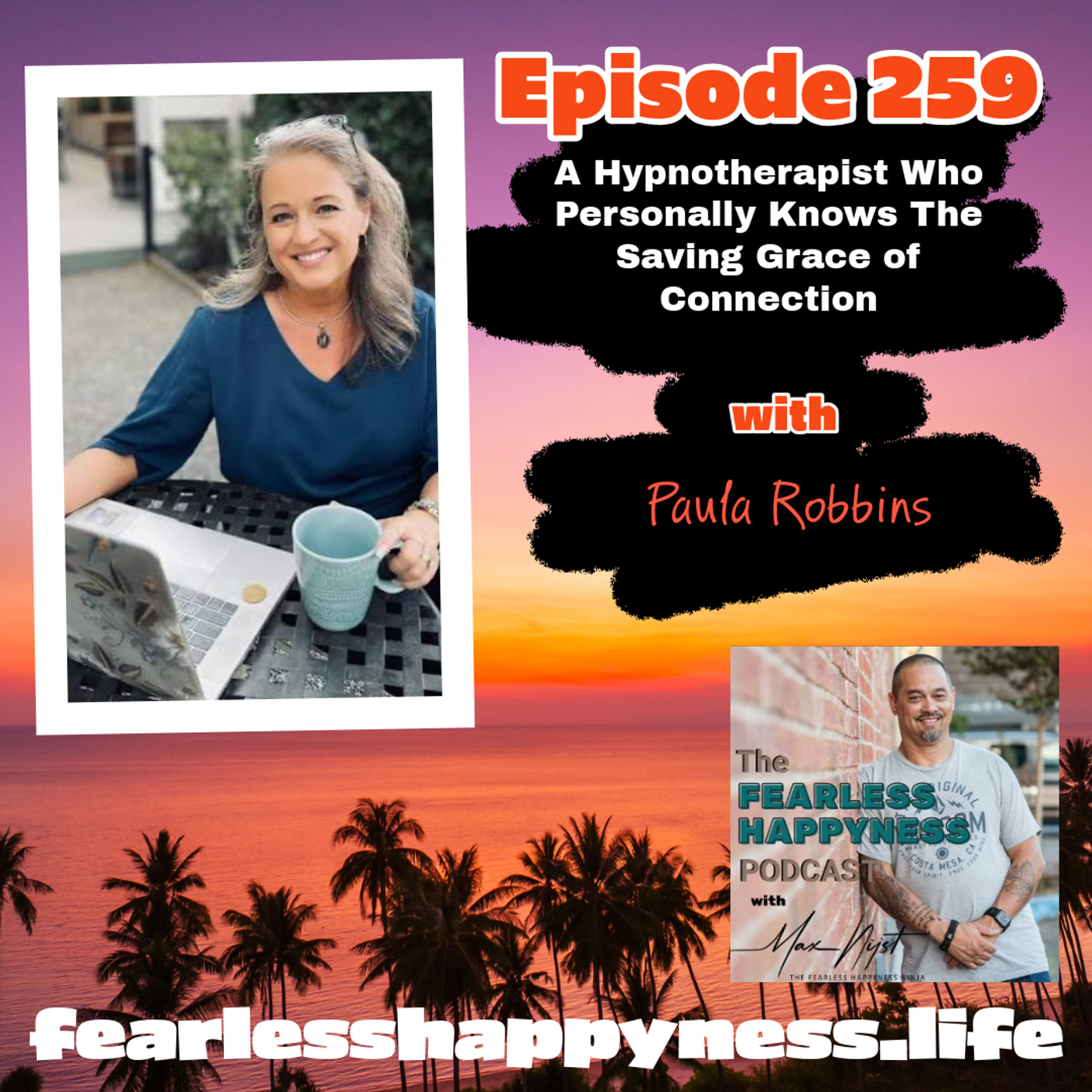
In this episode of the Fearless Happyness Podcast, host Max Nijst speaks with Paula Robbins, a metaphysical hypnotherapist and author, about her journey to sobriety and the challenges she faced along the way. Paula shares her experiences growing up in a dysfunctional family, her struggles with addiction, and the pivotal moments that led her to recovery. The conversation emphasizes the importance of community, connection, and the various paths to healing, including hypnotherapy. Paula discusses her work in cellular release therapy and how it helps individuals address trauma at a cellular level, ultimately leading to personal growth and healing. In this conversation, Max Nijst and Paula Robins explore the profound impact of subconscious thinking and trauma on behavior, particularly in the context of addiction and recovery. They discuss the importance of connection through community, mentorship, and service work as essential pillars for a healthy recovery. Paula shares her journey of writing her book, 'Hitchhiking into Recovery,' which emphasizes the significance of daily rituals and divine alignment in personal growth. The discussion highlights the transformative power of facing fears and embracing life's challenges as part of the recovery process.
For More From Sober Coach/Substance Abuse Counselor Max Njist, visit
Max Nijst: Welcome to the Fearless Happiness Podcast, where we showcase phenomenal individuals who have overcome serious traumas, life obstacles, and challenges to find their own path to fearless happiness. Listen as Max Naist invites guests from all around the world to share their experiences and spread strength, hope, and faith. This is the Fearless Happiness Podcast. And this is Max Naist. All right, everybody. Good morning, good afternoon, or good evening wherever you are in this world. This is Max from the Fearless Happiness Podcast, coming back to you today with another amazing and special guest. And yes, they are all special and amazing guests to me. I have been blessed with some really great ones. And today is no different. So today I have Paula Robbins with me, everybody today. But what I like to do, Paula, is have you introduce yourself, like who you are, what it is you do. And then you and I are gonna, like I say, rock and roll. Cool. So â my name is Paula Robbins. I am in Centennial, Colorado. I am a metaphysical hypnotherapist. I am 37 years sober, â predominantly through the 12 steps and a whole lot of deep healing work. And I just wrote my first book and it got launched in October. You know, I love that having fear. You know, I love having fellow recovering people on my podcast, especially when like I didn't know until like just recently when I was doing my research and you said you had said that you're so I'm twenty two years sober as of September twenty seventh of this year, and â it's great to to talk to my fellow recovering â friends, you know, my in twelve steps. But I I always have to preface, right? So there are people in the audience don't get mad who are not twelve steppers. This is not a twelve step. I'm not promoting any twelve steps, but Paula and I can tell you it is a great foundation and it saved our lives. And, you know, I could brag about it all day long, but I won't. But let's get into your story, Paula. Like I always like to say you go back as far as you want though, but let's talk about those challenges. â That have shaped who you are. I mean, you go back as far as you want. You could not go back, but I like to see I want the audience to see the resilience that you have and what you've been through and why you're here today, you know, sharing about your life and your book. Right. Well, so I I'm a Colorado native. I was born and bred in Colorado and I grew up in what I often jokingly call an above average dysfunctional family. it it was a rough upbringing, a lot of trauma, a lot of abuse, a lot of neglect. â my family I grew up predominantly with my maternal side of the family and they were all restaurant and bar people. So, you know, drinking food, fighting, all of it was just kind of the nature of how we lived. â I transferred schools thirteen times before I dropped out. And started my path of kind of escaping the pain of childhood at around twelve. I started drinking real young and smoking as much pot as I could and just kind of coping with life. â one of my coping mechanisms was speed skating. I was a athletic speed skater from about twelve to eighteen, loved that. music, friends, drinking, drugging, any kind of thing that would keep me away from feeling. the real emotions. And somewhere around 16 to 18, I clued in to the idea that something's wrong with this picture. I'm not drinking right. And I blacked out from the very first time I got drunk. I blacked out quite a bit throughout the entire duration. And towards the end of my drinking 16, 18, I started getting pretty volatile. And it scared me. I didn't want to be that person. I didn't want to I was done with the embarrassment and the humiliation. â at 18, I left Colorado. I joined â Job Corps, which is a Department of Labor United States government program for young people. Yep. I was 18, I was there for a year and a half, and something cool really happened there. When I was there, I did incredibly well like Monday through Friday. Like I got my GED the second day I was there. I became the center student representative out of 1,500 kids. I was president of my dorm. And like the Monday through Friday, I showed up on time. I I performed, I grew, and then Friday and Saturday just kept coming every week. And we went to town and I would party and I would drink and I would black out and I would get volatile. And by the time I graduated job core, I was really clear on the idea that I need to stop. I I I need to stop drinking. Drinking is the issue. And I was afraid to come back to Colorado because this is where I did most of my mayhem. So I was here for a few weeks and I moved to California. I moved to Sacramento with a friend of mine from high school. And you know, long story long, I hitchhiked everywhere I went when I drank. Hitchhiking was my primary mode of transportation. And in California, I was hitchhiking and I got picked up by the right guy. I got picked up by somebody who was in recovery, who was sober for almost two years. And he kind of shared with me a little bit about what it was like To be clean and sober. So that's where I went. So it was really an amazing kind of ride, synchronicity, if you will, to meet somebody like that. And it was great. I've been sober ever since. I love it, right? That's kind of what they call ever everybody, I'm gonna say it, right? The God shot, right? Someone shows up at the right time, right? Divine intervention. â I've always say like my My God shot, my divine intervention was my last relapse when, you know, the owner of the facility that I was at showed up, who never shows up on a weekend, but happens to show up this on a Sunday of all days, right? And I had just used and I remember her just knocking on the door with a big smile. Hey Max, what's up? Like no idea, right? But something inside me said, Don't lie. And I s because I had just had the house manager say, Max in the office now, like I'm busted. Like I'm gonna go to prison now because I've messed up for the fourth time. So she gives me this big hug and says, you know what I mean? It was one of those hugs I'll never forget. And she says, pack a bag, get in your car, and leave for three days. Come back and we'll start over. And I've been clean and sober ever since, you know. And it's I love stories like that, like yours, right? Like 'cause hitchhiking, right? When people hear it, right? We think of right back when we were younger, it was even then it wasn't. Okay to do, right? Because you hear of all these stories that go on, right? But luckily that angel showed up for you. So that's that's awesome. But what I want to get into, right, is because you and I know, like for me, the 12 steps have been a lifesaver. It's been my foundation on growing into bigger and better things, but I always stay close. And it's, you know, I always say, This is why I have the great guests that I do, because I continue to practice what I was taught each and every day, right? So that's why Rob or Paula's here and you know I I just had a I Rob came out of my mouth. Sorry, Paul, because I saw Robinson, but I just spoke to a guy who wrote a book who same thing, right? Like divine intervention. You like so many of our stories, right? But we all hit bottom. And what I loved hearing about yours, right? Because people, there are some people that have this thought. They're like alcoholics are the people. you see behind the stores sitting with a brown paper sack, right? There's only the one level, right? The drunk or whatever. But we all know, like you made it through the week and then you're the weekend warrior. But it's just as bad as someone who like me, when I start, I can't stop. And there is no weekend. Like every day is a weekend for me. Right. And that's why I love having guests like yourself, right? Because then we can share those stories of resilience with the audience who may not even be in recovery but might go, Wow, what a story Paula has. But so you meet this guy, does he okay, so you say he he's in recovery. Does he take you to a meeting or was he the the angel that like I like to say that planted the seed where he's whatever he said to you, you s it stuck and you're like, I gotta, I gotta find I gotta figure this out and do something different. It's both. I mean, he so when he picked me up, and let me just say, first of all, I never got in the wrong car as much as I hitchhiked. There was a lot of divine protection in my very young life. â but when he picked me up, he talked about how a lot of the people that he knew didn't drink or use drugs. And he talked about motorcycle rides and camp outs and dances and all these things that they did socially. He didn't even really talk about meetings, but I had had a friend who had been put in a rehabilitation program a few years earlier, a friend of mine in high school. And she had also gone to some 12-step stuff. So I'd known she planted the first seed, and now I'm with this guy who's talking about twelve step programs, but he he painted a different picture. He made it fun. And so we exchanged numbers and He would call me like on a Tuesday and say, Hey, I'm gonna go to a meeting tonight. Do you wanna go? And I would call him on a Friday and say, Hey, is anybody camping out or raft tripping or, you know, are they doing something fun over the weekend? And it was a a Tuesday morning after a very rough Monday night because it wasn't only a weekend warrior in my case either. Right. I woke up humiliated, crushed, hungover, sick, scared. And I called him and asked him to take me to a meeting. So I I went to my first meeting a few weeks after I met him and he was the person who took me. I love it. I love it. So I mean, it it sounds like even in pre sobriety, right? Like God was taking care of you, right? 'Cause 'cause hitchhiking as we, you know Like I couldn't picture any of my kids or grandkids doing it today. Like I'd be really you know what I mean? Like I would probably go down to their houses and, you know, tie â to a chair and go, You're never doing that again, 'cause I don't ever want to get that call. But we all so what I want you to do, Paula, okay, so now you you know, we know that you've been drinking, right? And you you go to â the job core, which has helped a lot of people who have you know, who have had like no Like I like to call it purpose, right? But I'm gonna go do this because maybe while I'm working, I can find what I really wanna do. because â I don't know about you, but like my purpose changed in the beginning every five minutes. I'm gonna be this, I'm gonna do that, I'm gonna be this, I'm gonna do that. Right. Right. And luckily for for me, I had mentors and a sponsor who would just say, Slow down. Like just just work on yourself first, right? Mm-hmm. And I've shared this before because, you know, when I was like 30 days sober the last time, right, my friend was every time we meet, there's a couple meetings we'd all go to together. He'd always show up on his Harley with his backpack and you know, smoking his looking really like the Marlboro man, really cool. And I'd go, Hey Ben, what are you doing? He goes, â I just got out of school. I'm gonna become a substance abuse counselor. And I'm like, I wanna do that. Right. And if I sponsor was next to me, I said, I'm gonna be a a counselor. He looked at me, he goes, No, you're not. Not yet. I'm like, right. But luckily, my last and like sure you felt my last use, I felt defeated. Like, and I said, I'll do I like my talk with God that day was God, you keep me sober, I'll do whatever you want. And I promise to do the work to stay sober. So instead of going, Yeah, I am and arguing, I said, Okay, right. And then I got to work for the next two years. How was that process for you? Once you realize like like me, like, â I love this AA. Like I have people that think like me, that have done things like me and but they still love me anyway, you know, knowing what I've done, right? They still every time I walk into a meeting, I get a hug. Like, 'cause where I came from before our my meetings, right? Like, 'cause they used to say, Here they come, here come the here come the convicts, right? On the drugie buggy. And Right. And I remember the first lady gave me a hug and said, Welcome. I was like, like, but that's another, I'll tell you about that after. But I was I looked at her like she was an alien. But what was that process like for you when you've realized, like, I'm gonna do this, I'm gonna stay sober and I'm gonna do the work? You know, I I feel really incredibly lucky to say that my first day, clean and sober, I went on a motorcycle ride. There was like 10 motorcycles. It was they we left Sacramento and we went riding all up through the Lake Tahoe Hills into the ghost towns and had ice cream and lunch. And I got a witness connection in a level of community that I had never seen in my life. Now, I had had friends that I partied with. I had my circles that I got in trouble with, but these were people who had light in their eyes. These were people who had these inside jokes and they kind of ribbed each other and at the same time they would come over and and one of â would stand real close and like, How you doing? Are you okay? Like, how's it going? How you feel? And at the same time I loved loved riding motorcycles. I loved being a passenger. So we're in the most beautiful scenery and it's beautiful weather and I mean I I couldn't have had a better first day. We we rode back into Sacramento and I went to a big speaker meeting and heard somebody tell their story and Then we had to dance and I danced and so my first day is not like most people. I'm I own that and I recognize just how truly lucky I was because I wanted a million more days just like that. So the chase started like right away. Like I want to do this. I want to have light. I want to have fun. I want to have honest conversations with people. And then sitting in the meetings, I was blown away at the vulnerability and at the honesty. And I was like, what did they just say? Like what? They just admitted that. Like they said it out loud, right? So I I was so impressed with the honesty and the vulnerability. And what happened is it created connection. So as you know, as anybody who has ever studied addiction versus recovery knows, addiction's disconnect, it's isolation, it's aloneness, it sucks, it's very painful. Recovery from addiction involves connection. To a community, to a mentor, to service, to a divinity. So, you know, that's ultimately the bottom line of what my entire book is about, the four pillars of connection. And that's what I got in the beginning. I started feeling connected to something that was alive and was mostly, well, you know, I mean, I still witnessed plenty of people coming in. Like one of the people that I really liked in the beginning, he died of an overdose at two weeks. I was two weeks clean when he died. And it was brutal. It was just like to feel that and walk through that without any escapism was was very raw. â and to witness how everybody else walked through it with like each other and connection and grace, it was really amazing. So there there was a lot that happened in that first, you know, few months, few years and I think all of it, just the connection kinda deepened. And then it waned and then it deepened and then it wan Right. Well, yeah, 'cause like I agree, right, with like you and I who have, you know, multiple years, right? We go through like, you know, years of where it's like just amazing. And then sometimes you go through a year or two where you're like, God, what happened to everybody? You know, like what's going on here? But that's the beauty, right? Like But now I hear you talking about motorcycle riding, right? That's why I think now I think I know why my brother moved to Oregon when he got clean, right? He's gonna be forty two years in a few days. Matter of fact, in about three or four days, he's gonna turn 42 years clean and cool. And he lives in Oregon and he's always riding his Harley. And I think that's what you said, because he it was his way to connect to nature and his friends in the program and and and stuff like that. And but see, that's This is what I don't understand. And and maybe you can help me, right? I know this this is about you, but like there's people that always diss the twelve steps. Whether I don't care what twelve steps, but you know, â you gotta say you're this and you gotta say you're that. But you said it and it resonated, right? It's that connection though. Like when you can walk into a room, like okay, for for instance, I learned from a speaker, she's probably 40 something years sober now, or if not more. But she used to say it doesn't matter if we came from park bench or park place. Right? Right. We come into the rooms and we connect and we get, you know, where we, you know, like the book says, we're normally don't mix, right? When we're in our addiction, we get sober, we get clean, i and we we can have this, you know, connection instantly, right? And that's I don't know if you've ever seen it, but there's a a a British journalist that has this sixteen minute long â thing on a d it's called What We Think About Addiction Is Wrong or something like that. I'm paraphrasing. But at the end he says, he asks the crowd, What do you think sobriety's about? Right. And you can hear the crowd going, recovery and and sobriety and all you know, all these and he goes, or he goes, What's the opposite of addiction? And they were calling you sobriety and every and he goes, connection. It's about connection. And you know what I mean? Like I don't know Rob â Paula very well. I I will by the time that but if I saw her at a meeting, we could sit down for that hour and we'd know each other after that hour. Like and and you know, like I said, I can walk in the room, she can hey welcome, give me a hug, and I'm not gonna freak out and go, Why'd you do that for her? Like I did in the beginning. And then I realized like I'm such a big hugger because of my twelve step. Right. Right. Like even my wife, like, you know, she goes, you hug everybody. Like I go, that's because of what that's what I do. That's what we were taught. That's how right. So you you get clean and sober, right? And you you know, and I know there's always the ups and downs. There's like the ebbs and flows of recovery. â what were some of the toughest things that you experienced as you were getting clean and sober, if I can ask that? So two things. When earlier you asked why do people diss the 12 step programs. So I wanna I want to address that. And I think it's mostly because they haven't really taken the time to get to know what it really means? What is it really? Because if you were to spend some time, go to a few meetings, get to know what the program is, get to know what the principles behind the steps are and what it means to practice the principles. If you were to get to know the divinity component, you know, a lot of people think it's religion. No, nope, it's not. Nope. You know, it's a God of your own understanding, whatever that might look like. And and in the beginning for me, that was the other people. They were a power way bigger than me. Just because they were staying clean and sober. So there's a lot of reasons. And it's it's there's some stuff that I have to own as a long term member of the 12 step programs that is outdated, you know? And I'm sorry if you can hear my dog, she's That's right. You might hear mine. I got four of them and that's okay. It's perfect. I love it. I feel at home. Settle in a minute. It's my daughter's dog. So there's there's some stuff that's outdated. There's some things that could be More modernized. But for those of us who've been in for a long time and who watch somebody new walk in scared, humiliated, nervous, I can't wait to share with that person that they weren't the only one. I can't wait to share with that person this is how I did it and how it worked for me. If they want to listen, if they're open minded enough, if they're willing enough. So I I think there's some things like that, right? And now there's also a million other ways to recover. And frankly, I I'm thrilled with a lot of the stuff that's out there. There's a lot of paths to recovery that are really phenomenal. â that are not twelve steps. So I don't care how you do it, just do it, right? And I will add that if it does not include connection to a community, to a mentor, to service, and to daily divine alignment, the four Pillars of connection, you're probably gonna struggle. And that was my second answer is I struggled with sponsorship in the beginning. The mentor piece was a big challenge for me. I I did not choose well and I had a couple of rough starts. So I didn't have a mentor. I had community and I had service. I wasn't really active in a daily divine alignment, which in the 12-step language is daily step eleven. Right. so over time. Like at eight years, I left California and I came back to Colorado and I got pretty disconnected from community, from service, from everything because I was going through a divorce. It was really traumatic. Really came close to drinking. And really grateful that I didn't. I ended up at a meeting instead that same day that really saved my life, you know. Right. â at fifteen years sober, I went through this period of thinking, well, maybe I was just young and dumb. I got sober when I was only 20. Now I'm 35 and, you know, maybe I can drink like a lady. So I I kind of got complacent. And the good news is I was on autopilot. I still had my regular schedule. I was going to meetings. â I did identify somebody as a a new mentor, sponsor. And I got real clear with myself. I never once when I drank wanted to drink like a lady. Right. I wanted to drink like a hardcore biker, right? Right. Right. So it where the idea came at 35, maybe I can do that now was just kind of that little seductive devil on my shoulder, right? Right. So the voice of of alcoholism was whispering in my ear. But gratefully the voice of recovery was on the other shoulder going, What are you even thinking, idiot? Right. Right. You know, you know better. So yeah, there there's been a few things. I mean, there was a very traumatic divorce, there was single motherhood, â there was money issues. I mean, life doesn't stop happening just because I stopped drinking and drugging. Right. But I'm learned that hard way too. â yeah, yeah. I mean, now I navigate it. Like I I've got I've been doing this a long, long time. So I I've built up a pretty cool toolkit to address the difficulties of life. And then I also went, you know, into some really deep territory of healing when I became a hypnotherapist and started doing a lot of my or deeper healing with inner work and shadow work and insanely cool metaphysics. So, you know, it's it's just a cool path of challenges and learning all the ways to heal and navigate them so that you can get better at this life gig. You know? See, and I love that you that you just shared that, right? And I want everybody to hear that it that in the audience who are twelve steppers, right? It it's not the only way. And and and trust me, Paula, when I was my first after I became a counselor after two years of being sober, that first year or two, I was that old timer, like â if you don't do it our way, you're gonna die and I can't work with you. And blah, you know, I tell clients that and they would look at me like Dude, you need a chill pill. Like, you need to relax, you know, because I was because I was so on fire how it saved my life. Right. I didn't have to go to prison. I didn't die in my four relapses in the place I was at. You know what I mean? Like I was given this chance. But I'm like you. Like, even now with the clients, you know, I work with in in the field, like, you know, I don't care how you do it. Right. You do it. I said, I'm here to just guide you, whatever way you pick. I'm going to be your accountability partner, right? I'm not going to tell you how to do it. But here's what worked for me. If you, if you ask me, I'm going to tell you my truth, my reality, and and what I love, right? And right. Because like you, sobriety has led to, you know, going back to school, learning psychology. â I believe like enhancing my recovery through personal development and and and you know, talking to people like you who've been They're before me and have gone through their stuff and I go, Cool, I'm not alone, right? Cause, you know, even in my recovery, I lost family members where you know, we just had this talk at my meeting last night where some of the guys were like, There's no reason to ever drink again, period. And some of them shared their horror stories, right? â and all I can say is though when I found out my brother, you know, lost his battle to addiction and took his life, I was in Denver, Colorado at a Denny's. and â you know, cause And there were I look out, you know, like I'm in shock. And I look out and there's this big billboard that says, We have the best marijuana and we deliver. Right? And I had that like two second whoa, that sounds good, you know, for a s and then I'm like, Nope, can't do that. I called right away, I called my sponsor. Because my poor fiance or ex fiance at the time was like, I I lost it in the middle of a Denny's and she didn't know what to do. And But that's what brings me back to you, right? Because how did you get into I'll before we get into your book, I want to talk about hypnotherapy because I've been so interested in like alternative medicine to heal whatever's going on with me, like physically, like bad shoulders, this or that, right? Because I as you and I know, we can go to the doctors, our primary care physician, we say we got a pain and they say here's a Vicodin. And we're like, Well, nope. I can't do that. So you gotta figure out something different. And you and I will hopefully can talk a little bit after because there's some hypnotherapy I've been looking into to I what actually and we can get into it too is that shadow work. Yeah. But talk about what led you to start looking at that and get into that. So I I had â My training in Job Corps was office skills. And it led me to a career in the staffing and recruiting industry that which I had for sixteen years. And somewhere around that fourteenth year, I started burning out. I started getting a little more clued into kind of corporate corruption. â corporate America's not too savory of a place â a place, you know? And was I had really ranked up in my roles and been promoted and now I'm in management and I was like, I don't want to do this anymore. This isn't serving my spirit. This is, you know, so I I went to prayer. I'm like, all right, God, where do you want me? Like I know this isn't it anymore. And on on a fluke, I went to go see a hypnotherapist for weight loss. It had nothing to do with my career change. But before I ever did any hypnosis whatsoever, the woman I met just had this really cool presence and she talked about her corporate America career and how she became a hypnotherapist and this light came on and it was kind of one of those literally it was kind of like a white light experience. I'm like, â my God, this is it. Like this is what I'm supposed to do. And the synchronicities were this incredible snowball effect. Like I got this huge bonus check. It not only paid for all of my entire tuition for the program I took, it paid for some of my bills to transition me out I had free office space for two years. I had a friend who called me literally five minutes after my resignation and said, Hey, do you know anybody who might be a good part time consultant? Well, I I could have used a part time consulting gig to lift off my new business, right? Right. So I mean, it was just incredible. And there's never been any question eighteen years later, I mean, that was in two thousand seven, that this is what I was supposed to do. And so I'm still doing it. And, you know, it's a really an incredible body of work dealing with the subconscious and and finding out what's really making me tick, whether it's my sickness or my ailment or my self-sabotage or what's helping me to dream and want to take my life to the next level for the better good. That's all in the subconscious. So it's fascinating, fascinating work. And there's several different kinds of hypnotherapy. So the the work I do. is really specific. â it's called cellular release therapy. And I created a video. If you you can find it on my website, I'm easy to find, paularobbins dot com. And you can watch it's a two hour it's like an hour and a half video, but the first 20 minutes is just a presentation explaining what is cellular memory, how do we hold it? Is it from our DNA? Is it from our childhood? Yes and yes, how do we clear it when it's traumatic? So it it's kind of an educational piece that people can find and it's free. They they can just watch it to understand it better. I love it, right? Because that's where trauma stays, is it our cellular level, right? That's why â we carry it with us if we don't right find a way to I wouldn't say get rid of it, but like deal with it and overcome it. Mm-hmm. Right. Because it's so amazing I'm listening to you, right? Because there's so many different ways to And everyone, I have to say, Paula, including yourself lately on my show, my guest, are all talking about like how we can like cleanse the cellular level by changing the way we think our in our subconscious, right? And like the law of attraction. Like I interviewed a man, he has nothing to do with that, but he wrote a book like which is, you know, â Which he talks about the secret that Napoleon Hill doesn't talk about really, like how that works, right? So he wrote a book on how that actually works and how if you do what he teaches, it'll work because he goes ninety five percent of what we do is controlled by the ninety five per our our actions are controlled by the ninety five percent of our subconscious thinking or whatever mind. And we don't even know it. And we don't even know it, right? And that's like where trauma comes in, right? Something happens to us. We may say, Okay, I got over it, I'm good, but we still do things based on that trauma. Right. Right. And you know, like like why I can use us like our our drinking and using, as you know, I I believe like Dr. Gabor Mate in Canada says, like based off a trauma that happened to us and it was our way of going, I don't need to feel that, so I'm gonna do this. Well that's like the the a lot of people you'll hear this, I've heard this recently a lot. Alcohol isn't the problem. Alcohol is the solution. Like I don't like the way I feel. I don't like to feel. I don't like the discomfort of emotion. So I'm going to drink and try to numb out, or eat, or shop, or, you know, porn, whatever it is. There's a whole lot of escapism from feeling. That's what addiction really is. Right? Let me let me let me feel connected to some rush because this other stuff is kind of scary. And When you think about cellular memory, that's the stuff that's getting triggered in the everyday. And there's two ways to clear and heal cellular memory. One is cellular release therapy, very specific body of therapy, but also by replacing old cellular memory, like good experiences, good affirmations, laughter, plays, service work, volunteerism, you know. divinity and prayer, there's a lot of things that we can do to heal. Right. And create positive cellular memory. But sometimes that old stuff that's still rooted that's not positive can still knock us around pretty darn good. Right. Well that's why they say like changing the narrative we grew up with, right? Like changing the way we talk to ourselves is going to help clear that stuff out. Or replace it with more positive, right? Right. â I mean we c sh we could just talk about that for the next couple hours if I wanted. But I want to talk about your book because I love what you said, The Four Pillars of Connection. Cause this is another reason I started the podcast, right? Is to connect people or have people be able to connect with someone that they hear on the show and go, â that makes sense. I'm gonna go, I'm gonna reach out to to Paula and I need her help, right? Because that's Ultimately, like what w you and I like that's that service part we talk about, right? Right. Right. Because I mean it still chokes me up because it was one of those things that I finally saw in a meeting after my last relapse and it stuck with me. And it's that I am responsible, right? Where when anyone anywhere cries out for help, let the hand of AA be there and for that I'm responsible. I still because I know because it made me think about all the people that worried about me when I was relapsing. Like even though I wasn't worried about them, right? But when I got sober and all the hugs and my sponsor and my my sponsor's wife taking me aside when I took my first year to â chip, you know, and she said, I've never seen that man cry except your last relapse when he didn't think you were gonna come back. Like he got teary eyed and I so that man has been my sponsor for twenty two years and he knows everything about me, right? And one of those guys I can trust to go here. I'm feeling this way. What can I do? You know, and I call them Ioda because I always tell him I'm gonna come over to your house one day or your office. You're gonna be floating in the middle of the room with this green aura telling me to use the force, right? Well, my sponsor actually does float in the room. I love it. so let's talk about your book. Yeah. I mean, they're awesome. I mean, there are sponsors for a reason, right? Like Yeah. â she's she's oof. She's my guru for sure. Yeah. So Getting into your book now, like what was the idea? Like when you first came up with I'm gonna write a book, what did that look like? And then then let's talk about the four pillars of connection because I I love talking about connection and all that good stuff. It's a big answer, but it started years ago. I was fifteen when I was in the heart of really deep depression and darkness. And I would journal a lot. And I remember when I journaled, I loved writing and I was like, I want to write a book someday. And it took me decades. I mean, I'm I'm gonna I just turned fifty-eight. So I just finished my first book. And in twenty twenty during COVID, â my work got real quiet. I think a lot of people did. And I submitted a book proposal proposal to a big publisher. And when I wrote the proposal I ended up with like, this book's gonna be like eight hundred pages. It's so much I wanna write. So I realized when I wrote the proposal, it wasn't just one book, that it was a series of books. And then I spent the ne the the next like three or four years really researching how to publish a book. Do I wanna go self-published? Do I wanna go hybrid? Do I wanna go traditional? What does it mean to write a book? What about writing a series? So I just did a lot of research and in Late twenty-three, I got a little more clear and started writing in early twenty-four. And then I chose a publisher path and really got down to it. And the book it took it took a little over a year to write the book. I the editing process, I had an incredible developmental editor who really, really helped me kind of just define the book and and get it right and helped me understand more. about my message of the four pillars of connection, which is really the core message of the book. And ultimately what the book is about, the title of the book is Hitchhiking into Recovery. it's pretty easy to find on Amazon or my website, but I've always been curious from the very first day I was clean and sober to the ver to to today, like what makes somebody an addict or an alcoholic? How come there's so many different versions of addiction? How come that alcoholic drank like this and the other one drank like that? How come there's so many different ways to recovery? Like what is the common thread? And of course, because I'm in recovery, the common thread of of what makes recovery tick was the piece that I wanted to write about. And it was about 10 years ago when I really got clear that there were four pillars to my recovery of connection that make my recovery not just recovery, but a healthy recovery. Like I love the life I live. I like the skin I'm in. I'm proud of who I am and how I walk. I I genuinely walk my talk, you know? Right. And it was community. I'm still very actively engaged with the community of recovery. It was a really good mentor. And I I've had several, but one that has been my mentor for 24 years. I do service work to this day. I still mentor women. I still answer hotline calls and daily divine alignment. This is probably my biggest message in the world. If you can connect every single day. And deeply align to your divinity, whatever that looks like for you. Could be nature, could be Christianity, could be, you know, Buddhism, it could just be that you breathe in light. Whatever that is for you, if you do that every day and you really align your free will with divine will and really align spiritually, you've got a chance at at living such a cool life. So that became the premise and core message of the book is how did I get here? And it's predominantly about recovery. The the books that I'd like to write about will be about metaphysics and spirituality. And I want to write one about trauma healing and I wanna write one about motherhood, you know. There's a whole bunch of them I wanna write coming up, but the recovery is where it all started. So that's why it's the first book. You know, I love that, right? Because like I said before, right, I used to be that hardcore, if you don't do the twelve-step kind of guy, right? But now like when I â approach a client, right? Obviously I meet â where they're at 'cause not everybody is right. Like me, I forget sometimes I was angry with God. Like, you know, but you know, leave it to our wise mentors or sponsors, right? When you say, Well, God loved me so much. Why did he take my kids away? And he's like, What? Excuse me? He goes, God didn't take them away. You gave â away. He just protected them while you were doing your thing. Right. And then Same thing when I Well, if he loved me so much, why would he put me in jail? And he goes, â got an assignment for you. Right. And I remember having to write what would have happened on the ones where I, you know, if I would have got caught. Right. What was I doing at that time? Obviously I was in my addiction doing hanging out with bad people. What would have happened? And as I write this, I'm like, he goes, â maybe God was protecting you and jail was the only safe place for you right then and there. And I'm like You know, but â you know, there's so many man, you like got me thinking 'cause there's so many ways we could go with this. But, you know, in the connection part, I think this is universal, right? For anybody, even if they're not in recovery, right? They can learn from your book about connection. Mm-hmm. Right. Because I remember having a hard time with, you know, he said, just sit and pray, even if it's for a minute or two. Just right. And and that's how I approach clients nowadays and you know, whether I'm working at a a facility or my private, you know, I said it's mind, body, and spirit. And they go, Well, what's this spirit thing about? Do I gotta believe in God? I go, No. I go, that's up to you. You have to figure that out. But I go, you'll know you're spiritually fit when your mind and your heart start to line up together. And they look at me all cra like, what does that mean? You know, and I said, Well that's why they call it a process and trust the process, I tell I said, I mean I'll have all the answers, but I'm gonna teach you what I've learned and in Blah, blah, blah. But â I think you're I I love that part, right? Cause my connection. So like in my living, we bought this house, right? And when we walk in the front door, there's these French doors that you look out the back, and all you see is the hills and the trees, right? Because we're right next to Camp Pendleton, but you would never know that we're near a marine base from our, but our view is gorgeous, right? And I my wife and I looked at each other and we said, were sold. Just for that view, right? We didn't think about the yard work like you. I'm gonna be fifty-eight in March, right? Now I used to when I first bought the house, I'm like, â yeah, I can do this right. Now it's like I look at the yard for about 10 minutes and go, God, I'm gonna hurt by the time I'm done with this yard, because I can't ride a mower. It'll sink. It's either too soft or it's too hard and you're gonna slide all over the place. So It's good old fashioned manual raking and sweeping and all that good stuff. But but that's sometimes, you know, people don't understand. That's how I connect with my divine i people or spirits is when I'm doing that because I feel like when I'm out in nature and I'm doing that work, I feel like, you know, this is how it all started. This is what we used to do. I mean, no one had push mowers and stuff back in the day. They had to do it with their hands and So talk about those like if you can individually about the four pillars of div of connection that you came up with so the audience can understand it a little bit better and so I can too and learn from you. So we'll we'll start with community because that's where it started for me. It's like and and here's what I'll say ahead of every single one of the pillars of connection is discomfort, right? It it's not gonna be comfortable to just walk into whether it's an AA meeting or, you know, women for sobriety or whatever it might be. There's there's different types of ways that people are getting sober now and people are finding recovery now. But it could be a church, right? It could be a yoga group. Right. But when you're new, it's uncomfortable, right? Whether it's learning a new sport, learning a new language, learning to drive a car. Everything's uncomfortable when it's new, right? But if you keep going, it gets more comfortable. And you keep going and it gets more comfortable. And eventually you get to know a few people. And if you're brave, because it takes bravery, it takes courage. Recovery is not for the weak. You have to connect and talk to them. And then you start building a community. So that's one. And there's a power in that connection. Finding a mentor. in that community or in any life or walk of recovery is about finding somebody who has what you want, who lives the way you want to live. Did they do the work? Do you respect the way they live their life? Are they they have integrity? Do they carry themselves the way you want to carry yourself? There's a lot of components to identifying a mentor. But and then again there's that discomfort. You got to go ask them. So do you mentor people? Do you sponsor people? How do you feel about having coffee and working with me? Right? That's not comfortable. It takes courage. Exactly. As soon as you meet with them, as soon as you talk with them, as soon as you get to know them, guess what? You start getting comfortable and you deepen that connection. Then there's service work. First time you're, you know, volunteering to do something. Could be a soup kitchen, could be making coffee for AA, doesn't matter. Right. Initially, It it's gonna feel a little weird. I think service was the easiest thing for me. I started taking hotline calls at like 30 days clean and they taught me how to handle those calls and I still take hotline calls. But it was something that was really, really powerful to help other people. It built my self-esteem. It really started shifting away from that self-loathing, self-hatred kind of mindset of I'm no good. Because I was helping others and I'm like, â you know what? I'm not so bad. You know, and then the daily divine alignment, boy, is that a it's a prominent message in the twelve steps, that step eleven, you know, daily prayer and meditation. Yep. however that looks for somebody, for some people it's a daily walk, eyes open. They connect with nature. You know, whatever spirit is for you is is what spirit is for you. But connect every day. And the more you do it, the more you deepen. Because one of the things I hear all the time. Is I don't know how to meditate. I don't I don't meditate very good. I can't quiet my monkey mind. And I'm like, well, if you practiced and you did it more, eventually you'd get more comfortable. You'd get better at it. You'd start getting more mentally still. You will get good at it, I promise you. Right. But you still have to sit down and close your eyes and focus on your breath. Right. You know? Right. And I love that, Paula, because I know if you're anything like me in the beginning and your sponsor or mentor says, I want you to practice meditation now. And you're like, You look I know the look. My sponsor still tells me he goes, When I told you to do that, you got this crazy look. Like, do you understand that my mind does not shut up and you're asking something crazy of me right now? Yeah. But if you listen to what Paula said, the more you practice, it might even be a minute or two in the beginning, but the more you practice The better you'll get at it. Right. And it's I think it's better than any high I've ever had. I'll say that straight up. I meditate, I I have a very committed daily practice of what I call quiet time. And I look forward to that every day, sometimes twice a day, because that is my little Zen space. That is the space where I like recenter and reset the day when I need to. And we've had some pretty heavy stuff happening with my family recently. And I've taken that time, even if it's like two to five minutes, midday, I might be sitting in the bathroom. Right. I'm gonna be like, hey, I just need to connect, I need some quiet, I need some zen, because life is happening, right? I mean, it becomes a really valuable resource that you I promise you will look forward to. Right. And I love it, right? Where I've learned now 'cause I'm getting more into breath work where the breath I do helps me quiet down. You know what I mean? And it took me a long time to get to that point. But you know, it's like like I told you, I'm so interested in all these other modalities, whether it's, you know, breath work or meditation or, you know, cellular stuff that you can clean your body and, you know, help Because I I believe it's you know, when when my mind and my heart are in the same place, that's what I f like the you've heard it in the meetings, like that's when I can smile at the guy that I'm looking at in the mirror and go, Okay, you're doing like you just said, I walk I'm walking the walk and I'm talking the talk. You know what I mean? I don't know anybody in recovery or or yeah, I've been doing a I've been a guest on a lot of podcasts recently and I don't know anybody who doesn't want to be a better version of themselves. They don't want to be a better, you know, they want to be a better person. They want to be a better parent. They want to be a better entrepreneur or friend or mentor. Right. And these are the tools. These are the way we get there, you know. You you've got to do your own work and you gotta face yourself. And that's that's the inner work. Whether it is getting brave enough to go become a part of a new healthy community you need. Or the mentor or the service or the quiet time, whatever. These are the things that take us from a place of reactive to responsive. Right? Right, right. I want to respond to life. Grounded, clear, gracious. I want to â navigate my life from that place, not this reactionary craziness that it's what it used to be. Yep. And I love it. And that's why I'm so grateful. And I'm grateful and honored that you're here today because You're another guest who, you know, from a whole different background has said the same thing as a bunch of my guests before. What I mean by â what you just said, right, is like I just had a guru from India at 3 30 in the morning, his time was on my show. You know, and it was such an honor. And and we talked about like a lot of the stuff that like you and I do in program. It's like we do that. And he goes, You gotta understand this stuff's been around for Thousands of years. It works. Right. And we can integrate Western and Eastern philosophies and and together, right? Because ultimately, like my, you know, I I what I've learned is to live in purpose on purpose. Right. And, you know, like God has given me this platform to bring guests like you and share your side of what connection looks like for the world and how we can heal ourselves and Right. I get goosebumps because, you know, part of me goes back. Like you would know. Like I think back when I first got sober and go, if you would have Paula is gonna be on your podcast, â one, I would have been like, What's a podcast? Like, well, I don't even know what you're talking about. Like, you know what I mean? I would have been like, I don't know what you smoked, but I think we need to maybe check to see if you relapse because but this is what I love about the process is Right. Over the years, just putting one foot in front of the other and like you said, doing the work and becoming one per just one percent better of a person than I was the day before has opened up so many doors and made my life full. I'm a grandfather, right? At fifty, I got almost almost fifty eight, and I've got twelve grandkids. Right. You know, I get to be a dad, I get to be a grandfather, I get to do all I get to be here with you. And if you're listening, everybody, it's it's a lot of the stuff that Paula's talking about. And you'll find in her book about the connection, right? It is. I had to find a community, right? Because my old community, like when I'm sitting in a dorm in jail, that's not the community I want to be a part of anymore, right? â but I learned some great lessons in there w this last time before I got sober, like things that people said to me that made me finally wake up and go. Wow, I got a guy in here doing what I'm doing, but he actually just gave me some wisdom and said, like, go change your life, you know? Yeah. And then, you know, connecting with the divine, whatever that looks like for everybody. I love that. And service, right? Like I used to I had a â H and I panel for two years. I loved it. â yeah. You know? And I love doing H and I. It was one of the my favorite â service commitments I had. And you know, besides, I mean, like I'm secretary at my men's stag now, right? I'm stay like you said, I stay connected. I gotta stay connected. And then â you know, being here this with you and connecting and and sharing your story with the world. So I love it. It's been such a great time. But now I get to ask you the questions like I so jokingly talked about before the podcast. These are the ones I do remember. â but we're gonna start with fearless, like you can see behind me, Paula. So what does fearless mean to you today? And how does that show up in your life on a daily basis? It means that I am not afraid to face anything that comes into my life, good or bad. I I'm I'm willing to face success. I am willing to face grief. I'm willing to face failure. I am fearless because every single aspect of my life has taught me something. I've been through an awful lot, a lot, a lot. And on the other side, of each trial or success is more wisdom and more growth and more evolution. So I I dig that. It doesn't mean I don't experience fear. Right. But I am not afraid of the fear. I love it. I love it. That's awesome. Makes you think everybody correct. I mean, that's just the way I think all of us should roll, right? Because what she basically I think said, correct me if I'm wrong, is like whether it's a success or Let's say a failure, if you're you go through that process and learn that lesson, you come out a winner anyway. You know what I mean? I love it. Always. Yeah. Now we'll talk about happiness, my favorite, right? And I put a Y in it. Knowing that I put a Y in it, what does happiness mean to you, Paula? And how's that show up in your life on a daily basis? Well, one, I love that you spelled it differently because I think that it stands out as the main keyword in your podcast title. â to me, happiness is about being comfortable with who you are, right? Being proud of the life you live, the way that you walk. And that doesn't mean every aspect. My life isn't perfect, but I am thousands of percent better than the person I was before I stepped onto the path of recovery. And I'm a little bit percentage better than the person I was yesterday or the day before. I mean, I And I'm happy. I'm happy with the way that I live my life. I'm happy with the components of my life and the people that are in my life. There are some difficulties. There are some challenges. There's been, like I had mentioned earlier, some family things that I'm not happy about. But I personally, in my own walk of life, love life. I love life. I love all of it, good and bad. And and I do, frankly, I trust it. I don't get caught up in some of the every time I hear somebody say this crazy world or you know, what's the world coming to? I hear it all the time and I'm like, My world's pretty good. You know, there is some craziness around, but there's always been. You can go back to the dawn of time and there was probably somebody saying, What's happening with the world these days? I don't you know. Those dang dinosaurs wanna eat us. What's going on here? You know, like I love it. I love it. Well, like I said, Paula, this has been like we could probably go for another couple of hours easy, right? 'Cause you and I, especially talking about recovery and just life in general, you know, like I like to say, like one of the the people I read his book in a a what is it called, the new pair of glasses, right? Like when I read that book, it was just a good way it was a good analogy. Now I can look through life with a new pair of glasses, right? Whether I'm wearing â or not. But This has been an amazing time. But I want to ask you again if you let people know, like one, if they want to work with you or get a hold of you, ask you questions, how do they do that? And again, where can they find your book? So they can find everything at Paula Robins.com. â P A U L A Robins R O B B I N S dot com. It'll take you to either my bio website which is paularobbins.com, but it also links you to my main business, sunlitpathways.com. Both websites have the book information. Both websites have information on how to do the initial intake session with me for hypnotherapy. I have a membership. There's kind of the the lower price version of working in groups with me and getting just an incredible value. So there's a lot there and they can just Go to my website and find anything that they need. And then there's a contact page. If they have a question, they can always reach out. I receive those personally and I do respond to every email myself. I love it. I love it. Well, like I said, Paula, this has been an amazing, amazing time. And thank you so much for being here. But you're not quite off the hook just yet. Now I get to ask you my favorite question that I ask of all my guests. And it goes like this. So Paula. What is the one piece of advice you could give my audience to help them grow as human beings and become better people? â it goes back to what I said earlier, my main message in the world. Develop a daily ritual of divine quiet time. If you do it every single day, I can promise you without any hesitation, your life is going to transform in a good way. It's it's been It was the biggest surprise of my walk in recovery and in life in general. And I I'll tell it to anybody who will listen. Develop a daily committed ritual of quiet time and divine alignment and see what happens. That's gonna You know, I love that because I can't agree with you more because at least like in the research I've done and and books that I've read, and I'm talking, you know, like people in the personal div development realm are very extreme extr let let's say very extremely successful people. They have what you just said. They have this routine they do religiously before they start their day. And that's I joke. You know, I I there was a one of my mentors when I was training as a hypnotherapy used to joke all the time and say JCPenney had it right. It's all inside. So that was the tagline for JCPenney for years. It's all inside. And that's the truth. Like you you want to grow your finances, your success, your health, your business, your pre parenting skills. Turn inward. It's vast and infinite what you will find within yourself, especially if you invite the divine. Whatever that is for you, invite the divine and figure it out because it will change. Whatever you think it is now, I can almost guarantee. It's gonna deepen and expand and show you something bigger over time. I love it. Wow, Paula, this has been such an amazing time. I don't want to stop, but I guess we could keep going. But God, I was supposed but I I want to talk to you after the show a little bit about a couple things. But thank you so much for being here. Mm-hmm. It's it was a truly amazing time, and I learned so much from you. And I know you brought so much value to the audience. I love it. I hope so. And thank you, Max. I mean, seriously, what you're doing in the world is so cool. What a valuable messenger you are. So thank you so much for having me. I I feel really honored to be here. And just keep doing what you're doing, man. It's cool. It's really cool. I love it. And I will. And we'll do it together. Right. You in Colorado, me here in Cal. We're gonna spread this all over the place. So again, thank you for being here. And you heard her, everybody. If Paula made you think, if she taught you something. If she made you smile, and my famous, if she made you go, hmm, I like that. Please go to iTunes and leave a five-star review. And come join me on my YouTube chat, my YouTube channel. So you can both hear and watch me, Paula, have this conversation. Come like and subscribe. And again, good morning, good afternoon, or good evening, wherever you are in this world. This is Max from the Fearless Happiness Podcast. Until next time. Are you tired of being weighed down by life's traumas and struggles? Join the Fearless Happiness Lifestyle and let us guide you toward a brighter future. Explore our past podcast episodes and get a copy of the Fearless Happiness book to ignite your inner strength. If you or someone you love is battling addiction or facing challenges related to unresolved trauma, know that we are here for you. Visit maxnates.org, M-A-X. N-I-J-S-T.org and take the first steps toward finding your fearless happiness. Thank you for listening. This has been a production of Fearless Happiness.


