
 Apple Podcasts
 Spotify
 YouTube
  RSS Feed
 A Sexual Abuse Survivor Who Kept Her Trauma In A Box Until It Leaked with Darlene Lekowski | 261
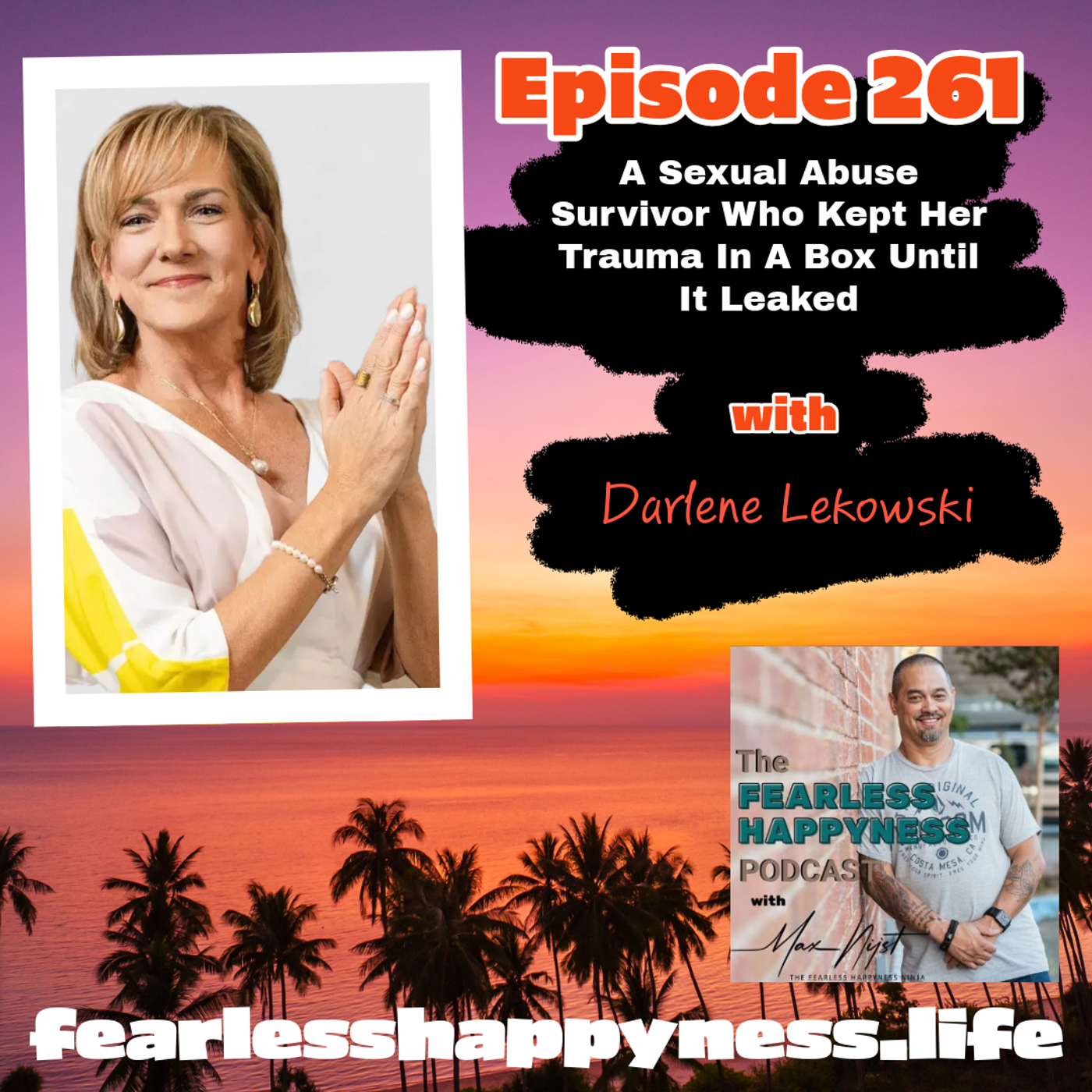
In this episode of the Fearless Happiness Podcast, host Max interviews Darlene Lekowski, a survivor of sibling sexual trauma. Darlene shares her journey from living in silence for decades to becoming a public speaker and advocate for others who have experienced similar trauma. She discusses the challenges of facing her past, the impact of her experiences on her family, and the importance of seeking help and support. Darlene's story is one of resilience, courage, and the ongoing journey of healing. In this conversation, Darlene Lekowski shares her journey of overcoming trauma and addiction, emphasizing the importance of healing, vulnerability, and community support. She discusses her upcoming book, which aims to help others who have experienced similar struggles, and highlights the transformative power of sharing one's story. The dialogue explores themes of spirituality, personal growth, and the necessity of being present in the healing process.
For more from Darlene:
https://www.darlenespeaksup.com
https://www.darlenespeaksup.com/the-book
For More From Sober Coach/Substance Abuse Counselor Max Njist, visit
Max Nijst: Welcome to the Fearless Happiness Podcast, where we showcase phenomenal individuals who have overcome serious traumas, life obstacles, and challenges to find their own path to fearless happiness. Listen as Max Naist invites guests from all around the world to share their experiences and spread strength, hope, and faith. This is the Fearless Happiness Podcast. And this is Max Naist. All right, everybody. Good morning, good afternoon, or good evening wherever you are in this world. This is Max from the Fearless Happiness Podcast, coming back to you today with another special and amazing guest. But what I'd like to do, Darlene, is have you introduce yourself to my audience, like who you are, what it is you do, and then you and I, as I like to say, are gonna rock and roll. Awesome. Well, thanks for having me on your show. â I wear a lot of hats right now, so I'm gonna go as quickly as I can. But my first hat is I am a wife and I'm a mother of three amazing adult children who are all in their mid-twenties to late twenties, and so I'm an empty nester. My second hat is I still have a full-time career. I work in sales and marketing and I manage some of the top banks in the United States. I work for a fintech payments firm. But my third hat, which I just started last year, was â coming out with my secret. I've become a public speaker, an author, an advocate, and most importantly, become public that I'm a survivor of sibling sexual trauma and abuse by two of my older brothers. And I wrote a book about it and I'm talking about it. Well you know, well, thank you for well, one being here and having the courage to do so, 'cause as you know, I mean, any type of abuse or trauma is difficult to talk about it. Yes. And I have to say, â you know, â in the work that I do and and the stories I've come across as an addiction counselor from some of the clients that I've worked with, that seems to be one of the worst when it's sibling. Poor, you know what I mean? Like Yes. Because I mean you want them to get better, but at the same time in your head you're going, I'd I'd probably do the same thing if that happened to me. You know, I'd be drinking and drugging and right, because you know, thank God that you you have made it through there, and keep working through it, right? Because as we know that trauma is it it's not like a one done and you're â I'm good, I'm over it, right? It's like grief. It keeps coming back up and you have to work through different emotions and feelings and triggers and right. Cause you could be having a great day and something you see or you know that reminds you will take you right back to those moments. You know what I mean? Yes, absolutely. In fact, yeah, I'm sorry, Max. Go ahead. â no, I was just gonna say without having, you know, to you go as deep as you want, but Talk about that because this is what the podcast is all about. It's you're living proof that you can go through that, go get healed and continue to heal and come out successful. You know what I mean? Because you got the toughest job in the world. And I always say this is motherhood, right? Like you have the toughest job. Not only do you have to mother your children, but sometimes you mother, you know, like your spouses. Like my my wife goes, Sometimes I'm not your mom, but But I like when you baby meanwhile. Come on. I mean and then you have a a corporate â career, which working with banks has got to be tough. So but talk about those challenges you have faced that you have just mentioned and you know, talk about that. And then what was the point where you said, This has gotta stop, I gotta heal, and then whatever else you would like to talk about that, because I'm sure there's plenty of my audience who have been through similar things as you and are here to find out how you, you know, they want to see your resilience so they could go, okay, I can do this. Yeah. Well thank you. And that's really what the book is about. It's I do talk about some of the abuse situations, but the book isn't â a story of their abuse and what they did to me. It's really about to your point, Max, my resilience and what I did through all of it. To move my life forward in spite it all, you know? â and when it's your sibling. I mean, this is a taboo subject. I grew up in the 70s. This was happening to me from ages seven to twelve. And nobody talked about that. I literally thought I was the only one. And I want to say to your listeners, don't believe that. Don't. when they threaten you and say you're going to be orphaned, you're going to destroy the family if you tell all of that, I kept it in a box for 50 years. And it's when you keep your trauma in a box, it leaks. And I didn't know I had PTSD until I started having these reactions. And and like Max, like you said, in my college days, Yeah, I I'm very vulnerable in the book as I talk about the drinking that I did, some of the drugs that I did to cope, all that I did to get through it. And it's not pretty, but I feel like to see the good in me, you also have to see the bad. You know what I mean? Like the pain that I endured, the choices I made and what I did to get through it all. Right. I love that. And and the reason I say I love that is that's how people connect, right? When they say, â wow, I get what Darlene went through. I'm doing the same thing. She found a way out. How am I gonna do the same thing? Right. Some people do it quicker, some do it later. But like you said, it's because okay, did you grow up in the South? Like we've been talked about before the show, like, because we know that like when Way bad. Like you don't talk about anything like that that's gonna harm the family in any way, right? Like Yep, yeah. Well I grew up just as bad as the South. I grew up in â Michigan. C very conservative Midwest Michigan. My mom went I love my parents dearly. Wonderful, wonderful people, but my mom, was very religious. She owned a Christian bookstore, was a pillar in the community, went to Hope College. And my dad was also a pillar in the community. And I just felt that if I had disclosed it in the 70s, I really did believe my brothers, that I would have destroyed my family. And I think you're right, Max, back then people didn't talk about this. It would have been buried. And then I would have been the one in shame. So I chose to keep it a secret. Right, because that's where the first thing at least that I've seen, you know, like I hate to say it, not just movies, but in real life where the victim becomes like, It's your fault. What did you do to cause this? Right. And you're like, wait a minute, like I didn't I didn't go ask my brothers to g hey, guess what I want to do today? You know? I mean, we laugh about it, sorry. But that's kind of like when I have those conversations where I have to go one, I go, Well, I'm not equipped to, you know, I I appreciate you being honest with me, but I'm gonna go we're gonna talk to the therapist so she can help you or he can help you better than I can, right? Because I can help you with the substance abuse, but talking about that stuff and and giving you right, because like the big thing that separates my job from a therapist is I can't use the word I'm gonna help you process. Then I would be practicing outside the scope of my practice, right? Because that I didn't go to school to help people do that. But at the same time, right? The inner like I know, I mean, because we all have some form of trauma. I think every one of us grew up with something, and I know, like, with my parents' generation, exactly the same. It's like hear no evil, speak no evil, all that good, right? And like if you we don't talk about it, because you're gonna make the family look bad, right? Yeah. And but what gave you the courage to finally go, that's enough. I'm I I gotta take care of me. We know, right? In this world, we have to take care of ourselves first in order to take care of our families, right? Because they might not have the mother they do your children if you didn't say, I gotta take care of me and go get healed. I gotta go heal and and fix this. Well, it's it's really a multifaceted journey. I didn't disclose about my abuse till I was out of that house at age nineteen. I kept it in a box. I found ways to survive. I became uber athletic, so I wasn't in the house. I found a tree where I was the skinny little girl that could climb to the top and nobody could get me at that tree. You know, and I'd fly with the birds and sit in the clouds and I could hide there. And â then I also decided the more friends I made, the more I will be invited to events. And so those were the survival tactics that I used. And then when I went away to school, I don't know if my brain said it's okay to now talk about it. And there was an incident that I had with a girlfriend at our house, you know, a bonfire and we're hanging out and I get up to go to the bathroom and her brother comes down the hallway and he starts kissing me. And I start flipping out. And a normal teenage girl would be like blow the guy off and run into the bathroom. So I that was the first time I told because I had to tell my friend. I'm like, look, I can't handle this and this is the reason why. And after that first time telling my girlfriend, I relied on seven more girlfriends over the next twenty years to confide in. And that's how I didn't go it alone. You've got to find somebody to talk to, right? If you don't go to a therapist, which I was trying to do, find your resource, find your refuge. Right. And you did that through your girlfriends. Thank God that they were there for you to do that with, right? 'Cause it was the beginning of your healing. You got to get it out. Yep. And not carry it all by yourself because we know that trauma gets stored in our bodies. That's why they have EMDR therapy, right? Is to take that out of your body and put it somewhere else where it doesn't hurt you. Yes. And but you know what I mean? It's Like it breaks my heart when I hear that when it's a sibling, you know, or any family member that hurts one of their own, you know, 'cause I gotta tell you, darling, by being a father myself and having two daughters and two sons and then being a grandfather, right? Like I hate to say, I see some of these things they're posting on the internet about certain things and ha their beliefs and it just drives me nuts, right? Like, how could you do that to a child? And you hear about Trafficking all the time. Yeah, I'm I don't care if it's adult or children, like, how do you do that to another human being? How do you treat them like they're nothing? Yeah. Yeah. I I completely agree with you. Like, how right in your head, you were probably like, These are my brothers. They're supposed to be like dad, my protectors, but yet here they are. So once that came out, like, did after you had the girlfriends. How did that come out to your family? And how did they respond? How did your parents respond? So this next piece is a doozy. I kept it in a box for many, many, many years because I vowed my parents were never to know. So my parents never did know. My mom passed away in 2021. and three months later. one of my brothers who abused me, he and I got in a argument, a text argument. I said, Pick up the phone. You know, and I tried to call him, tried to call him, and he wouldn't pick up the phone. And I finally just in the text said, Look, you don't you can't treat me this way anymore. And if you want me to, I can destroy your life with the truth. And he told me to go for it. So I did. â I it's not a great thing to say, but it was a text explosion, if you will. That box finally burst wide open. I don't think it's a coincidence. It was only three months after my mom passed away and my dad had dementia. Like the people, the family members that I was taking care of not to ever know, they were no longer needed. And so that text happened. I wrote an email to all three of my brothers. So I have three older brothers, one that's two and a half years older than me that didn't abuse me, didn't know what was going on. Then I have the two brothers who abused me, and then a sister eleven years older than me. But I wrote an email to the three brothers who were still alive, and I was hoping and praying, Max, for an apology. And instead of getting a sincere apology and the validation of what he did to me, I got served a lawsuit. Wow. Right? So so you have one brother who had no clue what was going on that was good to you, I take it. And a sister. â yeah. He was my best friend. So you had two brothers that were doing the abuse and then you â and w which a and then they they want to take you to court or sue you. I mean, what was their grounds for suing you? Like defamation, which is not true because you're telling the truth. Exactly. So I got sued in twenty twenty-two with a defamation lawsuit and I worked with an attorney and he said, To your point, Darlene, you're telling the truth. Let's countersue. Let's take this on the offensive. Because he's out there telling the world or my other family members, Darlene's had a nervous breakdown. Darlene's a pathical pathological liar. Darlene is this. So I counter sued. And I went through the court system for two and a half years. Talk about dealing with my trauma a second time all over again in a court of law. Right, because they bring it up. They're gonna bring it up, correct? Like the defense are your counter, so they're all gonna bring it up for you. Yep. Yeah. I had to relive my trauma all over again a second time in front of twelve strangers. And I But I knew I had the truth on my side. And that's why I did it. I wasn't â going to let him not deal with the repercussions of his actions anymore. I was dealing with the repercussions of his actions. You know what I mean? We talked about shame. Absolutely. Why did the victims take on the shame? I'm not doing that anymore. So I stood up in a court of law. Right. And and then that's something that I've studied like in psychology, right? It it it's It happens all the time and and you you have to wonder why. Like it's all I put it like this, right? Because I know they think I think the victim â like yourself at one point might you know, it just what did I do wrong, right? When you did nothing wrong, it's like going through the divorce and the kids go, It's our fault and you're like, No, it has nothing to do with you, right? Until it gets sorted out, right? And then you f we know that's Sick and demented what your brothers did. But what it sounds like one brother was fighting you. What happened to the other one who was complicit also in causing your trauma? So, and my family is all D's, so it becomes very confusing. So I won't name them by names. I'll just say the one brother who's nine years older than me, I called him The day after the explosion with the other brother, who's five years older than me, and said, Look, help me out here. I have all these memories. Can you please validate what you did to me? And on that phone call, one-on-one, me and him, he said, Yes. I was a horrible teenager. I'm so sorry. And he was super apologetic. And then we hung up and I felt amazing. But then the brother who's five years older than me. When it all became public, the other brother recanted and said, â no, she's lying. I never told her that I was sorry. So they both were ganging up on me. So he went from like, I'm sorry to you're it's your fault. I'm taking my brothers back and we didn't do anything to you. That's correct. Yeah. He almost testified in court, but didn't. Sorry, go ahead. And it's sad because that's what like the perpetrators seem to do, right, in any case like this is they blame the victim or they call him a liar. It didn't happen. And you could show â proof and they'd still deny it, right? It's like a drug addict when he gets caught with his drugs. That's not mine. I don't know. Exactly, exactly. I know he's hanging his hat on, well I took a lie detector test and I'm like, I took a lie detector t test too, dude. Like that's why they don't allow them in court. You know what I mean? And yeah, and sometimes I wonder why, right? Like if the test is so obvious that someone is lying, right? Which it can show. Yeah. But right, they said and then there's â inconclusive test, right? Where someone can actually pass a test or whatever. I I don't know. But in their heads, I think I think when they present that to the judge or he finds out or the jury for some reason and they you know, that could sway their decisions. But back, you know. I mean, I wouldn't I don't wish down any â kind of trauma like that on anybody, not even my worst enemy, because it is something that you have to live with with the rest of your life, especially like you said, when your feelings aren't being validated. And I think the worst is your brother who said, Yeah, I'm sorry, I did that, I was horrible, and then go, No, I take it back, she's lying. Like I know, I know, because it was only me and him. I know. But you know what, I and this is part of the growth, Max. You know, I had to release myself of them, of both of them. I mean, being put through the trauma and a court case, I was so angry and so bitter and so resentful. And I just felt like this huge black tar bubbling up and even winning the trial. Like I won his suit against me and my counter suit against him. A jury of twelve believed me and the truth, and that was an amazing day. And February fifth, twenty twenty four. Thank God they all believed me. You know what I mean? Absolutely, right? Well, they always say, right, the truth, the truth itself set you free. Hopefully they find, you know, something to ask for forgiveness one day, right? I mean, I'm not excusing, but I that's always tells me like when I I realized when I was getting in trouble, it's because I was doing the wrong thing. I wasn't doing what I was supposed to be doing. Then I go, Well, why did I get caught? That's bad luck. No, you were doing the wrong thing. You got caught, and now you're gonna pay the price for it. Right. I mean And so how was this, how did this affect your family as you went through this? Your you know, your kids, your husband. Cause they have to go through it with mom. Like they're gonna see when mom's struggling and not wanting, you know, I I'm sure you had days you didn't want to even get out of bed and just like, I don't want to deal with the world today and just you guys handle it yourself. I just want to check out. Like, how did they support you though? In the end. Yeah. Like or through this, I should say. Yeah. I I couldn't check out 'cause to your point, I'm a I'm a mom. I work full time. I have a family. But here's what happened. I mean, I went through hell for two and a half years. all of those survival skills that I built as a child, I need to be control because if I'm control then I don't get assaulted. I am never going to let these brothers see me fail. I always have to win. all of those survival tactics were going on in 2022. And I had to tell my kids about the abuse. None of them knew until they were in their twenties. And so what happened was I just I I had to really share with each one of them. And I had PTSD moments. I had a PTSD moment with my daughter where I thought she was my brother assaulting me. And I ended up hitting her in the head. I know. My brain thought, because I thought she was abandoning me. And so when you have to be in control, when you have to win, your family becomes your opponent. And after that incident with my daughter, I realized, holy moly, I have to get more help. I have to get fixed. And so I did the EFT tapping. I went to more therapist. But really what turned it all around, Max, was letting it all go. Like ironically, getting sued and winning the trial became a gift from my brother. Because then I after letting all that pain and anger go. I was able to be happy again. I was able to not be in control and not be anger angry anymore. Right, which is the best gift you could get, right? Is to be able to be who you were meant to be instead of storing all this anger and hatred, right? Because you can't help it. Like that stuff gets done to you, you're gonna be f angry, resentful, hateful, you know. Yep. And â well, I'm glad that you you got the help 'cause I know that would be like an eye opening moment for me too, if I did that to my one of my kids and realized, like, â my God, what did I just do? you know? But that's the power of the brain, right? Like it did not know the difference at that moment that that was your daughter. In your mind, that was your brother, and you were gonna do whatever you had to do to get away and stop the abuse. Yep, yep. I was that seven year old little girl fighting against my brother. I didn't even my brain did not recognize it was her. And I kept having these PTSD moments. Right. I didn't even know I was diagnosed. with PTSD. I didn't know I had it until twenty twenty three. That's how crazy keeping trauma on a box. And and exactly. And I'm glad you say that, right? So for people who are struggling out there with trauma or PTSD, i what Darlene is saying is, you know, take care of yourself, heal yourself, get the help you need because it it does not get better. Like she said, as you keep it in a box, it only gets worse, right? 'Cause it's growing in that box. Yeah. I liken it to my recovery, right? Where they say the longer I stay sober, the stronger my disease gets, right? Because I'm there was a saying that goes, The farther away from my last drink I am, the closer I am to my next, right? But if I like you, didn't do the work and continue to take care of myself and and do the things in my recovery I need to, that drink gets real close and close. Cause I proved it to myself four times, right? Like I did the work, but it was to look good in front of everybody else and not really work on myself and but that the work you did is some of the hardest work that anybody can do because no one wants to relive that. I mean, you already went through it in court, you know, and now it's a constant healing process, right? Of making sure you you continue the work that you've done so that you, you know, you can be the amazing mother and and wife and and boss or whatever you are at work, right? And The amazing author and the amazing person I see sitting in front of me and and having this conversation, right? Because there's a lot of people, and I get it, that probably don't even want to talk about their trauma because it scares them so much or they're in so much fear. So I truly appreciate and grateful that you're here, that you are so open and talking about what happened. So as you are going through this, so when did the book actually Was it after the court cases you said I'm gonna write a book about this? Or was it during where you had an idea during I'm gonna write a book about this process so I can help other people? Well, so it was after. So I I won. I won both cases. I thought, Hallelujah, I'm healed. But that's not how that's not how healing works. That's not how it works. Yeah, winning a trial did absolutely nothing for me. And â and then of course he appealed to the case and I'm like, he's still coming after me. I I can't keep going this way anymore. And after letting go was when I decided, you know what? I'm gonna write a book. I am going to tell my story, even if I help one other person on their journey, I've won. And that's why my book will come out April 2nd, 2026. So it's not done yet, but in the meantime, I'm speaking with people like you. I have a website. People can sign up for my book updates, but I just really want to encourage people that even though my book is for survivors. I really do think it's for anybody that's experienced trauma or had somebody try to steal their joy or threaten them. Right. You know? Because that's that is not okay, right? In in our book or any book, I think. Because I I I really appreciate right the courage that it took to to write. Like I wrote a book, but it's different. Mine is more from my addiction. Into recovery and like you, the same thing. I think I healed more out of writing that book, right? Help me understand like where addiction comes from. Yeah. And most people so cathartic, right? Yeah. Yeah. And they always say trauma like there's a famous doctor in Canada, Dr. Gabor Mate, that says addiction stems from trauma. Right. Like there's some right. And you said you had your experience in college, right? Where you're drinking and And I think when we all go through something hurtful, not everybody, but a lot of us, right? We don't it's so uncomfortable we have to find something, right? But I but here's my opinion, darling. Tell me if I'm wrong. But like right, divine intervention kicks in and says, Okay, you did it your way. Now you're gonna do it my way, because in the end, your story's gonna help someone heal from what you're going through. And in the process. It's like when I take someone through the twelve steps, right? Like, 'cause my sponsor, I remember the day we started and he's like, you know, you're gonna help me more than I could ever help you. And I'm like, What? You know, I'm like, Yeah, you're helping save my life. Like, I don't get way I don't know. Do we need to test you? 'Cause I think something happened here. And he's like he just smiled and he goes, You'll see. You'll see. And then the first time I did that with someone, right, where I took them through, I go, I called them. I actually showed up at his office. I gave him a hug and I go, You're absolutely correct. Like, I think that guy helped me more than I was helping him. But the he was like me, right? He goes, No way, dude. You're helping me. You're saving my life. You're giving me a way to live without drugs and alcohol. And I'm like, here's how you pay me back. You do the same thing with somebody else, right? So like you and I, right, we get to write because we want to help people. Maybe there's people that don't. in my case, want to always go to treatment or see a therapist. Maybe our books help those people that in the beginning are too afraid and they need to live through like your courage and go, well, if Darlene could do it, I'm gonna work up the courage to do it for myself too, because she just helped me. You know, you you probably say you're gonna save a lot of lives when they get to read your book, Darlene, because I think it takes people like you who have the courage to go, enough is enough. First I'm gonna heal and then in the process, if I cannot I can help one person, then I've done my job, right? And Exactly it's a great feeling, right? Knowing that that's gonna happen because I mean, I don't know if I've helped anybody through my book, but if someone can relate and go, Wow, his story, you know, helped change my life, then I get to be here with Darlene, who's doing the same thing with her story and I love it, right? Because that's As you know, the world's a crazy place right now, as you could tell in the news and everything that you see on social media, which I hate. â because who knows what's true or what's not true, right? What's, you know, people portray out there. But I like what I do because it brings different people from different backgrounds and I get to put â out in the world that they get to help someone that might need their help. from you know Darlene. So I wanna appreciate you being here and being so open and and you know vulnerable and sharing because I mean without even getting into detail, people are going, Wow, she went through that and then they denied her. I don't I know I it's so crazy. Yeah, yeah. And and I like your divine intervention piece. And I think it's so important because and I like you were addicted to alcohol. I was addicted to the party. That was my thing. Because being surrounded I was both. Okay. Well, being surrounded by people meant an alcohol. Yeah. Yeah. But for me, being surrounded by people meant I was not going to get abused. So I was more addicted to having people in a party, in around me, because when I was alone is when I got abused. So it was a it was similar. Right. You know, I drank, I did drugs, but that party is what I needed. But the divine intervention eventually for me became understanding and realizing that I am a spiritual being. And yes, they can touch me, they can traumatize me, they can steal my virginity, but absolutely nobody can touch who you are in your soul unless you let them. So I'm saying to you listeners, don't let anybody touch you. Fight, fight. Do whatever you need to survive, but you are you, and nobody can change who you are unless you let it open. Exactly. You know what I mean? Right. I I do. I love it, because I had a guess that says we are spiritual beings having a human experience, right? And no one can take away that spiritual being. No exactly. Like that's who we are meant to be. Right. That's why I think in the world that's why I love doing this podcast, right? I get to connect with new people every day. I get to listen to how lucky am I because I get to listen to their stories and then share it with the world, right? They I always pick it. You guys chose me. I didn't choose you. Right. And we get to have this conversation and and we get to laugh. We get to cry. We get to think about right all the things. Yeah, we're gonna think about what's happened in the past, but The the the positive part I I like to say is if you listen to the message is she's not living in the past. She took her power back and now she's living the life she was meant to live. Right. And yes, very much. You know, and it's it's this journey we call life, right? Whether people are are affected by trauma or not, right? I always believe, right, like we are meant to be connected. Whatever. You know what I mean? It's too there we have to get back to one miss, 'cause that I mean, I'm not a astute Bible studier, right? But I do believe there is a God. I mean, he saves someone like me from, you know, committing like they said I was always teased my audience and my friends, I said I was committing suicide on the installment plan because I was too chicken to do it really quick, right? 'Cause 'cause I had that pointed out by a mentor would say Every time you you stuck that drug and that that alcohol in your system, that's what you were doing. But you you you weren't slow. And it made sense, right? And I was like, okay. And â but anytime any of us like yourself, Darlene, that does something like this, you do touch someone's life. You're gonna give someone that strength to go, Wow, I'm not alone, right? Like I'm not alone, whether it's addiction or trauma or abuse or right. You are gonna help someone in my audience recognize like, okay, I'm not alone. And we'll get to this part, but I'm gonna reach out to Darlene because I need to ask her how she did it because I'm afraid to do it. And then you never know, you get that email, Darlene. Hey, I heard you on Max's podcast. Can you help me? I'm this is what I went through and you can go. Let's talk. I would love to. Yeah. Yeah. Well, it's so true because I will be sixty in January and up until a year ago. One year ago, Max, I thought I was alone. And I over the last year, I have sadly met hundreds and thousands of other men and women that sibling sexual abuse has happened to. And so to your point, we're not alone. Nobody is alone in this. You know? We're in this journey together. That's right. And it like I said, it and it doesn't matter what the trauma is or the challenges you faced, you can always find someone that could go, I went through the same thing. Let's have a conversation, right? Like now I don't feel alone. And I think that's where the healing begins. You're gonna help people healing just by letting them know your story. Yeah. They're gonna be like, thank you. You know, it's like you say, never stop learning, right? It's never we're never too old to stop learning, right? We can always learn something new. And you know the my hopes is that the podcast here brings people to light that can help someone that may be in those shadows going, I feel so alone and I don't have anybody. And they can go, Well now I got Darlene. Well, because they all know I said you got me too. All you gotta do is reach out. I'll help you anyway I can or I'll direct you to the right people. That's right. You know what I mean? And and but that's the beauty of â of connecting with one another and sharing your story, right? So we know the book, you know, is gonna have What happened to you? What else is in that book that people can take away when it comes out that could help them understand, like, yeah, I need to do what Darlene says and and stop hiding. Open the box and I know I need to go get help. Do you have like parts in the book where you this is what happened where I said, I'm gonna go get help now? And yes. There I go. Yeah, I mean, part one does cover the incidents. â but like I said earlier, it's not a catalog of the incidents and what they did. It shows Darlene as a little girl and portraying the good life that I had and why I chose not to tell my parents because 90% of my life was good, but 10% was poisoned. And then part two goes into the era that you were talking about, you know, my college days, dealing with the trauma. Dealing with when you keep your trauma in a box, what happens to the body, mind and soul. You know, it shows it shows the bad stuff, right? And then part three. Yeah, I'm sorry. Go ahead, Max. Yeah. I was just gonna say because that's how healing has to I think it has to include the mind, the body, and the spirit in order to heal. And you're gonna show everybody that. Yep. Yep. So part two is, you know. The bad stuff, the choices that I made to survive, but still the box was leaking. It was like a volcano, is how I like to equate to it. That little volcano was about to explode. Part three is the explosion text that I call it in 2021. The trial and then the healing moments, the lessons learned, the journey of how you have to be present. You can't be focused on the past, right, Max? It's all about. What do you need to do to change for you? You know? Absolutely. You know, I couldn't have said that any better. You hear that, everybody? You can't you won't heal if you stay stuck in the past because you can't change it. I mean, it's happened. Yes, we're gonna remember it, but in order to grow, we have to come to the present moment and kind of ask ourselves, how am I gonna grow from this point forward? And like you said, I think you said it. The lessons learned, right? Even from the most horrible things you've gone through, there's a lesson that you could learn from each incident, right? Or each whatever happened. And as long as you're open to learning that, even though it's gonna be tough, that's where the growth happens, right? It's like all like for me, that's where like all the famous and people that I look up to that I follow, right? They always say, like David Goggins says. Learn to get comfortable being uncomfortable because that's where the growth happens. Absolutely. Yes. For sure. You know, and and I just I had to come to a point and realize everything that I was doing was about my brother. It was the trial, it was, you know, all of that anger. And when I turned everything around and said, What do I need? For me, then my life became beautiful because when that release happened, my family is no longer my opponent. I'm no longer in control. I am more of a free spirit trying to not only continue to heal myself, but now I'm out there hopefully healing others through my story. Absolutely. And nothing better, right? Because you have that lived experience. That's how we help. It's like how Okay, let's say, right? And I'm not pushing any twelve steps, everybody, or church or anything like that. But that's how Dr. Bob and Bill W started AA. It was one alcoholic helping another. And then it just transformed. Now look at all the other anonymous that have sprouted from that. Right. And but and like in Darlene's case, like when someone shares a story like hers, she's helping someone unpack that box so they can go. If Darlene can do it, I can do it. And I just need to be brave enough to do it like you did. Like take that first step and go, Here comes that text, baby. It might scare you, but here it comes, right? Yeah. And it can be baby steps. It doesn't have to be an explosion like mine was. Just start focusing on what you need to be whole, is what I say. Right. That's perfect. I love the way you say that, right? 'Cause I I want the â audience to understand like it doesn't mean you gotta take these huge, massive, you know, leaps of faith and go, â I'm gonna go get well today, right? It could start with just one step in the right direction. Like, okay, like sometimes admitting you need help, right? And I take this for my recovery, right? Like admitting I had a problem. Or admitting you need help. That's the first step. You've just taken the step in the right direction because you know there's something going on and I need to get help because I can't do it by myself. And know now you got a person like Darlene out there willing to help anybody who's gone through this because she's got her book coming out next year. And â so I'm gonna ask you the questions that I love to ask, right? Like we were teasing before. I always tease my guests before the podcast, but we're gonna start with fearless. What does going through what you've been through, right? Because it's a long story of from when you were a child to the end of these court cases, going through all that stuff, what does fearless mean to you today, Darlene? And how does that show up in your life on a daily basis? Fearless for me means standing up with the truth. And the honesty and that's really where I am today and why I'd chosen to go public with my story. Because I was so scared and so threatened by everything and all of the lies about what happened to me. And once I shed the shame, I'm now fearless to tell my story. Okay, 'cause you got the hard part out now. Like there's no stopping you. I love it. I've lived my chopper three times. And now we're all here supporting you. And we all got your back, darling. So don't worry, you never have to go through that again alone, as they say. That's right. And then the next question, right? Like happiness, as you can see, I put a Y in it. Knowing I put a Y in happiness, what does happiness mean to you and how does that show up in your life on a daily basis? I gotta tell you Happiness has become the fact that I have been able to have an open relationship with my children. I mean, and telling them the truth about what happened and not being ashamed. I mean, I was so ashamed for them to know what happened to their mother and now they're all like, Mom, why didn't you tell us sooner? We would have known why you were you were the way you were. But now I'm so happy because I don't have all of that icky black tar inside of me anymore. I've let it all go. I know. I mean, â sometimes we do I know I can relate Darlene, like why didn't I start sooner? Right? Like this would have been a lot better. But I always believe it happens when it's supposed to happen and then it 'cause you're then you're equipped of how to help your family understand why you didn't tell â sooner, right? Because â we're all afraid of judgment, whether it's from family or strangers, you know, we We just don't want to spring that stuff on them and get that look like, â here it comes. I can already tell by the look on their face, right? Right. But how brave are you, right? You just set the bar for your family when it comes to courage, I think. You know? You have showed your daughters that this is how we do it, right? Yeah. But well and and â I'm sorry, Max. I was gonna say you can relate. I have a son who was addicted to marijuana and alcohol. And to your point, he said to me, Mom, I can overcome this because I've seen what you've overcome. And he's been clean and sober for three years. So I l see I l you set the example, right? And it doesn't always have to be another addict or an alcoholic. They just need to see someone who's overcome their challenges to go. Wow. And well, how cool is it though when it's their own mother? You know, they get to you know what I mean? Yeah, yeah. We're thought amazing, Max. It does, 'cause now your kids go to say, My mom can kick your mom, but I you know, I know this 'cause my mom's tough, let me tell you. I'm kidding everybody, but it's hilarious. But you know what I mean? The the strength that you have shown not only on here by being open with us and and, you know, sharing your story, but like in your court case and not backing down and and just, you know, to take that step and stand up to your brother and go, this ain't you're not going to control me anymore. It's like me, like I said in my which I kinda relate is like I stood up to the drugs and alcohol and said, No, how matter these feelings are gonna be weird and uncomfortable. I go, You're not gonna control me anymore because and here I am twenty two years later having this awesome conversation with you and, you know, sharing your life with me and my audience. So we're We're very happy that you chose to be on the podcast. â but now I get to the part where I get to like I like to ask is if they want to get a hold of you, like to ask you questions or someone wants to reach out to you and have you speak on what you've been through because they need your help. And also let â know exactly when the book's gonna come out and where they can find that. How do they do that, darling? Okay. So the easiest way is I have a website. And it's Darlene Dash Lakowski dot com. But it's long, so it's D A R L E N E dash L E K O W S K I dot com. That's my website. You can learn all about my story, but at the very top of the page you can sign up for book updates. I'm Emailing updates to everybody about once every four to six weeks. But you can also follow me on Instagram, which is at Darlene Lakowski. So again, my name is hard to spell. D-A-R-L-E-N-E L-E-K-O-W-S-K-I. â So and then the book is coming out April 2nd. Yeah. Sorry. I forgot to say the book is coming out April. Yeah. I love it. â because you have a tough name. I have a tough name. But my little okay, here's my last name, N-I-J-S-T, right? But when I was getting in trouble, I'd have in booking, they would put an SKI and I would go. Like, where do you see an SKI on my And â you know, I would get myself in big trouble because I don't I go, I don't see an S K I. How'd you get an SKI out of my name? It's only N I J Why you say it anyway, right? And I'd argue with them and do you want to go back to your cell like worse often when you die here? I'm like, okay, I'll keep my mouth shut. You know, this has been an amazing time, Darlene. Thank you again. â but you're not quite off the hook just yet. I get to ask you my favorite question that I ask of all my guests, and it goes like this. So, Darlene. What is the one piece of advice you could give my audience to help them grow as human beings and become better people? Never give up. I mean, if I were to go back to that little seven-year-old girl, I knew she never gave up, but you do things around everybody else. That's what that's what our world is. But I'm saying never give up on you. And I really mean it. You're a spir you're a spiritual being. You're a soul. Nobody can touch that. So grow through all of the pain and the sorrow and become the beautiful soul that I know you can be. I love it. You heard that everybody? Don't forget it. Well, like I said, darling, this has been an amazing time. I mean, you you've shared so much value with my audience and myself and you've touched us all in our hearts. Thank you for being so brave and showing the world that, you know, all it takes is that first step and you can begin the healing process, whatever you've gone through in this life. And as you know, there's people that have gone through worse that have are sharing their stories, but To me, you know, what Darlene has gone through, you know, God is definitely in my book protecting you now. He's made you, he's given you that armor. And, you know, my hope for you is you continue to help people because I know they need it out there. So thank you for for shining your light, as my friend would say, 'cause the world needs your brilliance and they get yours pretty soon. They're gonna be all over the place. So I love it. That's amazing. Thank you so much for having me. I I really appreciate it. And thank you for your time. The honor's all mine. Thank you. Like I said, I'm grateful. And you heard her, everybody. If if Darlene made you think, if Darlene taught you something, if Darlene made you smile. And my famous. If Darlene made you go, hmm, I like that. Please go to iTunes and leave a five-star review. And go join me on my YouTube channel where you'll get to see this conversation. So go like and subscribe. And again, good morning, good afternoon, or good evening, wherever you are in this world. This is Max from the Peerless Happiness Podcast. Until next time.


