
 Apple Podcasts
 Spotify
 YouTube
  RSS Feed
 The Teacher Who Hopes You'll See (And Take Off) Your Mask with Ashanti Branch | 258
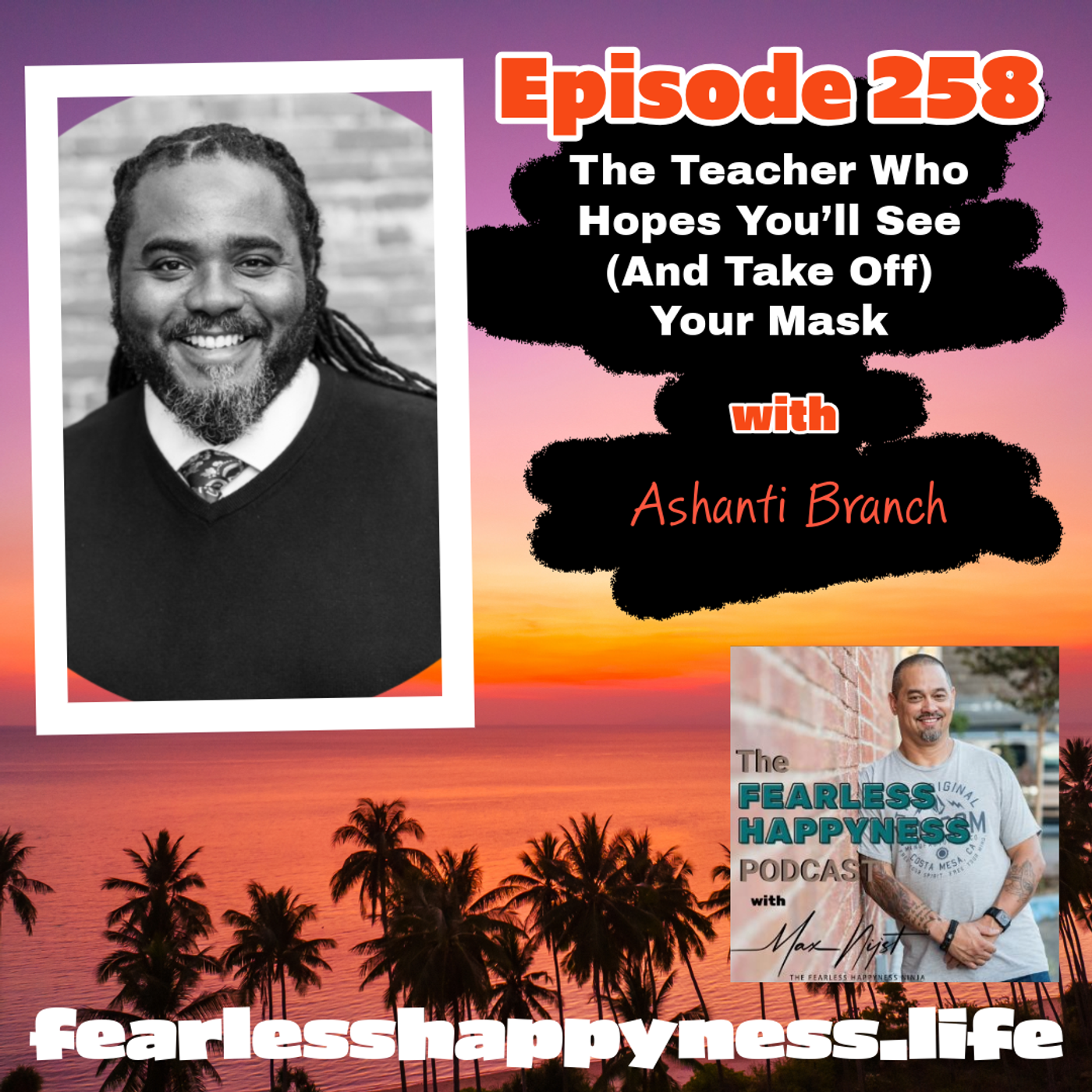
In this engaging conversation, Ashanti Branch shares his journey from being a fatherless son to becoming a transformative educator and founder of the Ever Forward Club. He discusses the importance of mentorship, the challenges faced in the teaching profession, and the impact of emotional masks on students. Through his experiences, Ashanti emphasizes the need for empathy and understanding in education, highlighting the role of teachers in shaping young lives and fostering personal growth. In this conversation, Ashanti Branch shares his journey of personal growth, trauma, and the importance of mentorship in education. He discusses the struggles faced by students from challenging backgrounds and the impact of trauma on their behavior. Ashanti reflects on his own experiences with addiction and the healing process through vulnerability and connection. He emphasizes the significance of kindness, understanding, and building deeper connections to help others navigate their struggles. The conversation also touches on the definitions of fearlessness and happiness, highlighting the ongoing journey of self-discovery and the power of community support.
For More From Sober Coach/Substance Abuse Counselor Max Njist, visit
Max Nijst: Welcome to the Fearless Happiness Podcast, where we showcase phenomenal individuals who have overcome serious traumas, life obstacles, and challenges to find their own path to fearless happiness. Listen as Max Naist invites guests from all around the world to share their experiences and spread strength, hope, and faith. This is the Fearless Happiness Podcast. And this is Max Naist. All right, everybody. Good morning, good afternoon, or good evening wherever you are in this world. This is Max from the Fearless Happiness Podcast, coming back to you again with another amazing and special guest, Ashanti Branch. But what I like to do, Ashanti, is have you introduce yourself, who you are, what it is you do, and then you and I are gonna rock and roll. Well, â first of all, I'm thankful for it to ha that you have me here. Thanks for being with you. â I'm I don't know, I feel like I'm tongue tied. I I think I'm So excited to be in this conversation. â I'm a Shanti branch. I'm from Oakland, California. â I was raised by a single mother. I'm a I'm a son. I'm a I was the oldest of four. I'm a big brother. â I'm a I was raised as a fatherless son. My my father died before I was born. â so when I think about all the different hats and â p â metaphorical masks I have to wear, they take on a lot of different titles and roles. â but I think I early on my my journey, I was just trying to figure out what it meant to be a man when there was no man at home teaching me how. And so â it's been a long journey. And I think every day it's â I get to do this work. I get to support young people around their own development and growth. Our primary work started through an organization that I'm the founder of called the Ever Forward Club. â that was started in 2004. I was a first year teacher. â and so it's hard to believe that it was twenty two years ago. But what I realized as a first year teacher was that there were smart young men in my classes. who are failing algebra. I'm like, look, you're too smart to be failing this class. I like you. There's a lot of these teachers who don't like you. So go fail their class, but don't fail this class. You know what I mean? But I was really trying to help them see that they that their their ability to pass wasn't in anybody else's hands but their own. Right. Whether they were fourteen or whether they were eighteen. The choices you make now are becoming and building you to the man you're gonna be when the world says, Okay, you're an adult now, you're a man. Enjoy. Figure it out. Right. Nobody cares your problems. And I think I told I would always tell my young people, look, you're only gonna be young for about four more years. And after that, you're gonna be old the rest of your life. So in these next four years, while people still remind you about deadlines, while people still will pull you along and help you sit you down and bring you at lunch and do some work with you, well, invite you to come in after school on their time to support you, take it full advantage of it because after this It's all on you. And if you don't get it, no one's gonna care that when you were fourteen this one teacher didn't like you. And so you got opportunity right now. So I was really trying like paint the world in real pictures for them and not just some metaphorical like if you don't get this education, your life is gonna be horrible. I wasn't trying to use scary tactics. And so every forward club started and then I started the Million Mask Movement after we were featured in a documentary called The Mask You Live In. And the â the Milion Mask Movement is a reflective tool. â It's about this emotional mask we wear. We we have three parts. The front of the mask, the things I let the world see, the back of the mask, things I don't usually let people see. And we ask people to draw a picture to represent some of that. So and that's what that's the work we're doing right now in around the world. Well, one, I I I'm like I I am gonna tell you like it's an honor to have you here, right? A a teacher. I wish I had a teacher in math that was like you. That's it. You can pass my class. I ha My experience back in high school was quite the opposite. I was called stupid and I ended up leaving his class, right? And not all teachers were like that, right? And because really I I struggled with math, where I always tease that â my father was really good at math, and a lot of my cousins are on my father's side, right? Like it comes to him naturally. My dad came to this country, became a citizen, went to the library, learned math on his own. That's because he loved it, right? Like But my brother and I, my little brother and I, and God rest my little brother, so like we always tease that, that that gene went by us quick. Like it didn't stop for us, right? Yeah. â but it's but I did have a teacher in English that sounded a lot like you. She had more faith in me than I had in myself. And she knew I could do the work. And â like one of my regrets is not going back and thanking her for that. You know what I mean? Like 'Cause getting caught up, you know, as a senior, I'm doing I'm going to the Navy, I'm gonna go travel the world, but which we jokingly I told you I never really I went to San Francisco was the farthest I went and they got stationed in Long Beach, right? Which was twenty minutes from my home. Anyway, â that's another story. But, you know, that then there was that teacher who truly you could tell cared about her students. And I think more so the ones that struggled, right? 'Cause she knew I know what you're doing. You're only trying to do this so you can play sports and then you don't want to do the work, but y I know you're smarter than this, right? I see it now, but back then I was like, God, she's mean. You know what I mean? Like she doesn't like me, right? She sits me right in front of her and this and that. And I'm like, â man, like you don't like me at all, do you? But I ended up passing her class, you know, and and grip getting a B plus on the final so I could graduate. If I would have got a B or a B, I would have failed. That was it. Yeah. But Well that that you know, teachers are amazing, right? And I think that, you know, Miss B P was that teacher for me, right? Miss B P she was my English teacher and I hated English, right? So it was like this idea that like, what? And I had all kind of excuses about, okay, if if we're reading, and I could read. I knew how to read, but I there was rules about being too smart in my school. So I would be just timing it. I'm like, okay, she calls on him, then she calls on him, we're going in a row. I'm going to the bathroom when he starts reading, right? And I'm gonna be in the bathroom. For at least fifteen minutes. 'Cause when I get back, they're gonna be past my seat and she would always be like, â Mr. Branch, you returned. Let's let's get you caught up right here. I'm like, â No, no, no. You you you don't get what I was â why are you tripping? Like I you are hey, I don't wanna take his turn, let him go. You know what I'm saying? â get me the next day. Get me the next time. Right. She's like, No, we no, we're gonna get back to you. We g we got you. You're you're here and I i it's it was the worst it was the worst, right? And she saw it. She saw me evading it. But she's the one who really shifted my life as a educator. And I think â when I look back, I did get to say thank you to her. I wanna like â like a miracle I got to call her and say, I wanna appreciate you. I don't think she I don't think she even got it when when I called her that how much she had a had an influence on my life, but I I knew it. And so at least I got to say the words, whether she could feel the impact or not, you know? Right. Yeah, and I know I wish I could have did that, right? And instead of the opposite with the the math teacher, I was like, you're you know what, I'm out, right? Never to touch math after that that year, you know, because but it wasn't only a teacher, right? Like I struggled with it. And then it happened with some family members, right? Where they didn't realize like, to me it and it is still to this day, it's been traumatic for me to be told I'm pretty much stupid when it comes to math, right? And â and I got â my God. So I was helping an uncle one time at a swap meet, right? To make a couple bucks and help him out, right? So someone buys something, I'd break out the calculator so I can give him the correct change. And he looks at me, right? And in front of people, he says, Why are you doing that? What you can't do it in your head? And I'm like, No. And then that was it, right? Until we got home. And then he told my mom, and then she did the same thing. You know, God rest her soul. But like then they wondered why. Math was not my thing. Like history, like stuff that would catch my attention or sciences, right? Where I could really like go, â cool. I like that. But you th you throw numbers and like you, it's like, hey, where Max go? â I think he went to the bathroom because yeah, I think he just won right and like you, I know the teacher would just go, There's something strange going on, but I know what's going on here. He doesn't want to be called on, right? But And the stuff that you do, it sounds like, right? You help people or young people understand that that's okay, right? Well, you can get there. You just have to figure out how to do it, right? And then in that like you and I are similar, right? My dad was not there when I was for they divorced when I was young. So I I grew up without a dad. And when you were talking, I'm going, God, we're a lot alike, 'cause I was trying to figure out what it meant to be a man, you know. And then even when I got married, you know, I got married young. How am I gonna raise my son? Because, you know, I my daughters and you know what I mean? Because I go, I've never had the father figure teach me how to do this. I gotta figure this out on my own. And as you and I know, like I I fell â for me, my experience is I fell flat on my face many times, like, oop, that didn't work, you know. Like, but I don't know about you, but I I know me and my private, like. Behind the mask, right? Because like you're right, I show everybody, â I'm good. Like you know, you guys are tripping. I'm fine, right? But behind the mask, I'm like in tears sometimes or angry as you know what. And, you know, telling myself, Dad, if you were here, I'd probably punch you in the mouth for leaving me so early, you know. Not even that it was it wasn't his fault that he passed away, right? But anyway, that's another story. So continue, like, how did you put that together and when did you realize like That's what your passion was and that was your purpose is to not only help people, you know, as an educator, but to learn about taking time to do some self reflection, right? Which you and I know in this day and age the world needs to do a lot more of reflection, if you know what I mean. â man. â man. I thank you for asking. â let me s so the journey to becoming a teacher â was a was let me tell you a quick story how it happened. So I was in â I graduated From Cal Poly San Luis Obispo, right? In engineering. So Ashanti's plan was to be rich. I I I w I did not plan to be a teacher. Like my mom was a teacher. I know how poor teachers are because we were poor growing up. So I with the when teaching called me, I was like, something is wrong here. There's no way possible that God wants me to do poor again. He already grew I was raised in poor. I was raised in apartments broken down big metal garbage cans downstairs, like I I I I all the things, right? Now we had a roof, right? So we had something. Maybe we had some top ramen. Maybe we had some crusty ass pancakes. Like we we had something. Right. Maybe we had some whatever it was, like it was she my mom knew how to put a nickel and dime together. But it wasn't like it was like, yeah, like this is what I want from my family too in the future, you know? Like it was like I want something better and something different. And so anyway, long story short, I went to engineering, started working engineering for five years, and then teaching called me. And I think that, you know, and I really appreciate you just sharing some of your story because I think when I if I was being probably more honest, I probably was on a r a couple of wrong roads in engineering. I was I was making money that I'd never seen before. I could pay all my bills and still party every weekend without even blinking twice. Like I would be like I still got money left over. How'd happen? I swore I burned through it all last weekend. I got more. And my engineering job, we got paid weekly. So it was like every week, it was like just deposits. It was like ching, ching. And I realized that, â this is a a new world. And I started partying a lot. And I realized that teaching wasn't on my radar. A friend of mine called me once and he was like, Hey, I need a tutor for Saturday at this program called Upward Bound. And I was like, Saturday? Saturday. I don't even know what Saturday mornings look like. I don't get up to Saturday at at least noon or one. You know what I'm saying? Like there's no what are you talking about? There's no way. I'm a I'm an engineer, you know? And he's like, dude, I I need a math teacher. Like I just lost my math teacher. I got these kids coming every Saturday. I need a math teacher. I'm like, you got two months. You know, I I I fought at first. I was like, I I I only get two days of party in a week. You know, so I'm working every other day. Friday and Saturday night is all I got. You want me to give up Friday night so I can be teaching some kids? Saturday morning. And so I was realizing, like, okay, you got two months to find somebody else. I'll hold this spot. Let I'll help you out. â and that first Saturday is when it all kicked in. This kid came in. I mean, I'll I sacrificed my Friday night. I was went there on early on time, getting ready for these kids. And this kid came in late. And he's like norm from cheers, right? As soon as he comes in the door, everyone's like, Damon. And so I'm like, Who is this kid? Like, what what what's what who is Damon? So Damon comes in, Damon gotta get a hug to everybody. Everybody gets a hug from Damon. High five, handshake, like everybody. I'm like, come here. Come, come here. Now I'm new. He's new. He know he knows everybody. I know nobody. And I'm them first day. And I'm also like, who are you? Like how you just show up here late? I'd have sacrificed a whole night of partying for you and you show up here late, like like this is your like red carpet. I'm like, you don't sit down here in the front today. He's like, â no, no, I sit in the back. I'm like Not today you don't. Not not today you don't. Today, since you showed up here late and gotta go give a hug to everybody, all thirty people in this room, you can sit here in the front with me. You know what I mean? And so I realized that moment that he started mugging me. He started giving me these looks, right? Like, who this dude think he is? So â in my mind, that week, preparing for the next week, I was strategizing what was gonna happen if Damon showed up late. I was like, I dare him to show up late again. I got a plan for him. Now listen, I'm only g supposed to be in this job for two weeks, two months. Like my buddy is just I'm only here for two months. Why do I care so much? Because there was a seed already planted in my soul that at heart I was a teacher. But I was my ego was like, There's no way 'cause teachers don't make money and I am not gonna be in a job where I'm not gonna make any money. So that's that's how it happened. It was like a these things were calling. Now I didn't just go become a teacher right away. I I saved my two months and I told my buddy, look, I'll stay. I'll stay longer. And I felt invested in those young people. And then when I when this calling on my heart again came to become a teacher, â I was more ready. And â yeah, and so teaching as a teacher, you know, I I come into teaching, not as a person who's always dreamed of being a teacher, because I didn't. I if you was if I was being honest, sometimes I was like, I didn't want to be a teacher. Something called me into this thing and I couldn't keep running from it. I mean, I could have. I imagine a few people in jobs that they hate, but they got stuck, right? They got stuck with a mortgage, they got stuck with family, they got stuck with responsibilities that the money couldn't they couldn't let go. Right. So luckily at that point I had none of those responsibilities yet. And I thought I was coming to teaching for a couple of years and go back. I th I literally thought I was gonna come do it, make a c make a couple of give my little Peace Corps time, service to the world, and then I was gonna go back to the money. And â that was twenty four years ago. â And I've I've looked back, I haven't haven't gone back. I'm not in the classroom anymore. I'm now running this organization, but it was a journey of like hi having to see the classroom, see what was happening in schools, seeing you know, I I've been a bad student before. So I know how bad students are treated. And so when I get a kid in my class who is used to being the bad kid and I I don't treat him like he's expecting to be treated, he just still wants to respond to me in ways that he thinks I'm yelling at him, even though I'm actually being really kind. I ha I learned that from my journey of education was I was helping young people see, hopefully see a shift in how education could be. And so we just try to make school fun. That's how the Ever Four Cup started. I was like, look, â I I had young men who would rather me kick them out of class than for me to tell them how smart they were in front of everybody else. Like they would rather put up a fight, like literally a physical fight, than to me to embarrass them like that by telling them how smart they were. And I'm like, dude, you You rather argue with me than let me help you? Like what's going on here? And I realized that that was their mask. They're I we won't use the metaphor of a mask back then, but I was seeing this behavior. And so when I started the Air Before Club, I was like, look, I'll buy you all lunch once a week. In exchange for lunch, teach me to be a better teacher. What am I doing wrong? Because I'm I think I'm smart and I can tell you're smart, but you're failing my class and these other teachers' classes. So what's going on? What what am I what are we what am I missing? Teach me. I'll teach the other teachers. And therefore we can r â make school work for you too. Because you're smart, but you're not acting smart. And so there's something going on that we're missing. And that's how it all started. That's how the you know, it was a it was a journey of like figuring it out. â because I think that oftentimes we miss the the fact that there's so much happening in the minds of teachers because it's not like I get to do it like a doctor. I don't get to be like, â you're my one patient for this moment. I get to talk to you and look at your stuff on the computer and have a conversation with you and then a diagnose what's going on with you. No, I got 30 of you at the same time, all talking to me, to each other, at no one. And I got to figure out how to give you what you need so that you can be successful in this academic class, knowing that you came from 30 different homes, 30 different experiences, 30 different lives. And I'm s and look, I'm not, I'm not making that that that's hard work. And so since teachers are expected to do that and yet we treat them and we pay them like peasants, then we expect them to continue doing this hard work. â in all the conditions that we create for them, the way our kids come to school stressed out, afraid, worried, definitely what we see in our world today. And so teachers are n teachers are more than just subject matter, right? They're counselors or mentors, they're doctors, they're socialists. They're everything in they're everything in one. You know what I mean? Like I I agree with you, right? Because as I get older, I've gotten older and matured and and look back at some of the teachers, you know, that I treated disrespectfully because I thought it was funny, or I'm trying to be the cool kid in class, or I just didn't like them. I realized, you know, and plus my wife works at the high school here locally, and and I it those are some of the lessons I learned, right? Because Her current students will walk up to her and go, Miss Lisa, I love you. Thank you for, you know, always being there. And what's cool, we go into town to go shopping, and an old pr â previous student will go, Miss Lisa, how are you doing? You know, and then they'll look at me and go, you know, your wife is amazing. She taught me she tr you know she she believed in me. And she's not a teacher, but she helps teachers with behavioral modification in the special ed classes, right? And and it's so cool. So get let me give you an it's 'cause I have I have you guys in high regard now, right? Maybe not back when I was seventeen, eighteen. But when I went back to college and found the teachers that even in college I go like, you can do this. I have faith in you. And I'm like, â cool, you know what mean? But like here's an example of what you're talking about, what I love, right? So we go to the senior night soccer game of one of her students. He's a senior this year. And it's senior night. So they get to do this little walk down before the game. And, you know, the announcer is telling them this is a quote from this student. This is, you know, he's with his parents. And it was, and every one of them always gave their favorite teacher, right? Like so-and-so likes this teacher. And this one specific student that my wife has had since he was a freshman says, â yeah. And Miss Lisa is my favorite teacher. Thank you for always. being there for me and and teaching me how that I could do this, right? Cause he was in, you know, he's in the classes like we talked about before, like, where â they they don't want to learn. They're bad kids. So we're gonna put them over here and we're gonna treat them this way. And that's how I felt the long you know what I mean? And when I was growing up, that's how I felt in school sometimes. I go, â you want me to you want to put me in that I'm gonna show you how good I can be then. Right. I wasn't bad, bad, but I was the one that was right on the edge. I could be good and I could be like the jerk where they just go get out of my class, right? I don't wanna see you. But I hold teachers like I do too. I believe you guys are f very underpaid for the work that you do. Yeah. Right. Cause I can look back and say, God, you know, when I was I can remember in our teacher when I was having a hard day, she knew it and she would put her arm around me, like, Are you all right? You know, we're gonna do the we're gonna get through this class today, we're gonna have fun, right? And I can remember that that's when you would go, Okay, someone cares, right? Like and like you, I had a single mom. So I knew she was doing her best to put the roof over our head, food in our bellies, and make sure we had, you know, our band tennis shoes and our, you know, our whatever we liked. And but like you, it's like, man. Like I was a jerk. You know what I mean? Like I I I'm yeah, I wish I could go back and tell some of the teachers, right? Sorry for being such a jerk, right? Because I thought I wanted to be cool. And I'm not just saying that because you're a teacher, but since this topic is coming up, I and I think we need to treat everybody like that, right? Well, we don't know what you guys are great at seeing a student come in and going, okay, there's something going on with a student, right? How You know what mean? Everyone and then imagine 30 of them, right? All different, like at the end of the day. Cause I as a counselor, right? When I do the same thing at the end of the day, I'm like, that was a killer day, man. Like I need to like I need to reflect. I need to decompress, right? So that I don't let it build up until the next day and then start like lashing out because I think you know what I mean. But â I guess what I'm getting at is right, you know. How because those are the challenges I want to find out about you now, right? Like what are at when you decided, okay, teaching is my thing, I'm gonna do it. When you had those tough days, what were those challenges who have shaped Ashanti who he is today, right? Yeah, you know, I mean, there's a lot of the journey of of life, you know, and I think about not just the teaching. If I I mean the teaching was one challenge of like, â imagine it's not the j it wasn't the job. It was the the h the ego, the heart, right? Because as an engineer, there's one thing when you tell people it's imagine you think about if you've ever had two different careers, you tell somebody about â there's one career and people get super excited. They get like, Wow, that's amazing. And you tell them about this other career and they're like, â okay. You throw you you know the difference, right? So as an engineer, you know, you're in a club or you're somewhere, you're like, â so what do you do? Because everyone asks you what you do. â I'm an engineer. They're like, What? Yeah, I build big buildings around the world, right? What? And then you the a couple of months later, after you switch careers, you tell them, â I'm a teacher, they're like, â wow. So so noble of you. Because they know first of all you broke. That's one thing they know. They know that they know that that you they they they think they they know what you're about, right? Because they have made up a story about what teachers are about, whether they had good experiences or bad experiences with teachers, they make up some stories and then you're just like, â yeah, like that's a big di I re I would never I I knew the difference of the feeling that people would give you when you told them what their what your career choice was. And so and but I was now a caveat it. I'd be like, But you know, I left engineering career to become a teacher and then you get a little bit of brownie points, but Yeah, I was like, why am I having to do that? Why do I feel the need to do that? Well, because I think that your heart wants to feel like y you matter. Right. I think this it's one thing to have a student after many years come back and say, Man, branch, thank you. But when they're teenagers and they're in the moment, they're not really thinking about how it's gonna affect them in the future. So they they may be they may be selfish, they may be dismissive, they may not even get it. And so I think the part of me when I was creating Ever Forward where I was thinking about like All the things I went through, like when growing up in Oakland, you experienced lots of stuff, depending on who you hang out with and whatever. Right. And I experienced some crazy stuff, right? But I also remember like my mom was she was overprotective and she was more like she'd always be checking stuff. She'd be like checking my pockets. She always thought somehow I was doing something wrong, even though I wasn't, right? Right. So I so I was always afraid to do something because I was afraid she was gonna check my pocket. She would I come home, she's like, let me, let me. Your eyes red. Come here. Let me see your eyes. Let me smell your clothes. She's smelling my clothes. I'm like, what's wrong with you, lady? Like, what's what's w like, I'm not a kid who's doing nothing. I wasn't even I was more afraid to do stuff than than anything. But I think it was like all that was more of like her way of protecting. She didn't know any other way to protect. She's a woman. Right. She's my mother. She doesn't know any other way to protect but to be like mother bear, who is like swatting away anything that she thinks is dangerous, even if I think it's fun. And so It was it was that kind of growing up where I didn't really know. But also that, you know, there was a lot of trauma too. So, you know, â my mom got married, I was like thirteen, twelve. I thought I was gonna finally have a father, and this man was not kind, nice, caring, loving. He didn't love us, you know. He loved his son. He loved the the son that was created by him and the rest of us, we were the peasants. We were just there to serve the the prince, you know. Right. â and it would became it became very ugly at home, right? My mom took his side a lot of times and I felt like, how dare you? Like what's wrong with you? Like so her my relationship well, I feel that right there. Like my relationship with my mom began to suffer. So it's like there's childhood stuff that happens that you know I'm a old d I'm a dude with gray hair. Like how am I still feeling this feeling, right? Because it never got dealt with. Right. There's nobody to talk to about it with. You just stuff it. You stuff it, you bury it. And I think what I saw with young people, they were doing so much burying that they were exploding. They were like taking it out on other people. So I'm a teacher, right? Right. They need somebody to take it out on. I tell them put your pencil away or put your paper away or whatever. And they got they needs they need somebody to take all this stuff that they've been burying out on. And hey, I'm a good excuse. So hey, I'm gonna yell at Mr. Branch because he ain't gonna yell he may yell back, but he ain't gonna hit me. I'll make I make cuss at him, he ain't gonna do nothing to me. So I became like this punching bag for a lot of them. And I'm like, hey, hey, I ain't your enemy. I ain't your enemy, buddy. I'm not sure what you I'm not sure what's going on right now. And so I think what was happening along the journey of becoming a teacher was like I began to re re feel those things coming back up of like, â this kid is having a meltdown. He wants somebody to blame, he thinks he should blame me. could I could puff up my chest just as much. You know what I'm saying? I got a loud voice. I got a big stature. And sometimes I was doing that. That's what and now I realized it wasn't that wasn't the answer. The answer wasn't me punching back. My answer was me, but wait, what's happening here? Let's let's take a step outside. Let's take a I I'm not sure what's happening right here because you're treating me like I'm I've harmed you and I've I barely met you. You know? Like and so I think what what what it was was my learning of like all the stuff I went through watching these kids come to school going through whatever they went through and I wasn't coming in as a teacher who only cared about your academic. I I cared about you. And it was that th those were the lessons that I think were what helped make me not only I think a good teacher, but also who was doing more than just teaching. When I when I started the Everford Club, I told these young men, look, like tell me what I'm missing because I know that I I c I I can do better at this, but you can't just not do work. You know what I'm saying? Like you can't just be in my class and I just pretend like you're like you're I can't, I'm not passing you because you're a nice kid. Right. You have to earn this pass. You're capable of it. And I think it was like me shifting the gears of trying to be like, I know everything to I know nothing. And I'm helping I'm asking you to teach me so that I can be better able to serve you. That's I love it, right? Because you've you touched my heart in a way, right? Because in my recovery. There's this saying that says, the longer I stay sober, the less I know. Right. And if I look at life, that means I'm always gonna learn and I'm always gonna be the person, like when someone's struggling, going, hey, here's my hand, come grab it. I'm here to help. Right. And I've learned that just like you did in my counseling career, right? As a substance abuse counselor, is they're not lashing out at me per se, but somebody that's saying you've heard it, hurt people. hurt people, right? And until I can get to know them and what's really going on, I cannot. And when I was, you know, when I was fresh, of course. And you know what I mean? I'm new, of course. Like I react, right? But thank God I had this program, right? You know, and and everybody just know I'm not pushing any like, but you know, thank God I did the 12 steps and I learned from great men and women. That's right. To learn to respond instead of react. Right. Cause I could have hurt a lot of clients if I just reacted, right? They would have like, see, this is why I don't want to be here. Cause Max, he's a jerk, right? He doesn't know what he's doing. but you know, it took those learning lessons like you, like it said, like I'm sure you did where you've fallen flat on your face and go, Ouchs, that hurt. But what did I learn? What can I learn from that and do better? And I do exactly what you do with my clients. I tell them, you tell me what I can do better so that I can help you and support you in this journey. Right. And I've learned to do that over the years, right? Where I had to push aside the ego, right? Say, â you know, I'm a recovering this and I was so bad and now I've changed my life. Look at me, everybody, because now I'm this and I'm great. You know what I mean? I I But I love my mentors and stuff that would help me smash that ego, right? When I needed it bo most. Because if it wasn't for them, you and I wouldn't be speaking right now, right? You know what I mean? I would who knows where I could be. But this is where I I knew this was gonna be a great conversation, right? Because every time I think to myself, when I have to reschedule, we have this, this happened or this happened. I go, because God is fine-tuning this. Conversation. So when they meet, it's gonna be great, right? And that's right. Like I said, from from coming from a perspective of teachers suck, they don't know how to teach, right? They're mean. They don't like me to you guys are underpaid. I love you guys. I think we need to pay you like double all of your salaries because of what you right. And I hate to say this though, but you know, tell me if I'm wrong, Ashanti. But like in Oakland, right? A lot of Oakland is synonymous with. Gang life, right? Like poor and and just having it rough there, right? And like you kind of alluded to how you grew up, you know, not having a lot of money. That was probably an element that was tugging at you, right? Where when you were growing up. Yeah. And for you to to, you know, tell a kid that grew up in that grew up, because I'm only telling you because I know from experience from talking with my wife, wife. Right. Where you're talking to a kid and you know there's some stuff going on. Yeah. And for when you tell them, hey, I have faith in you, you're smart enough. That's right. They look at you like at first, like you're speaking a foreign language. No one's ever talked to me like this. So there's what do you want from me? Right. Like, yeah. What do you I don't have nothing to give. So what do you want? What is this all about? Right. Until they finally realize, no, Mr. Branch is just he cares, right? But you know, because you've been in the you've been doing it for so long, it's like sometimes a hard shell to crack. Talk about some of those moments, some of your toughest students where you like, Okay, God, I don't know why you put me here, but I'm about ready to walk away and go back to engineering. You know what I mean? Like I wanna tell you like what you just said and those the the two pieces of what I want to reflect on is â see when you talked about addiction and like mine were food. Right? So when when my early trauma â I mean I was sexually assaulted at eight years old at a at a camp. â I didn't tell my mom about it. I I I was the oldest. Like, first of all, how dare like some I blame myself for like somehow letting it happen. I've I've I I I knew that my mom, if if I told her, I knew she would have flipped out. I mean, she she gets mad when I forget to sweep the floor. Like knowing like somebody did something cr to me, right? So like I was like, well, if I tell her, she's gonna go go crazy and then she's gonna get taken away from us. And so at eight years old, I'm making adult decisions to protect me and my siblings future. So I had to stuff it. And so the way it was always good to be able to stuff it, because I was a stocky kid, was just I just, I mean, I didn't I mean I wasn't thinking, how do I deal with this pain that's going on inside of me? I just was looking for comfort and I went to food. And you're a big kid. People think you like to eat, and you do. And so you turn it on to food, and food became the thing. And food and candy and food and candy and all the delicious things just to numb away what I didn't do I couldn't deal with. I wasn't able to deal with. And I didn't realize â that food addictions until I became an adult, what I I thought I just liked to eat. But I realized I w I didn't realize I was using food for comfort. Right. And I realized, â that's where that's what's happening. â and the reason was your escape, just like drugs for an addict. You know what I mean? That was your Absolutely. That's how you numbed all those feelings. Because at the moment you were getting the endorphins your body and your brain needed because you said, â food good, just like if it was me, â drugs good. I don't have to worry about anybody else now. I'm where where I need to be, right? Sorry for interrupting, but I I just I want people to understand that addiction is an addiction, whether it's gambling, food, sex, drugs, alcohol, it all affects us in the same way. It all the same receptors, right? And and it's just as damaging as someone doing a drug, right? Absolutely. Absolutely. And that part of the journey of like as a teacher, when you see a student acting out in a certain way. They're they're trying to solve some kind of situation, some kind of problem. They're looking to solve their all their own problems. And sometimes you're trying to tell them, listen, â I don't know what's going on with you, but â listen, somehow what you're demonstrating in class is that you don't want to be talked to, you don't want to be helped, you don't want to be cared about, you don't want to be smiled at. Like everything I'm trying to do, you are punching it back like I'm somehow trying to harm you. And I don't know what you've been through, brother. Right. I don't know what I don't know what what's happened to you in your life that has got you so angry at people who are trying to help you, but it wasn't me. Right. Like it's not me. I've I isn't I didn't do it. But I'm asking you to like help me help you because ultimately this is not my life. This is your life. Right. You know what I'm saying? And I think I was what I what I learned in the journey of like not only education, but also my own self is I was seeing right or sometimes I was seeing mirrors. I was seeing mirrors of angry little kid angry little young men. Angry, maybe not little, but angry young men who were just like raging out. We we go today they call them crash outs, right? Like I watch these videos now and I see students crashing out. â I'm like, that's an emotional landmine right there. Right. There's it wasn't that one little push. It was the twenty, thirty other pushes that they ignored and now they breached the blind. Right. Now what we got? We got an explosion happening in the middle of the hallway. And everyone was like, why did you take it? Why do you take it so serious? Right. You just missed the fact that he was already full. You stepped on the landmine. Yeah. And that's what we continue to see. Right. The old saying is that was the straw that broke the camel's back. But people don't rem that was the piles, right? Of right. Of not having an out, like or someone to talk to. And, you know, thank you for being so open and vulnerable, right? But you know, being sexually assaulted when you were young. How did you right tell the audience? Because this is a big part of my podcast, is like talking about those kind of traumas and struggles that you've gone through, right? Thinking, because you're the oldest son, right? Yeah. I've got to hide this because I don't want to upset mom. I don't want to upset my other brothers, right? And how did you finally recover from that and deal with that. Did you get therapy? Did you finally talk to someone and go, hey, this happened when I was a kid? How did that go? Man, so, so it was 20 â 16. I was at a in a fellowship at the D school at Stanford University. â we were building the Ever Forward Club, really trying to figure out how to grow the movement. â I had some â colleagues with me at a workshop in Oakland. a man in that workshop when we do our work around the mask We go around and people share something they're willing to let people see and know about them. And he shared in this circle that that it had happened to him when he was young. Man, I heard when he when I heard it, up until that moment, I had pushed it so back far in my in the recesses of my brain that I forgot about it. The addiction had taken over it and I couldn't even tell you why I was because my addiction w it wasn't like I was stealing food to eat. I was just going and buying a bunch of unhealthy stuff and I was eating it because it was it was it was mine, right? Right. So when he said that in that workshop. Something like lo a light went on, a a connection happened, and I'm like, â man, why am I feeling so deeply impacted by this and I'm this man telling the story? And I remember the workshop ended, we all went home, we packed up the materials, I get home, and that next morning, â like he was still his his words were ringing in my ears 'cause he shared â some of the details of the story. I'm like, why why is this man keep coming back into my mind? And I'm in the mirror and â yeah. So I'm in the mirror in the morning, just getting ready to brush my teeth. And I remember the day I got home after it happened, right? Right. So I'm in the bathroom. â I'm â what I was experiencing was just pain, but I was also like, what's going on? I think I was probably crying in the bathroom. And my mom was like, What's going on? And I was like, â nothing. I I hit my head on the on the edge of the, you know, the counter or something. I just made up a lie. Like something just to get her off the back because I need to like keep her away from whatever. But I'm like, â I just h hit my head on this thing and I'm j and I'm I'm fine. And when I was in the mirror as an adult after this workshop, this man shared the story. I'm brushing my teeth. I'm looking at myself and I remembered being eight years old in the mirror. Flying through the door I come fine. Like I knew my mom loved me, but I didn't know if her love could survive that story. Right. So I buried it. And I said, She could never know. She could never know. But in the mirror, as an adult, trying to just brush my teeth, I'm like, w â my God. Like. And so it was like this moment of just kind of coming back. And it was a moment of like, â Ashonti, you have. carried this w wound. Like it didn't even get a chance to scar over because you never talked about it. You buried it. You just kept covering it with new bandages of new things and new cookies and new cakes and new pies and new foods. You just kept covering it and it's still gay it's just oozing out. Because it's still festering off after all fester, you know? That's right. That's right. And it was that moment of like, okay. And then I was as an adult now, I'm like, â I can definitely never tell this To nobody. I don't have anybody I trust to tell this to. Are you crazy? Like what's going on? So then I'm in an adult mode, remembering it again, but also like, n â I can't talk about it. And I think it wasn't until just moments like I went to a men's retreat and I remember and I remember at this men's retreat, â I said it for the first time. Like I I I I mean it was it didn't it wasn't like easy. It like, â I mean tell this. It was like I was I was f avoiding doing the hard work of like letting go of it so it could start healing because it wasn't ever healed. Right. I I buried it for twenty plus years of a l as an eight year old kid. And it was that moment of like, â we, this is what happens. And so now as as an adult, me being able to go back and let that little boy know that you I'm sorry you felt alone. Right. I know that you did the best you could. To try and be the big brother for everybody, to be the oldest son, trying to be responsible and carrying all your own stuff that you couldn't talk about. And that's that I so I don't know that it I'm still working through it. I still feel it right now. Like it's still it's not a wound per se anymore, but it's still raw. 'Cause I don't and I think I'm still, you know, I mean I'm I'm I think I'm I've I've found s â healing through helping others to know that they don't have to do it alone, that they don't have to try and figure it out by themselves if they don't want to. If they want to figure it out by themselves, I know what that's like. I'm not gonna tell you it's gonna mess you like, hey, I've had a good career, I've had a life, and doing the best I can, but I've found so much peace on the other side of like, I'm not alone and I don't have to pretend like I am. Yeah, and I love that, right? For one and for thank you for being so open and honest and and right, courageous in my book, right, to to show. That still hurts, right? Like it like you're right. It's a process that is ongoing, like in recovery, right? Like I am not cured because as soon as I've I I forget all the hard work I've done and go, you know, for instance, I if I said, Hey, Ashanti, you know, I'm good, man. Let's go have a beer after this, right? Like that could happen if I'm not careful. Right. And I know there's, you know, and I'm not pushing any specific way to get clean and sober or heal old wounds, right? But what I've learned, like Ashanti did, is I didn't have to do this alone, right? When I got to the dreaded four step that they talk about in the twelve steps, it wasn't so it was more dreaded the first time when I just kinda go, â yeah, I'm gonna tell him this, but he's not gonna know that. I'll I'll tell him that, but he's not gonna know this. Right. And then four relapses later I figured I was still holding secrets and I was still hurting. Yeah. And the only way I knew to to cover that pain up was to go back out and do the research all over again, right? And the and the fourth time was only a one day, one time use it, but it felt like I was out there again for 20 years going, â my God, I can't do this, right? Like I can't. Like I gotta do something different. And and I've shared this on the podcast before. I mean, I I literally looked in the mirror and then I turned to, you know, and I looked up and I said, God, I Give you this promise. You keep me sober. I promise I will do the work to stay sober. And I've been here almost over 22 years now, right? And I've but the thing is, like you, I didn't I hadn't have to do it alone. And the people I help, I let them know this is you do not, whether it's with me or in a meeting or whatever you find, find your your tribe and do it with other people. Find your connections, I say. 'Cause I learned something from a a journalist on a YouTube talk I saw, â TED talk, and he goes, Everything you we know about addiction is is wrong. Right. So he he goes through this whole thing, he talks about addiction and and I love repeating this because I want new listeners to hear if there are lit new listeners in my audience. He says, What is the opposite of addiction? Right. And you can hear the crowd going, sobriety, recovery, right? And he goes, No. He goes, What I have found the opposite of addiction is connection. We need to love on our suffering addicts instead of shaming them or sending them to prison or jail because they're only doing what their DNA is telling them to do, right? Because I have addiction on both sides of the family. Right. But then I'm hearing your story and I'm like I felt it because I remember. You know, like I still think about I can remember everything like it was yesterday when I made that decision to go, okay, my life is in your, you know, and I'm not pushing God or church or anybody, but this is what happened for me. God, my life is in your hands. Right. Because here's what I learned. Yeah. And I got taught this, right? You want to hear God laugh, tell him your plans. And I've done that so many times and I've heard a loud laugh in the back of my head, you know, after I like, shouldn't have done that. Right. And I could hear him going, I told you so. I told you so, man. I shouldn't have done that. Right. But but like you say, we find our journey, right? We find what heals. And this is what I'm getting at, right? Everybody is like Ashanti did, and is be kind, right, to the people you coming, whether you're a teacher or at work or going to the grocery store, try to be kind because that door you open for someone and let them in, they may look at you like, You know, wow, like someone cared enough to open the door for me, right? Or a kind hello, right? 'Cause they could be going, like you said, students, when you go, what's going on? Right. Like I'm not the guy that did it, but I just I'm here to help. Like, but you gotta be honest with me, right? But you I'm sure you've seen that on your daily activities. Like when you say hi to someone, they kind of give you a look like, Wow, someone cares enough to say hi to me, right? And and we don't know what they're going through. They could be having the roughest day ever. And That hello might have saved their life, even for that one minute. You know what I mean? And and that's what I've put this podcast together. That's why I'm so grateful for guests like yourself who are open and willing to get vulnerable and and share their story, right? Because you and I be, you know, if we've helped one person today, Ashanti, we've done our job. Like and that's a good thing, right? I think what you described is so beautiful is like that that question when people ask how you're doing. is often used as a greeting. Right. Right? And what most people when they answer it, they're answering it like somebody just greeted them, so they just say an answer that's easy to keep the greeting moving, right? How you doing? I'm good. I'm fine. How are you? I'm good. I'm good. Somebody you probably had a situation where you asked it, they asked you it back and you asked them again 'cause you didn't even hear it the first time they answered. So you're kind of in just like a greeting loop and you basically think you're asking people how they're doing and you're not really asking 'cause you're not really hearing it. And imagine that. Imagine that that's the work that we're talking about. Like I I think â yeah, I really appreciate you sharing because I want to tell you I I've you know I've been to for food addicts, I've been to these meetings and whether you go to meetings or not, I believe in God and I believe in a higher power. â I I'll never forget the first few times I heard them read these promises, right? Like of like what happens on the other end of this the bottom of this bowl, the bottom of this pot, the bottom of this pie, the bottom of this c like whatever I was using as the substances, I I didn't even think of it like that because I just like to eat. I'm a big guy who likes to eat, right? Right. But these last two promises that I wanna share are two that always come back to me. Even though I'm not going I don't go to meetings per se anymore, but I I know that I'm I'm in this journey. I've been on literally on the last five months on this plant-based diet, really trying to reclaim my health, right? My my health through with the things I eat. Number eleven of the promises says We will intuitively know how to handle situations which used to baffle us. And I'm like, â yeah. Well Friday after I had a long week and I just want to go to nation's burgers and get a burger and a pie. â I that's what I thought was the way of dealing with the all the stuff I didn't want to talk about or think about, the the the disappointments of the week, the frustrations of the week, the not completing that deadline, the whatever. And then number twelve said, We will suddenly realize that God is doing for us what we could not do for ourselves. I love And as a young man who grew up in church, I realized like there's so many times I remember just being in the mix of madness and realizing how did I even make it home that day. Like I mean yes, food was my product of choice, but when I was an engineer, there was many days I was out partying in San Francisco and I I didn't take the a taxi through that tunnel across the bridge. Do you know what I'm saying? Right? Like this and it wasn't like I was drunk, I was buzzing, but I was definitely that buzzing is drunk, right? And I remember like, John T what are you being stupid for? Why what are you doing? And if it wasn't for God taking the handle that wheel, if you well I know for sure that â that people have died for less, with less doing less and I realized, â my God, he was he was pr he was protecting me when I didn't even know. he was looking out for me. For an eight year old boy, he was doing the best he he's a I I got a problem. I'm protecting him. Yep. Because he is going to help others in the future. And I've and I've seen young people who have thrown their lives away because they were just carrying all this stuff together. And I said, if I can help another, not have to go through it the way I went through it or to navigate it in better. That that's the journey. And these young people who I see where you were talking about like, why are you helping me? Like what do you want? Like they like they think that you you sh you want something from them because they've never had anybody help them and you're like, I don't I I'm not sure why they put you in my class. I don't make I don't make the schedule. Right. I just I you know I'm saying you just happen to be in my class. Like I you wouldn't not care about you and sometimes you can watch them like want to wrestle with that answer. Like Yeah. Like and they don't know what they pull you off my back. Yeah right? Because Right. I just want you off my back. I'm like, well, this is what caring looks like, brother. Right. So if you thought caring looks like letting you do whatever you want, then I'm not gonna question how other people care about you, but that's not how it looks for me. Right. Like I care, so I'm asking you where were you yesterday? I care, so I'm asking you why you didn't do your homework. I care because I'm asking you why a smart kid like you gets a zero on a test that you can get a hundred percent on, because I know you're smart. And that's the thing where it's like Helping them see it see themselves differently. Like you said, that teacher did for you. Saw more in you than you saw in yourself. Sometimes we just need that person to come along. But what if that person doesn't come along? Then we gotta find a ways, you know? We have but then that's our job to be that person, right? Like I learned like in my recovery with my sponsor, right? Like I didn't trust guys as far as I could throw â You know what I mean? Because I was raised by a mom and â to me, guys leave me. They abandon me. So And he's been my sponsor for over twenty-two years, right? And he knows everything about me. And I want you to switch something up on that number eleven. This is what I've learned after long term sobriety, right? So instead of saying, you know, we we intuitly know how to handle situations that used to baffle us, right? Now you're gonna say I now I intuitively know how to baffle situations that used to handle me. Right? It's a good way to look at that one. So a mentor taught me that. He goes, dude, after a while you're gonna understand it. And he did it that way. And I'm like, I get it now, right? Because now I baffled up. Now I think about those situations where I can do it the right way. And those situations are going, Man, that guy learned too much, man. We gotta figure something else out and try to baffle him again, right? That's beautiful. I I'm writing that one down because that's â that's I'm I'm gonna use that one. I'm gonna use that one. But â you know what, Ashanti, this has been an amazing time so far. But now I'm gonna ask you the questions that I teasingly told you I don't remember, but I do remember a couple, right? We're gonna start with fearless. Yes. Right? Because you have been open and and this has been an o like such an honor to have you here. But we're gonna start with fearless. Going what you have been through, and even now what you're currently going through, what does fearless mean to you and how does that show up in your life on a daily basis? Mm. â today, fearless means to me that â I am not or nor have I ever been expected to never have fear. But I've been asked myself every day, can I fear a little bit less than I did yesterday? Can I be afraid a little bit less than I was yesterday? And every every day I can be a little bit more fearless. Then I'm on a journey towards the the way I really hope to be able to live my life. I love it. Wow, that was how do you follow that up? Like, I don't know. If anybody was behind Ashanti, they'd be going, like, I can't follow that one up. That's good though, right? That's how courage is built, right? If I could be f a little less afraid than I was yesterday, then I'm gonna do it anyway, right? Yeah. Love it. Love that. Yeah. We're gonna ask my next question, happiness. And you see, I put a Y in it. I did that on purpose. Sometimes they get guests, they You know you spelled happiness wrong. I said, No, I didn't. I did it right. But knowing I put a Y in that, what does happiness mean to you today? And how does that show up in your life on a daily basis? Yeah, thank you. â I think I have given up the idea that my job in life is only to be happy. I think I at some point I was always like, Why my life is so miserable? Why my life is so but I was not ex accepting the moments of happiness and joy that came. I I want to find joy. So I w I I think I've I've learned to be finding ways of like knowing that my life is meant to be a mix of all the emotions, all the experiences that can possibly come and hopefully lean towards more joy in them. Right. So I think for me happiness means I am on a journey of doing and enjoying the days, knowing that some days are gonna be good days and some days are gonna be tough and maybe even I would call them some bad days. â but I'm gonna continue â looking to the the where where I think my strength comes from, which is a higher power than me. And I think that I I I hope to be able to invite others. Definitely when I meet those young men who I see are how they show up in my life. But when I meet young men who are just walking around just angry, I love just to say, Hey, can I ask you a question? Like what what has you so in this mood today? Right. And maybe they don't want to answer. Maybe they don't know what to say, but I I I try and like let them see that I see them. And I'm and I'm and I'm whatever has happened, I don't I can't fix it. I'm not here to try and f be a fixer. There's nothing you're not broken, there's nothing to fix about you. I hope that you know that everything that happened to you, if you're still here, you survived all the worst days and maybe the they were those lessons were here to help you help someone else. And so that's I'm laughing because I gotta tell you, I know you're a lot like me because I know when you see those angry people, like what you know what I mean? I I know you if you're like me, you probably just wanna h what up. Hug them and say it's gonna be okay and then walk away real quick and watch the look on their face like, what was that all about? Right. Just like I said, here's a hug, man. I l I love you, man. It's gonna be all right, man. You don't have to walk around like someone just I always say peed in your Wheaties or something. You know what I mean? Like, come on. But I know you'll probably think the same way when you see those students, right? Like I know they're having a rough day. I just want to give them a hug and tell them it's gonna be all right. Just put a smile on your face, right? It's gonna be okay. You're here. You've already did half the battle. That's right. Wow. I love it. This has been an amazing time, my friend. Thank you so much. I knew it would be. And yeah, you hit a home run. I mean, we could keep going, I bet, you and I, and spend hours on this podcast. But now I gotta ask you, right? If if people wanna reach out to you, Ashanti, they want to get a hold of you, they wanna ask you about your program or get to know you better. Yeah. How do they get a hold of you? Yeah, I so appreciate you for that. â they can find us our organization and the work we do at Ever Forward Club All Together No Spaces, Ever Forward Club dot or R G. And if they want to check out the Million Mask movement and anonymously share their three words on the front and three words on the back, they can go to million mask dot org. So everforward club dot or G and or million mask dot or R G and they'll find me there. I'm Easy to find. My my information's all in there. But yeah, I look forward to and they they can follow us on any of our social media under that channel as well, ever for a club. So I love it. Love you. I love it. Well, like I said, it's been a great time. And, you know, I've I've had an amazing time sitting here getting to hear your your story and you know having this conversation with you. But it's you're not quite off the hook just yet. Now I get to ask you my favorite question that is implanted in my brain because it's my favorite one that I ask of all my guests. And it goes like this So Ashanti, what is the one piece of advice you could give my audience to help them grow as human beings and become better people? The one piece advice I would im offer, unsolicited, but now it's solicited. It's a solicited here. So thank you for soliciting. â the one piece of advice I would â invite was is that â is this this phrase that we say in our work is that â there is more to you than anybody could ever see by looking at you. And so as you think about the people in your life who you care about, who you love, â who can you let get to know you a little bit more? And if you find that one person that you can get to know you a little bit more, maybe the invitation will be mutual and they will let you get to know them a little bit more. And I think that we begin to build that connection, we can definitely help people navigate away from the addictions that we see rampant in our communities, not only with substances, but even with these devices that young people that find themselves connected to. And so that's a long piece of advice, but just hopefully find people in your life where you can be more known. Fully loved. Love it. That's awesome. Amazing. Like I said, this was an awesome time that I had with you. So thank you again from the bottom of my heart for being here. Thank you for being patient with me through this whole process. But you heard him, everybody. This was an amazing conversation. So, you know, as I say, if Ashanti taught you something, if he made you think. If he made you smile, if Ashanti made you go, hmm, I like that. Please go to iTunes and leave a five-star review so more people can find the podcast. And come join me on my new YouTube channel where you can actually see Ashanti and I have this awesome conversation. So again, everybody, good morning, good afternoon, or good evening, wherever you are in this world. This is Max from the Fearless Happiness Podcast. Until next time. Are you tired of being weighed down by life's traumas and struggles? Join the Fearless Happiness Lifestyle and let us guide you toward a brighter future. Explore our past podcast episodes and get a copy of the Fearless Happiness book to ignite your inner strength. If you or someone you love is battling addiction or facing challenges related to unresolved trauma, know that we are here for you. Visit maxnates.org, â A X. N-I-J-S-T.org and take the first steps toward finding your fearless happiness. Thank you for listening. This has been a production of Fearless Happiness.


