
 Apple Podcasts
 Spotify
 YouTube
  RSS Feed
 Privileged Addict Who Had To Learn The Hard Way with Matt Grace |256
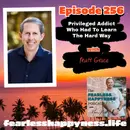
In this episode of the Fearless Happiness Podcast, host Max interviews Matt Grace, who shares his profound journey through addiction, recovery, and personal transformation. Matt discusses his early experiences in the addiction space, the challenges he faced growing up, and the enabling behaviors of his family. He emphasizes the importance of service in recovery and how his spiritual awakening played a crucial role in his sobriety. The conversation delves into the complexities of addiction, the impact of childhood trauma, and the turning points that led to Matt's recovery journey. In this conversation, Matt Grace shares his profound journey of recovery, emphasizing the importance of service, accountability, and faith. He discusses the struggles of addiction, the role of trauma, and the necessity of helping others as a path to healing. Matt highlights the significance of being fearless in the face of challenges and the true essence of happiness found in service to others. His insights provide a powerful message of hope and resilience for those in recovery and their loved ones.
Max Nijst: Welcome to the Fearless Happiness Podcast, where we showcase phenomenal individuals who have overcome serious traumas, life obstacles, and challenges to find their own path to fearless happiness. Listen as Max Naist invites guests from all around the world to share their experiences and spread strength, hope, and faith. This is the Fearless Happiness Podcast. And this is Max Naist. All right, everybody. Good morning, good afternoon, or good evening wherever you are in this world. This is Max from the Fearless Happiness Podcast, coming back to you again today with another special and amazing guest. I have Matt Grace joining me today. But what I like to do, Matt, is have you introduce yourself to my audience, like who you are, what it is you do, and then you and I, I like to say, are gonna rock and roll. Well, â first of all, thank you for having me on your podcast. â anytime I get a chance to talk about my story or what I'm doing, it's really a gift and an honor. â and I look at it as kind of my responsibility as well. â so kind of how this thing started, â I wrote a book. Actually, I used to work in the â addiction space. I started out as a recovery mentor where I would fly people to and from treatment. I mean, you you understand that business as a sober coach. Yep. â then I started my own consulting business. â I had a business partner who handled the therapeutic side â for the family stuff and then I handled the one on one recovery stuff. And it just got to the point where, â as I I'm sure you understand that â a lot of the families were the biggest impediment to their whoever was trying to recover. And so we we would sign people to â a one year contract. So it's not a nine to five job, right? It's â Putting out a lot of fires. They're calling me at Sunday at two AM sometimes and you know, you're beholden to the family. Right. And so â I just got burnt out and I didn't have a balance in my life. And I I want I think balance is important. Absolutely. And so then â one of the families that I helped, â I've been in s was doing sales for quite some time and he said, Why why are you doing that? He said, You know, you were so good at doing working in recovery. He's like, that's what that's where you belong. And so I kind of thought to myself, what can I do to try to give something back without being pulled in seven days a week? Right. And so I decided to write a book. â and the book is called â God Doesn't Relapse. I love that. I love that I love that. â and the subtitle is Sex, Drugs, and the Life That Almost Killed Me. And â because I also talk about sex addiction. â which doesn't get really it gets kind of swept under the rug. â why did I write the book? So the the book I wrote because there's three themes. One is enabling â and I use my family as â particularly my father as my greatest en enabler. I call him the Mariano Rivera of enabling. â The second one is what I'm most passionate about is service or volunteer work. Right. â and how that's changed my life and impacted my life at certain times of my sobriety. Right. At like even at eleven years when I lost my father, I started over like a newcomer and started just the one thing that pulled me out of my depression and my sadness was volunteer work. Yeah. â and I know that you can relate to that. So and then the third thing is, you know, the the elephant in the room, right? God. Right. And this country has moved more secular â since the nineteen thirties. And so the book is not religious whatsoever, even though I grew up extremely religious. â but as you know, â getting sober I had to let go of a lot of old ideas. Right. and so it's it's just really I guess one of one of my mission statements is that service can be your higher power. â but if you're really struggling With the concept of God, whether you're an atheist or an agnostic, right? â if if you just roll up your sleeves and and it doesn't even have to be correlated with any 12 step program, right? Because I've I've I'm getting a lot of now that I'm kind of entering this online stuff, I'm getting it, you know, attacked, which is fine. I love the haters. Yeah, me too. I'm with you. So â I'm just so passionate about service and what God has done for my life. â and when I say the word God. I have no idea what that is. I just know that I when I got on my knees for the first time and I asked God to spare my life, it was October third, two thousand four, six thirty in the morning. And I got on my knees and I said, God, if you don't show yourself, I'm gonna kill myself. And I had a white light spiritual experience that lasted twenty-five minutes and the obsession was gone instantly. Now, as you know, most people don't have that kind of awakening. And so I'm just I share a lot of other people's stories who I'm motivated by and have a lot of respect for. So it's not a memoir just about me. Right. I share a lot of other people's stories who've faced the direst of consequences and have come out on the other side, but they had some kind of belief in something. Right. So the title can be kind of, â God, you know, he's already mentioning God. But I talk about multiple pathways. â to a relationship with a higher power. And well, Matt, I love that, right? Because I I'm like you though. A lot. I have this, I mean, God intervened so many times, whether I noticed it or not, right? And I always like to tell the audience this, you know, Matt and I aren't gonna, you know, this we're not pushing any certain belief, like whatever that is for you, for us, it's God, right? And our stories, right, which led us to that point. And especially like Matt's, we have similar stories. We were talking before the the podcast here. But what I like to do, Matt, let's so, you know, they okay, Matt wrote a book. So let's talk about those things that those challenges, right? Like one year addiction. Like, talk about some of the things that have shaped who you are. Even those awful things that you and I, you know, really don't like to talk about anymore, right? Because it's in the past. But It's the things that brought us to where we are today. So I know my audience, I'm excited to hear about your journey and and some of those things. And then we'll dive into your book and some of those stories you talk about. So I'll I'll talk about my childhood â a little just a little bit because it is so unique â for someone who grew up privileged like myself. â I was expelled from two preschools. You started off early, huh? I I life was did not start well for me. Okay. â and then â by the time I got to kindergarten, I was I was a handful. and the school social worker told my parents by the time I was six years old that they were concerned I would turn out to be a criminal. And so â You know, back in the eighties, in the â late seventies, early eighties, you know, my parents did the best that they could and tried to get me the help that they could, but there was a lot of stuff that went on undiagnosed and missed. But one of the things that's important and as a matter of fact, in my book I I actually I put a paragraph, a disclaimer that that before the book starts that said if â some of the some of the content that you're gonna read might be difficult to read about. â because I don't I want the reader not to stop reading the book. Right. And so when I was a kid, I was cruel. â I was cruel to other kids. I was a bully. â out of all the things that I've done, and and this is before my addiction, that's what I have the most regret about. Right. â because and what people don't understand is that, you know, therapy or medication was only going to take me so far that I knew from an early age that my spirit was broken. I just didn't know how to put that into words as a you know, six, seven, eight-year-old kid. Right. So I was sent to a therapist, â starting at the age of nine, who â and I saw him three nights a week for nine years. And he came up with a very disturbing diagnosis â that I it was called, you know, an Oedipal complex. And at nine years old he told me that I wanted to have sex with my mom and castrate my father. And that was â what my problem was. So wait, wait, wait. He he your therapist told you that? Yeah. â wow. â and so you c as you can imagine as a nine year old kid, what how to process something like that. Right. So the first our first session session, I started physically assaulting him. And I assaulted him three nights a week for four for the first four years. And â I didn't get very far 'cause he was a big guy. And I was a kid. Right. So I would kick him, punch him, throw toys at him, and then he would put me in a sleeper hold and s you know, and then say, if you stop, you know, if I let go, are you gonna stop? And so I didn't know as a nine year old boy, I thought â that that was what therapy was, because he never mentioned anything to my parents. Wow. And so â you know, you would think that today. if a kid assault tried to assault a therapist like that, th it would be over. Yeah. Right. Like it's a different world today. So my behavior got worse. â I started â in seventh grade. I'll just do a culmination of the the I don't have time for every story, but I almost pulled someone on the expressway. I threw something out of a school bus on a field trip and it cracked this lady's windshield on the expressway. â wow. And â they â followed the bus to the off ramp and made a â and cornered the bus in. And that was the first time that I learned that privilege comes, you know, you you always hear powerless, but in in my story, coming from a place of privilege, I I came from power because my father paid her $25,000 to not press charges. â wow. And so â instead he arranged for me to sit in juvenile court because one of his circuit court judges was his friend And I sat in court all day and watched other kids get sent to juvenile hall. And I just sat there and there was no lesson learned. Right. And then eventually my father, â Detroit was a world class city at one point, but then by this time it was a a a tough place. And he drove at thirteen, drove me around the inner city and said, At some point they're gonna take you away from me and I don't know what else I can do for you. Right. So â Yeah, my childhood was was challenging. You could say traumatic, right? I mean nine years with the same therapist. â then I started sleeping throughout the sessions for months where he the he wouldn't say anything. So I would just sleep for months at a time. Finally he told my father what I was doing. And so my father came in to the sessions and then two of them just grilled me with questions as a fourteen year old kid. Right. And I just sat there and I and one of the lines in my book I said is I got from a Green Day â song. I said, The clock is laughing in my face. Right, because it's like I can't get get me the heck out of here. â so I should I talk about my the addiction partnership? Whatever you think â are I think you should, right? So give the audience a kind of an idea of what you've gone through. Right. 'Cause you and You know what I mean? Like did that therapist ever tell your dad that he was putting you in a, you know, chokehole and holding Of course not, right? No. So I'm surprised I'm sorry, just 'cause I have a thought. Right. â then I started â I s okay, so I I started using drugs when I was sixteen, but back up actually real quickly. My father introduced me to â prostitution, strippers, pornography and gambling when I was sixteen. Did he think that was gonna help you or something? I you know, I think he just wanted to I think he so what w one of the things that I talk about in my book is enabling. Right. And â I say that my dad was my was my best friend, but he was never my father. Gotcha. Those are two very separate things. Absolutely. So â God rest his soul, but I use a lot of examples in the book of what other families, what I don't want them to follow. Right. And you'd you'd be surprised how many men still want to buy their kids escorts. Wow. â so â the first time I ever got high, I â my best friend who's dead â died from this disease. â he crushed a rip pill of Ritalin and said, come over here and snort this. And that was it. I said, â my God, this is the feeling I've been looking for my whole life. And if I could bottle that feeling, any anyone who likes amphetamines will understand what that what that's like. So â it was just such an incredible feeling. Right. And from 16 to 29, it was â it was off the rails. â it it it impacted my life significantly. â I was I failed out of four schools, â was arrested several times. â I started committing felonies, but by the grace of God that I never got â arrested for. You know, I Got involved with the wrong crowd, broke into someone, you know, breaking into people's homes. â I got into identity theft. and I again, there's something out there that wanted to see me succeed because in spite of myself, I'm still here. So â what the interesting thing is when I started snorting Ritalin, â I went, I had a therapy session, and I told my therapist, I said, I found the best thing I've ever experienced. I crushed a pill in our session and snorted it in front of him. Right, as a minor. And he never told my parents. And I I'm pretty sure that he probably had a he should have, right? I'm sure he was obligated to. Yeah. That just goes to show you how lost I got in the shuffle. Right. so from Riddle in to Crystal Meth, so from sixteen to eighteen, it went from Riddle in to meth. â when I started doing math, I started â as I mentioned when we were â before the podcast started, I had a psychotic break. â and my friends had to sit on me because I thought people were jumping through the wall trying to kill me with chainsaws. And â my father flew out there. I â spent he gave me a credit card for emergencies only. But â I said, Well, Crystal is an emergency, so I started taking cash advances out on the card at ten thousand dollars and that's thirty years ago. Wow. And â he got my report card and my credit card bill, which was a â ten thousand dollars and a zero point zero zero. I went to one class in five months. â flew out there. Now to his you know, to his defense, my parents were total squares. And the the genetic predisposition really came from my grandmother's side, from my mom's side of the family. â alcoholism, but my parents didn't use, they didn't drink. So they were just kind of oblivious to what the signs were. Right. â even though there were many. And â my dad flew out, you know, said, Can't you just pull yourself up by your bootstraps? And then two weeks later, â in my dorm, I s was at 6 30 in the morning, was pounding on one of my dealer's dorm rooms, screaming at the top of my lungs to open the door, begging him to for meth. Right. Sitting just sitting there, pounding on the door. The RA came out, looked at me and said, Are you calling your parents or am I? Because I look I'm thin to begin with, but I look like death on a stick. Right. â I called my mom and I said, If you don't come out here tomorrow, I'm gonna die. â because I I O D'd. I turned purple, â had trouble breathing, went to the ER. Wow. The dish. Yeah. I I well I I say that because you're not the only one. I did the same thing. Really? But but I was by myself and you know, people would tell me back then you can't OD on meth, you can't OD on meth, and pr I proved them all wrong because I did such a big amount. I woke up the next morning and I don't normally share this with people, but I woke up on the floor in my room with a needle sticking out of my arm. Not knowing what happened. You know what I mean? I'm like, â my gosh. But anyway, sorry to interrupt. No, no. And you know, this is and I think this is good for people out there who are listening that may have a loved one struggling, right? Because you've probably seen it in your career and what you did. I know I have. I mean, I've had so many parents drop off junior or, you know, and go, We'll be back in ninety days, fix â Yeah. And you're like, you you I know you have that look like me, probably like, what? No, it doesn't work that way. It doesn't I'm sure for you that brought back some memories, right? My mom, you know, during my t I look back and, you know, she became a black belt in Al Anonon without even having to go to Al Anon. You know what I mean? Cause she kicked me out. She's you know what I mean, like she would just she got tired of it, right? And was like, you're out. Like go. I remember the first time she kicked me out. It was like a movie, right? I'm walking around with nowhere to go and it starts raining on me. I cried like a little baby. You know what I mean? Like this is where my life's going, right? But you know and I know. I just go, I know what'll fix this, right? And we continue the cycle. My mom, I came home intoxicated, severely intoxicated, spilled Kool Aid on the white carpet, the one place where I wasn't allowed to drink Kool Aid. â wow. And â I started laughing. And she took everything I owned and threw it in the middle of the street. And because my fa like I said, my father was the enabler. Right. And so I I knew to stay close to him and away from my mom. My mom was the disciplinarian. Gotcha. And so, â you know, not to tell a whole â drunkalog, but from eighteen to twenty nine, it was you know, crystal. I came back to Detroit because at that time meth had not made its way to the Midwest â in nineteen ninety-five. So I I convinced myself that if I just take pills and I drink Xanax and Valium, Ritalin or A then Adderall, â Vicodin, Percocet, then eventu eventually oxies, whate whatever, you know, the whole gamut, right? Right, right. And in and out of treatment, â drug court, sober home, â therapy, â outpatient. The whole everything that the the the treatment center industry has to offer. Right. But I you see, because I grew up in a state of privilege and a and in a bubble, I thought that the world owed me something. So I had this this ex this this in this horrible attitude of entitlement. And you know, I say I needed a root awakening before I had a spiritual awakening. Right. A lot of people have heard that saying. And so You know, finally, I came home from a three day crack and alcohol binge and I was living with my mom. I was twenty nine, living her living in her basement, setting the world on fire. Right. Actually a woman â a girl called my house and â my mom picked up the phone at the same time and she says, Do you live with your mom? I was like, â then I had to then I started calling girls from payphones. Yeah. Right. Just so anyway, came home. â my mom looked at me, started sobbing. I weighed 129 pounds, I'm six one. And she said, If you're gonna die, it's not gonna be in this house, get out, I'm changing the locks. Wow. And I knew that she meant it. Right. â and even my father â you know, decided to cut me off. And and so people say, Well what what really changed? It's when my â my when my parents took a stand when they drew a when they drew a line in the sand. Right. Right. When and what I'm hearing is is that today, you know, one of the things I talk about that was so upsetting is in the Detroit Free Press about three, four years ago, it had a three page article about a mom who was driving her son to the hood so he could buy dope and then get in the car, shoot up in the car and then come home. And I was really upset that the that a major newspaper would publish a story like that. Right. Because â the mother thought that she was she was helping her son. Right. No. I've heard of stories, so many stories like that, where they think they're helping, you know what mean? So you know, one of the things I say is that i I I held my parents, my family hostage. Everybody. I I lied, I manipulated, stole. â but most importantly wasted a lot of precious time â of employers. â I used to be a T V reporter for ABC. What? Yep. All right. â During my addiction. That's my book starts it with chapter one, where I come to work after drinking a half pint of vodka at seven thirty in the morning and taking I I can't remember, maybe eighty or a hundred and twenty milligrams of oxy and â I O D'd in the newsroom in front of my coworkers. â wow. I was drunk or high every day live on television. And my father got me the job. That was my father used to own TV and radio stations. Okay. And so â I every job I had he secured for me. And so why is that a problem? Well, there was so many other you know, it's so hard to make it to break into television. Right. Right. And so not only did I not appreciate the opportunity. that kids who were really trying to come up, you know, didn't have my advantage, who really wanted that job, I didn't even want to be there. Right. And I just lied. I mean, I â I I made up a story where I told people that I thought I had cancer. â I showed them a a a healthy picture of my esophagus and told them it was probably cancer because I was missing so much work. Right. and just you could go on and on and on with stories like that. â most of the employers I would I would come to work with vodka and my orange juice bottle and â my boss would say, Well what's in that bottle? And I'd say, Don't worry about it. So there's not too many people who can t say that to their boss. Right. And I mean you know, I mean, I'm listening to your story, right? And I I like I there's n during my heavy use, right, there was my job was just getting more. Right. As you know that right? Like that was my work, right? For nine years I had no work experience because I was doing my thing, as they say, right? And, you know, I could have said I was in sales, right? But I ended up sucking at that because I would do all my product and right. I'd always have to go but I I know like you're bringing back memories and and this is what I want the audience to know with addiction, right? Because a lot of people you know, I mean you've been probably hit up with it many times as I have, right? Where people goes, Well, it's a choice. Why didn't you just quit? Well, it doesn't work that way. Right. When you're in the throes of addiction, like your choice, you really don't have a choice. I mean, you wake up, that's the first thing on your mind. What am I gonna do next? Right. And to put it out there, right, I I would wake up with whatever I was drinking from the night before in a syringe full of meth, right? Just so I could get up if if I had it, right, to function. Yeah. Right. And not of all not all of us, but I like I that place I was telling you I worked at at one point, right? Which is n in Newport Beach, which I call the land of the rich and shameless, right? Because there's it's where movie stars live, it's where sports figures live, it's right on the beach, right? So, you know, â my first and I wouldn't say he was privileged, but one of my Clients was late to group. So I went to go look for him in the room. And there he was standing by his bed looking at the bed. I go, make your bed. And he goes, wait a minute. Don't you do that for me? That was me. Right. But this was cool about this kid. He I go, no, it's not my job, but I'm going to teach you how and I taught him how to make it military style. Because I'm ex I'm a veteran, right? Okay. But in that process, I had a cool encounter with him because he looked at me like seriously and he goes, I've never been taught how to do this. I I have people that do this for me. And I was like, wow, right. And he wasn't like being what do you what you said earlier? â that the w he he didn't feel that the world owed him something? Right. He was like, cool and I taught him, and every day after that he would make his bed. It's like he really wanted to get a it was weird because he was a kid from privilege, right? Very rich parents. And He didn't act like that, â God, I call my kids that, you know, the entitlement. He didn't have that sense about him, right? But and he really wanted to kind of like fit in, I guess you would say, with the regular folks, right? But it was very interesting and he thanked me for teaching him how to make a bed, because you know, I think I I think he stayed sober and I think Just that encounter with him, it's like he wanted to break off and be able to do his own thing, right? And be independent, not have to worry about, you know, hey, I need my bed made, you know, can you come up and make the bed? Like, right. Some of us, like, I don't know about you, but I've slept on the streets, I've slept behind bushes, and you know, it's it's not fun, right? And but I did kind of get that entitlement, right? When I got sober in my first year, couldn't get a job, right? And everybody's telling me the same thing. Well, we're gonna go with another candidate. And I knew. Why, right? I was a felon. Right. I'm not a serious felon. You know, I had no violent but mine was all about felon's a felon. Right. But so they're looking at me, right? And back then they were so, you know, they sent me the place that I was at would send me to these felon friendly places. And so I don't want to hear excuse you can't get a job because your new job is to go look for a job until you get one, right? And â You know, just a cause I love where this conversation was going, but I talked to my sponsor when I go, Man, I can't get a job. Like, I'm not, I don't know what to do. And he goes, Go flip burgers. Here's where my entitlement. I go, Man, do you know who I like I'm not flipping, man, do you know who I am? And he goes, Yeah, go flip burgers. And I'm like, â man, no way. I'm not doing that. I'm not flipping burgers. And he goes, Okay, you won't get a job then. And then so but I went home that night and I prayed and I said, Okay, God. You've kept me sober for a year. You know, I'll flip burgers if that's what you need me to do. And then then that next day I got a call from someone that I applied to. And it was a it was a cool job, right? My very first legit job in over nine years. And I made okay money. I got back into paying my child support and all that good stuff. It was one of those jobs. It was a get well job, but it made me feel really good because I felt like I got it right. Until I became willing to do whatever, you know, like flip burgers, God was gonna say you're not gonna get one until you become willing, right? And you know that feeling because I could hear it in your voice, right? The stuff you've been through. So talk about those moments when things started to change for the better, when you like that moment you went and got sober and you, you know, talk about from that point forward. Well, I think though it's important for â people to understand â is that the consequences were not sufficient to bring me to my knees. It was pain. Right. â deep rooted spiritual pain. I mean, I I I told you about the consequences. I mean, I I I I slammed into a parked F 150 going 60 miles an hour. You know, I OD'd at work at the it's, you know, so â consequences, th those that that didn't do anything for me. And finally, I was ready to die. I I I I wanted to die. And then my family just kind of gave me a little push because I burned every bridge. Right. â in my life. And I finally went to a men's group and I say that I had to surround myself with people who were going to tell me what I needed to hear, not what I wanted to hear. I love it. Yeah. And so with twenty one years of sobriety, there's been a huge shift. And I don't know if it's societal but also program related. But man, my I I picked someone to help me who lit me up. And he wasn't yelling at me. He just was very direct. Yeah. And, you know, basically he said, â I want to know what you give back to this program that saved your life. Right. And I said, Well, I drove someone to a meeting three months ago. And he's like, That that's that's not good enough. Right. And I I don't like being told what to do. I've always had â problems with authority. Right. Being expelled from two preschools. â And so â I told him to fuck off. I'm sorry. I told him to F off. That's all right. And â yeah, I'm trying. I curse, you know, when I when I go speak, I wanna touch on that at the end. But I speak to the I I s what changed my life is speaking to the â state funded treatment centers in Detroit that the guys don't have health insurance. Anyway. and three months later I came to my senses and we reconnected. And I I talk about that one conversation and I say that he cared more about my relationship with a higher power in my program than my feelings. And so for me it was all about being around men. â I did go to mixed meetings, but â I had to â women and that's a big part of my story is women were a big distraction for me. Right. â so I don't care who you are, if you go to any kind of recovery meeting and there's a a good looking woman that walks in, you are noticing. And if not, you don't have a pulse. Right. Absolutely. And so When I took the drugs and alcohol away, that's why when I was in treatment I didn't do well because I was so fixated on women. And I don't I'm not a fan of â dual sex treatment centers where they live so close to each other. That's a whole nother story. I know y you and I can probably do a whole podcast on that subject alone. So, â Service is what changed my life. And, you know, I I get a lot of â stitch videos for my content and hate. And w what I what I discovered was that I was raised in a material world where if I had a a nine-eleven and a home and a golf club and all of these material things that I would be fulfilled. And my biggest fulfillment and what has really saved me from sickness. â from some depression, â you know, even in sobriety is getting out of myself to go help someone else. I don't care what you're s you don't have to be an addict. Right. Right. If you're watching porn three hours a day right, then what's helpful? I'll s why don't I cut down to two hours a day and that extra hour I'll go volunteer somewhere. Correct. Because that's one hour that I'm not hooked on porn. Right. So making small adjustments â and and you know, my mentor always said, if you want self esteem, start doing esteemable things. Yeah. Well, it sounds like we â both come from the same background when it comes to that, right? 'Cause my sponsor was the same way and I say that proudly, right? He's been my sponsor for almost 23 years now, but he never yelled at me, suggested, right? But he did it in such that's why I call him my Yoda. And everyone in the audience know they've heard me talk about this because he's so calm and he never has Ever raised his voice with me, but he has a way of just you know, like the I don't know if it's the reverse psychology, but like I would go into his office like one day. I talk I don't talk about this much, but I'm gonna go, I'm gonna lie to him and see if I can get away with it. Right. I I just want to see, right? And I just remember sitting in there across from him, we're talking, I go, here it goes. And then I couldn't even spit it. I couldn't even spit the lie out because I go, He's look, he already knows it's coming and I can't do it. He goes, What's wrong? I go. I was just gonna try to lie to you and see if I can get away with it. He goes, but I go, You taught me well, I can't do it. Because, you know, one of the things he taught me after my last relapse, right? Was what you talked about. He goes, You know that part in our literature that says, I'm responsible, right? When anywhere anyone cries out for help, let the hand of AA be there and that for that I'm responsible. He goes, You're gonna take out the AA and you're gonna put anybody, right? And that's where I had my spiritual awakening is when I Right, because before that I was like, okay, I can look cool, I can be in the room, I can share very cool, right? Because this is where everybody sees me. But behind closed doors, right? And then I was taught, right, remember, you gotta be the same behind closed doors, right? When no one's looking as if you were in the meetings. And well, I always say recovery takes place when nobody's looking. Absolutely, right. And it was funny because at that time before my relapses, I could look good, I could memorize parts from the book and you know I could share really cool and people are like wow this guy's getting it right but now it's like even after I I I have if I have to direct you to a part I have to get the book out and go, okay, this is what you need to read. You know what I mean? With a sponsee or someone and â you know God has taken certain things away from me, but then he's also given me, you know, this wonderful life Being here with you today, which is a you know, I'm grateful for and honored that you're here, that we get to have this conversation because you and I know might you know, cause we have changed so much. People c like I could show you a picture of my last, you know, mug shot before, you know and you go, Wow, that looks you know, that's how I was looking at the end, right? You know, all a hundred and thirty f pounds of me, right? And I'm normally about one eighty and you know, and And like you, I was just it, and I've heard it, right? And it made sense. I was just trying, I wasn't trying to quit. I wasn't trying to stop. I was trying to control the consequences when they were, you know. But then I realized that's not how it works, right? And like you, I always say, I have I God surrendered me that last time. Even though it was one use, one day, that feeling of right, when I finally realize I'm either gonna go to prison for three years or I'm gonna die doing this. I need help. Okay, God, I'll do whatever you want. And that moment it was lifted f I haven't had the obsession to drink or use any drugs and like you over twenty years. And â but I do get to have awesome conversations like this with people in recovery and even outside of recovery, when I share my story, you know, and talk about what I do and they're like, wow, man, that's you know Like people can't you and I know that how it controls us. Like it is like the song from Metallica, Master of Puppets, right? And it's controlling everything we do. But as you got into recovery, right, and started to understand, right, you had that spiritual experience. Like people don't get it. I didn't have the white light. I just had that moment where I heard God's voice saying, Okay, you promise me this. I will keep my promise if you do what you say you're gonna do. And You know what I mean? So if if I start straying for any reason, I I get that little voice. Remember what I said? You know, yeah, I do. Remember what you said? I okay, cool. You you said you mentioned what if got when God takes something away, but a lot of times when he takes something away, it's it's â it it my life â improves eventually. Absolutely. But so one of the things that I'm I think that the word trauma has been hijacked. â and I talk a lot about that because â First all, everybody's had trauma. You don't have to be an alcoholic to have had trauma. True. And I I don't usually talk about not because I wrote a book, I talk about the therapist who told me, I mean, imagine being nine years old, him telling you for nine years that you want to sleep with your mom and what that can do to you emotionally. But what I say is that I use tr my trauma as â a manipulation. â I â hit below the belt. I said things to my parents And used my trauma, like you left the family, you left me with that therapist because and they were not wise to the game that I was playing a game that they were unfamiliar with. Right. But as as as an addict and an alcoholic, I will say or do anything to keep my addiction going. And at some point, â you know, I have to be accountable, be just accept my past for what it was. There's plenty of therapy. There's EMDR, I'm sure you know other, you know, to anybody out there, there's there's C B T, D B T, â all different types of modalities today that they didn't have back then. So at at some point I have to, you know, say, I'm all right, I'm fifty years old. â I have to stop driving drunk every day and putting other people's lives in danger. Right. And â true be count accountable. And so â trauma is important and it needs to be dealt with, but â If I keep screwing up and doing the same things, you know, everybody gets sick of that story. Right. â and so that's something that like you said, the man who helped you. Well, because the and the man who helped me, they told us the truth. Yeah. And everybody wants to hear the truth until it's about their situation. Right. â and so when when I had my practice, â you know, boundaries. are as you know, working in the â industry. I mean, some of these families could not keep this most simple boundaries. Yeah. â that that are life saving boundaries. And â and so I just said, you know what, I want to write this book and share my story. And maybe I can help maybe if someone just takes a step back and reads what I have to say. Right. Instead of me sitting in their living room, maybe they'll digest it differently. â but You know, so that's that's really what it's about. I I got sober because â I was a l I was a boy whose father was paying all of his bills. Right. And at twenty nine years old I was still a boy and I felt very insecure on the inside. And I had to become a man. And what does that mean? It means being responsible. Right. You know, getting a job, not taking advantage of people. How about getting out of myself to help someone else? And I want to touch on something. â because I've worked I've had the the the blessing of working with â men suffering from schizophrenia and bipolar disorder. Yeah. And so there's one story that really sticks out. My one of my â a men who was trying a man who was trying to help â someone who was suffering from bipolar disorder. â he was a chronic relapser and he said strongly suggested that this young man get two service positions. One on a Sunday night and one on a Tuesday night. And he hasn't had a drink in five years now. I love it. And so I it's not a coincidence. And so people have seen his â his disposition change dramatically, right? And it's not I'm not â advocating to take medication away. I'd never do that. Whatever you choose to do and be on, you go you do it. But if you go help someone else, and that's why that's my that's what I if if a takeaway for me is â if you're suffering, go help someone else. Right. And you know that that the people who have â and and even I talk about â atheists, right? And one of the â a good friend of mine who is a staunch atheist, right, â has been clean from heroin for thirty three years. He does not believe in God. We have very different opinions, but he has been taking a meeting into a treatment center. Every twice a month for 33 years. Wow. Now think about that kind of commitment. Right. â he can say that that's why I say that for the people who are really struggling with the concept of God, that that service, like there's no excuse to not try to help someone else. Right. Right. And and truth be told, when I was in my practice and I'd say, they'd say, I don't believe in God. And I'd say, you know what? You don't have to. Why don't you meet me at the soup kitchen? And we'll we'll we'll we'll make coffee or we'll we'll pass out sandwiches or we'll be a greeter. Whatever whatever it is, whatever program, whatever it is, and when they say they don't want to do that, well now that we know they're full of shit. Right. I love it. Yep. Can't we just cut to the chase? Right. Right? Like, dude, just be honest, it's okay. I didn't want to do anything. Yeah. I didn't want to do service. I didn't want to unfold chairs. Remember emptying ashtrays? Yeah. Back when you could smoke in meetings? Yeah. Even outside, you have to, you know, I was a butt can cleaner, you know what I mean? Throwing the butts away. But let's just be honest. There's this whole thing of â well this you know, they're not getting what they need from treatment. Well I d I didn't deserve to be in treatment. I was disrespectful, I was not courteous, I didn't want to be there, and I was disruptive. And â you know, I think some people need to be sent home sometimes that that's not happening. Yeah. Well, you and I know things have changed in the addiction field, you know. Yeah. Some of it for the worse. And it's yeah. We'll have a talk after the podcast about that, but so and and then just you know, prayer. I don't think there's any right way to pray. I think the only right wrong way is to not try it at all. That's It doesn't matter. I get on my knees. â I strongly suggest â and as someone who grew up as a religious Jew, The fact that I get on my cause because Jewish people traditionally don't kneel. That's a â you know, Catholic people kneel. And and so all the things I said I would never do are the things that saved my life. Now, isn't that funny how that works? Absolutely, right? And, you know, I think I'm glad you're talking about service work, right? Because it's as you can tell, right? We're two people with over 40 years of sobriety between us, right? And the key element there between the two of us is our service work, right? My first three years back after my last relapse, I was in a meeting every day, twice a day, and I had probably a commitment in each one of those meetings, right? Because I knew that's what I had to do. And I'm not saying everybody else got to do what I did, but it taught me something very important, important, right? Because when I was in those meetings and I saw someone who was having a rough time, right? I could go over there and go, hey, how can I help? Right. Do you you need a cigarette? Do you need, you know, do you need someone to talk to? Right. And that's where like I love my mentor, my sponsor so much for us. Cause he goes, I don't care who it is, right? You might be at the store. It may be some stranger, right? Open that door for the stranger or whatever you need to do. And just the whole thing of getting outside of yourself, because we know when we're in our addiction, we are the most selfish person. People on the planet, right? And the thing is, you may not even want to show up and do it, but if you do, you may save someone's life and not even know it. Well, how many times have you done that, Adamine, where you shared something and someone come up to you and go, Matt, you just saved my life. But then I got to a point where all the blessings came back in my life, and then I stopped shaking people's hands. And I realized that I had a responsibility to, to, to go up to someone who's new and looks lost. And that's a whole something else that I talk about. I want to inspire people who who stopped coming to come back. Because men, â and I know we're we're cut on short on time, but â I â there's a guy named Scott Galloway. â I don't know if you've seen any of his podcasts, but he said if you go to the morgue, â four out of five suicides are young men in this country. Yeah. That's right. Men are falling through men are falling through the cracks. And I believe that I was spared. â I I have a responsibility, not only as someone who has everything's been given to me my whole life. I didn't earn anything. So I feel like I have a tremendous responsibility to â to to to be a a beacon of hope for someone not only trying to get sober, but how about who doesn't have a family, a driver's license, they're a felon, they can't even afford a sober home. Right. Right. Like I that's what drives me is to try to help men who are falling through the cracks. I I call them the forgotten ones. Right. The ones that society right, Matthew if they're not Matthew Perry, then no one cares. Right. And so, â That's that's what really lights me up. Right. And that's what's sad, right? Because we've seen that side, right? If you don't have some kind of pull or right, some status, right? All those men behind that that get lost in the shuffle, like you said, right. â and I almost felt like that, right? Because you know what I mean? And it was weird because I was in a place that had parolees and probationers, right? But it I felt like if I wasn't on parole, right, because The owner had this special thing for all the parole. Plus, he was making a ton of money, right? Which I fight would find out later. Yep. Right through some of the programs. But it was like, you know, if you weren't one of those guys, but at the same time, I have to thank that guy. He's sober again. He's doing a good job now. I hear but his his structure, right? Like that what we needed in the beginning, like saved my life. And my sponsor would always remind me, because you don't have to like him. But think about the structure he provided for you that right brought us together and got you sober and you know what I mean? And I'm like, yeah, you're right. and I'm I'm along the lines with you too on that. Like, I want to help those forgotten people. I don't care who it is, one, but the ones that, you know, because they may be homeless, you know, and society looks down, â there's just another drug addict or another alcoholic, right? Those are the people. Or, you know, in my case too, I like the people that are maybe of privilege or you know what I mean, or worked their way and built a big company or are high performance. I'll send them to you. Right. What I mean by that though, the ones that are are scared because of how they might look and the you know what I mean, they might not go on Facebook and say, but truly want the help, but you know, need discretion or whatever, right? Because they have a lot to lose. But You know, I have met a lot of people like that that are very humble, right? That were humbled by our disease, right? And they're like, Man, like, teach me what you did because I don't know what to do, right? Because I have to keep this running over here. But if I don't do all this, I'm not gonna be I can't do it, right? And I go, Yeah, you can. You just have to but anyway, that you and I could spend another couple of hours talking about that stuff. Yeah. But I â and I wanna bring you back, right? And we'll dive into your book. â more, right? Because we need books like yours where it it's very raw. Right. Very raw, but it can give the loved ones, let's I like to say the loved ones, whether it's mom, dad, husband, wife, that insight on what to look for. Cause we are very good at what we do when we're in our disease and manipulating people. And we can make you feel like that big when we need to. August eleventh is â the publishing date. So â awesome. â well, let me ask you these questions and then we'll I'll get into that, like where they can find it and all that, and you and all that. But let's I'm gonna start with fearless, right? 'Cause you know, you and I, when we look back, we were full of fear, right? So this is why I named the podcast the way I did. So fearless, what does fearless mean to you today, Matt? You know, and how does that show up in your life on a daily basis? Fearless means having ultimate faith in some kind of higher power, which I choose to call God. And I ask God every morning to let me live in faith rather than fear. Rather than the paralyzing fear that I had and that I lived with and to â to do things that maybe make me uncomfortable or or that I'm afraid to do, but do it anyway. Right. So fearless is I'll tell you what fearless means to me. â when I was sixteen years sober, I got sick with really sick with COVID. â and I it it triggered fibromyalgia and I've had a tremendous amount of health problems over the p over the years. Okay. And that's what I say is is there's gonna come a point, you know, people say, well, you know, meetings, this, that, â hiking. But what happens when you become chronically ill and you can't do anything except stay at home and try to get better? Right. â one of the best things I heard is that eventually, â The only thing standing between me and a drink was God because I wanted to die again from the chronic pain that I was living in. I feel terrible for people who have chronic pain and sobriety. Right. And so it's and then I doubled down. I my faith in God even became stronger because I I said, you know what, I'm gonna demonstrate and I'm gonna show the newcomers, I wanna demonstrate to the people who are new in recovery that you can go through anything. And come out on the other side. A death of the son. My my one of my best friend's son was murdered and and and he didn't go back out. â one of my friends lost his wife and son in the same year and he didn't go back out. And what those guys talk about is having faith in something in the universe. One guy like the Saint Francis prayer. I love it. Someone else believed in the universe. I guess my point is is that they had a belief system and they had faith in something. And in my experience in 21 years and 10,000 hours of working in the field, the people who have had some kind of faith in something have fared much better than the people who don't believe in anything. Absolutely. I couldn't agree with you 100%. And I'm not I I hope, you know, I some people, you know, I'm not trying to sound like a preacher. I'm just trying to share my experience that there's gonna come a time in your life when the shit hits the fan, cancer, terminal cancer. I had a guy once say he just came to meetings and said, Okay, God, what am I supposed to learn today? He never complained once. So I feel that these stories are not as represented enough of them as it should be. I think that there's a misunderstanding that we're these fragile relapse machines. Right. That if you turn on these movies and televisions, the way that they portray recovery has is is not even remotely close to what brave men and women are doing when they have faith. That's behind them. I and we'll talk about that after I got that's perfect. I love that, right? Let's go to the next question. Okay. Happiness, right? Seeing I put a why in happiness, going through what you've been through and your addiction and it even in sobriety, right? All the challenges that come with life in general. What does happiness mean to you today? And how does that show up in your life on a daily basis? One hundred percent is service. â when my father died, and this is really important because â I want people to listen. I'm I will never say that money is not good, right? Money provides security. Right. â it's very important. Health insurance, â healthcare stuff, right? Money is essential. However, when I was eleven years sober, â I bought â well actually thirteen years, sorry. I bought â brand new nine eleven Porsche, my dream car. Right. I bought a house, I joined a country club, I bought a Rolex. And â started traveling. And I thought to myself that I have now surrounded myself what society tells me is going to make me feel good. Right. And I don't know whether it's because I'm an alcoholic or someone who already had some recovery. But eight months into owning the car, I sold it. It did absolutely nothing for me. Again, I'm not hating on nine elevens. Right. But happiness to me looks like and again, what changed my life even at 14 years of sobriety. I started volunteering at a woman's shelter â for women who have been sex trafficked and abused, who come from the worst stories that you've ever heard. It reinvigorated my happiness. I felt plugged in. It changed my perspective because I was always comparing myself to someone what what someone had on their plate. Right. You know, comparing myself, â the home, the car. And and I can just tell you that Being of service to others â is provides me with the greatest amount of happiness. I love it. I love it. I couldn't agree again, like I said, â I agree with you so much on all that. Like, I mean, you just told my story, right? Not the but service, that's ultimately right. And I even tell a funny story, right? Like when my I worked in that hospital in Newport Beach, my mom lived in a town which Without traffic was forty five minutes away, right? But you know in California the traffic on the freeways at five o'clock. Yeah. So I had to take the fifty five to the fifty seven, which would be a two hour trip, right? And I love telling this story because it's funny, right? Now that I but I got to do it, right? That was one of my one living amends and two. It was what we're talking about is being of service, right? My mom calls me at four thirty in the afternoon. Right? What are you doing? â I'm working. And I I know it's coming. She goes, Can you come over? My I my I kept the TV's not working right. And and right, I'm like, you know, you know, yeah, mom, I'll be there. Right. Don't argue. I'm I get on the freeway and I'm cussing her out the whole time there, right? God, I can't believe you made me come, right? I really have a mom. I get to her house, right? And she's like, hi, â the TV works. I fixed it. Right. And But you know, I don't let her know that I cussed her out all the way. I just give her a hug and a kiss. â cool, mommy, you know. And she goes, Yeah, you want to go out to dinner and get something to eat. And I said, I just had to laugh and I go, Mom, if you just want me to come over to take you out to dinner, just tell me. I go, you don't have to tell me. She goes, No, really, the TV didn't work, right? And I'm like, but that's I think about those things, right? And what a gift that was for me to get to do that after all those years of you know, being a a sh let's say a shitty son, right? And her having to tell me my last time in jail, if you come near my home, I'm gonna call the cops. And if my neighbors see you, they're gonna call the cops. So what are you gonna do? Right. And I'm like, whoa, I don't know, right? But, you know, I this has been such a great time and I can't wait to get your book, right? I'm gonna go pre order it. And â so that when You come on again, we can talk about that. And I think it's gonna be an eye-opener for people and things that I've been preaching about, you know, in this field for many years. But â so again, remind the audience I always like to ask, you know, first, where can they get your book? Right. And if they have questions for you, right? Like, hey, I have a a family member struggling and what can I do, Matt? How does my audience get a hold of you? Yeah, so my website is mattgrace.com. â my email is hello at mattgrace dot com. Now I'm still finessing the landing page and I'm working on so people can try to contact me and I c it will be easier to get a hold of. and â so eventually my my contact page will be more functional. Right. â but â there's a an about me, a bio and all that stuff. And â so There's certain links on my website, Barnes and Nobles and Amazon, or you can go to Amazon and Barnes and Nobles â Books a Million, and it's called God Doesn't Relapse. Okay, I love it. Well, this has been a great time, Matt. I loved it. Every minute you're bringing back memories for me, both good and bad, when I'm thinking about my addiction, but the good, which mostly good, right? Talking like how you found your spiritual experience, how it came to you and what it's doing for you today. And you know what I mean? Like we have a lot of similarities and but you're not quite off the hook just yet. Right. So I have my last and favorite question that I asked of all my guests. And it goes like this. So Matt, what is the one piece of advice you could give my audience to help them grow as human beings and become better people? Yeah, I have I have two things. One, connect to something that you're passionate about. It doesn't have to be recovery based, â a soup kitchen, â some kind of charity, â anything to â find a strike a balance in your life of all the fun you wanna have, if you wanna be super successful, just cut out â a a couple hours, three hours a month. To to try to be of service in something that you're passionate about or something that you care about. And lastly, â prayer. â right. If you're struggling, I I just I know how it's so cliche and â but I if you would have ever told me that getting on my knees, I used to say, That's the s dumbest thing I've ever heard. My life, I'm a crackhead. Right. Right. I'm I'm â just a disaster. Like how is getting on my knees gonna change my life? And so if you don't want to get on your knees, I completely understand that to pray. But incorporate some form of prayer, whether it's meditation, â whether it's â yoga, â sound bath I mean, there's so many different things that you can connect with, but try to find to tap into some form of prayer and higher power. I love it. I won't disagree with that. Matter of fact, I approve that message. I love it. I I don't fail, do I? No, this has been an awesome time. I've had so much fun with you and listening to your story and and what you're doing and how you're trying to â like me break that stigma and you know help the other side. When I call the other side that one you and I agree on, like the enabler side, like how we can change that so that there is better outcomes, whether at a treatment center or Right. One thing about that hospital I told you I worked with. They had a four day we a four day family week. Right? And that's really good. Yeah. And it's a model I love because I saw so much success where the loved ones, you know, got to hear their side, but then the patient got to hear what they did, right? And they couldn't it was just the way they did it. It was it's amazing and it's still going strong all the I mean, they've been in doing this for I want to say 30 plus years now, right? But but you know, I'm grateful because it's led me to conversations like this with with you, right? Like what we do, our service work. So I appreciate you being there. You heard him, everybody. If Matt made you think, if Matt taught you something, if bat Matt made you smile and my famous, if Matt good made you go, hmm, I like that. Please go to iTunes and leave a five star review. Or come join me on my new YouTube channel where you actually get to see Matt and I have this awesome conversation. And again, good morning, good afternoon, or good evening, wherever you are in this world. This is Max from the Fearless Happiness Podcast. Until next time. Are you tired of being weighed down by life's traumas and struggles? Join the Fearless Happiness Lifestyle and let us guide you toward a brighter future. Explore our past podcast episodes and get a copy of the Fearless Happiness book to ignite your inner strength. If you or someone you love is battling addiction or facing challenges related to unresolved trauma, know that we are here for you. Visit maxnates.org, M-A-X-A-N-A-N-A- N-I-J-S-T.org and take the first steps toward finding your fearless happiness. Thank you for listening. This has been a production of Fearless Happiness.


