
 Apple Podcasts
 Spotify
 YouTube
  RSS Feed
 The Social Worker Who's Breaking Up The Burn Out Cycle with Helen Malinowski | 254
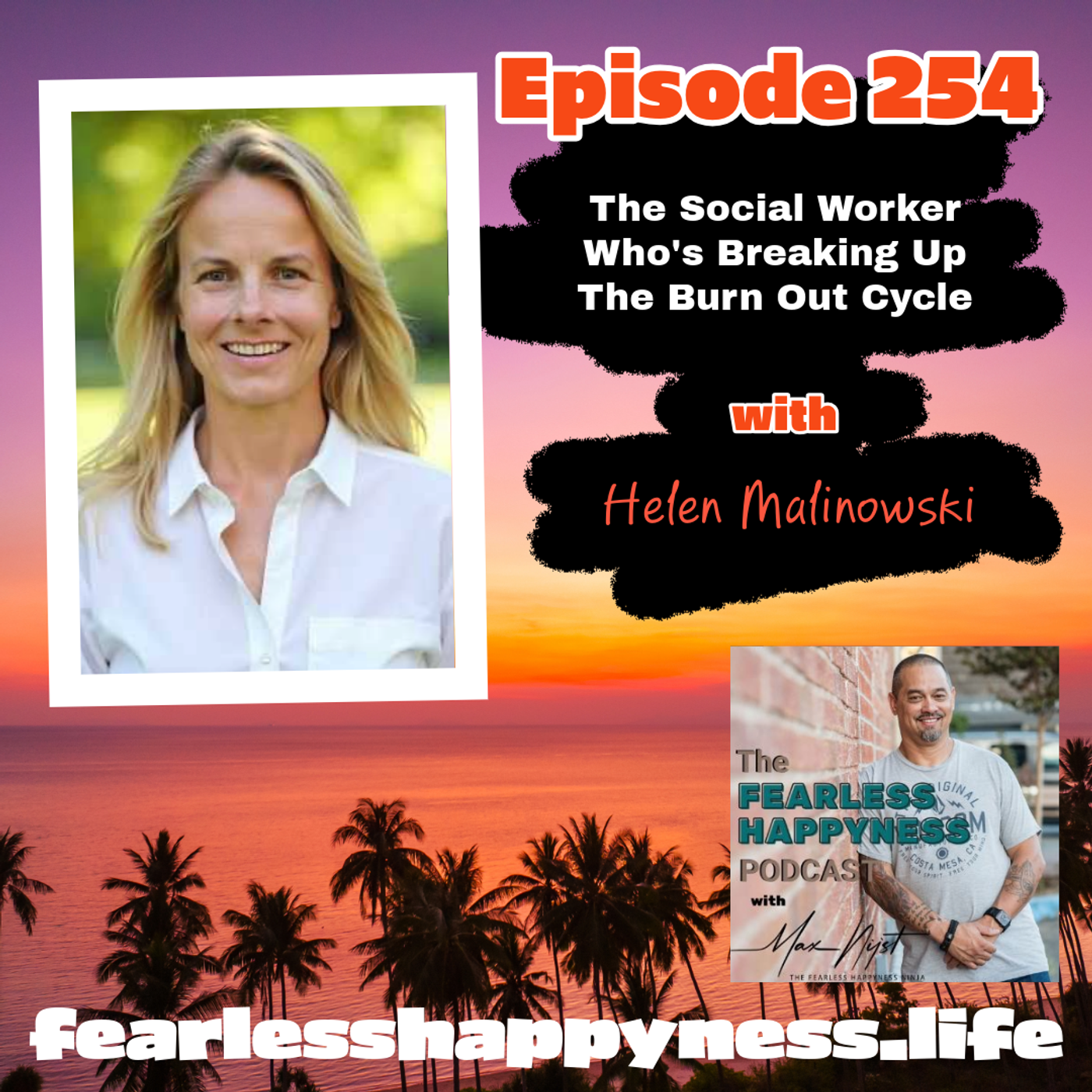
n this episode of the Fearless Happiest Podcast, host Max speaks with Helen Malinowski, a trauma therapist specializing in clinician burnout. Helen shares her journey into therapy, the challenges she faced, and the importance of self-care and community support for clinicians. They discuss the impact of burnout, the discovery of somatic therapies, and practical strategies for maintaining mental health in the helping profession. The conversation emphasizes the need for clinicians to prioritize their well-being to effectively support their clients. In this conversation, Helen Malinowski discusses the irreplaceable role of human connection in therapy, emphasizing that while AI can assist, it cannot replicate the emotional presence of a therapist. The importance of self-care for clinicians is highlighted, as they often prioritize their clients' needs over their own. Helen also shares insights on fearlessness and happiness, suggesting that true contentment comes from being present in the moment. The discussion concludes with a focus on the wisdom of listening to one's body and the significance of integrating personal experiences into therapeutic practices.
Website: https://somaticintegratedinstitute.org
Email: info@somaticintegratedinstitute.org
Instagram: https://www.instagram.com/somaticinformedtherapies/?hl=en
Special offer: https://www.flourishingpractice.org/fearlesshappyness
For More From Sober Coach/Substance Abuse Counselor Max Njist, visit
Max Nijst: Welcome to the Fearless Happiness Podcast, where we showcase phenomenal individuals who have overcome serious traumas, life obstacles, and challenges to find their own path to fearless happiness. Listen as Max Naist invites guests from all around the world to share their experiences and spread strength, hope, and faith. This is the Fearless Happiness Podcast. And this is Max Naist. Right, everybody. Good morning, good afternoon, or good evening wherever you are in this world. This is Max from the Fearless Happiness Podcast, coming to you again today with another special and amazing guest. I have Helen with me today. But what I like to do, Helen, is have you introduce yourself to my audience, like who you are, what it is you do, and then you and I are gonna rock and roll, as I like to say. Awesome. Thank you so much. I'm I really appreciate you â having me on today. I know you do. This is a lot of work putting this on. these shows on again and again and again and you really do a great job. So â who am I? I'm Helen Malinowski. I am a therapist. I'm a trauma therapist and I specialize in clinician burnout. I have a group practice that is a seven figure group practice and I have a an organization called the Somatic Integration Institute, where I coach and teach and train and try to Keep clinicians feeling fulfilled and sustained in the work that they're called to do without burning out. So that is who I am. You know what? I love it. And you know, I always say that, you know, for me, God is always on time, right? Excuse me. The reason being is I've been in the addiction field for 16 years. And some people ask me, like Max, how come you have it burned out? â I don't know. I I make sure I take care of myself, right? And make sure that my priorities in order and you know, especially in what I do, I always like to say I keep my recovery and my my practice separate, right? Like 'cause my me going to the office or to the house or wherever every day is not my recovery. Even though I get can become very fulfilled from the work I do, right? And the people I try to help. But like as you know, if you're if you've you Doing what you do, you probably come across people in addiction, right? Who's they say the addiction is stems from trauma and I'm sure you work and and when you hear that stuff day in, day out, there's days you do wake up and you're like, Okay, how am I gonna do this today? So let's get into that. Like, let's talk first before we talk about like what how you help clinicians stay out of burnout, let's talk about your challenges that you have faced. That got you into the field, right? Because we all of us helpers, I like to say, any of like you, especially therapists, right, and and people that do what you do are are big time helpers, right? Have gone through their own I like to say challenges. I if they say trauma, I left that I leave that to them. But we've all gone through something that in our brains clicked and goes, I want to turn around and help someone overcome what I've come, right? Or whatever. And You know, that's why I love what I do, and that's why I keep going. So but let's talk about those things some for journey in Max. That's journey. My story. My story, Max. Well, it's interesting. I I grew up in a family that didn't know anything about therapy. Like it was not part of my world as a child. My parents are scientists, they're researchers, it's just very kind of cut and dry, black and white. And Yeah, yet I found myself drawn in this other direction. And I and I've had my struggles. You know, I've I've I've had my struggles with alcohol. I've had my struggles with â boundaries and with people pleasing and some of the stuff that I'm still kind of dealing with and trying to navigate. â but I I found myself s drawn into this field and I about let's say it was about fifteen, fourteen, fifteen years ago, I had the opportunity to start Do work in some sober houses. There was a community. Falmouth, Massachusetts is a huge recovery community. We have a number of treatment centers here, and it's a big recovery community. And so I started doing this work, this sober house-based group work with guys in a couple of different houses. And I was going in and we're doing, you know, we're sitting there and we're talking and we're learning tools and and processing. And I thought this was beautiful work because a lot of sober houses don't offer that. Right. A lot of sober houses don't. They say, you know, take your take your drug test, â you know, show up for the house meeting, you know, you can leave to go to work, right? Like that's what they say. And and this was an organization that said, no, like we want our guys to be h working on themselves and to be healing themselves. And so I had this beautiful opportunity. And I did it for a number of years actually until I â became a mom. And then I you know, transitioned into some more clinical directorship roles and the work was exhausting. It was exhausting. You know, you put so much of yourself into what you're doing. You're working long hours. You have some successes and you see some clients really flourish and take off. And you also have you also see some really hard things happen. And you see clients who you've been rooting for and rooting for and rooting for just not able to To do the thing that they need to do, yet. I always say yet because we're just a stepping stone in a person's journey. We can't see where they end up. â and it can be really disheartening. And about 2018, well, 2015, I started my private practice. In 2018, I decided I'm doing this myself. I don't want to be in a clinic anymore. I don't want to work in that setting. had come from a PhP program actually at that. point said I really need to just do my own thing, focus on the clients that I love to work on work with. And it was really great work until the fall of 2020, when I realized I had been working at home. I had at this point â a a one and a half year old, goodness gracious, a one and a half year old and a four year old. And everyone was home and I had shut my office down. I was seeing clients at home, you know, at night after during nap times with with kids in the other it was it was so stressful and I had such a hard time saying, no, I don't have the capacity to take on another client. I was getting calls. And I went to my doctor that fall. I have a beautiful relationship with with my primary care doctor. And I was sitting there in his office, you know, on that table, or you're sitting there swinging my feet. And Yeah, right. And I just remember he looked at me and he and he asked, You know, how are you doing? And I don't think anyone had asked me how are you doing? Like in that way. Right. From someone who understood that we're not doing okay. And it did. It gave me a real pause. And it it forced me to stop. And you know, for those of you listening who were working in the field in 2020, 2021, you know, when we were just kind of in the midst of it, â that might resonate with you, but I I was I I was I was tired, I was irritable, I was but I wasn't sleeping well. No matter how tired I was, I wasn't sleeping well. I was worrying about my clients, I was worrying about the world and I was isolated because I wasn't I had my family, but I didn't have my clinical community. And he said to me, we were talking about this, he said, Helen, you're burnt out. I was like, No, I'm not burnt out. That's our first. Even though, like you said, even though someone that could spot it because they're in the same and they say you're burned out and you go, No, I'm not. What are you talking about? No, I'm not. And they're like, Max, I can see it all over your face and the way you walk. Yes, you are. No, I No, I'm fine. And I and I also know, you know, having worked enough in the addiction world, what fine actually means. Yeah. Okay, so you know about me, huh? So it's like in my head, I'm like Yeah, I'm not fine. And and that was that was that was the beginning of of me really realizing that something had to change, that something was missing in in my work and that I I needed to try something different. So I round about the same time discovered somatic therapies and somatic experiencing. I don't know if you've come across anything like that. You know, I've heard of it â it and w the work I do. You you see it like in the, you know, therapist notes and stuff like that, because, you know, a lot of the stuff they do I can't do. But I've I've always been interested in what that is, but never, you know, get pursu I never pursued it because I always get my attention goes somewhere else like you, right? â I gotta worry about these clients and You know, if, you know, you know, like in the addiction realm in the sober living realm, right? Like, are they going to their meetings? Are they learning anything? You know, I go there. Cause like there's, yeah. This is gonna be such a great conversation. Well, it and and and it and it opened up my world in so many different ways. So it's it's a it's the somatic experiencing program is a phenomenal program for people who work with for it doesn't matter if you're a clinician, a th occupational therapist, a recovery coach, a regular coach, a physician. â if you're working with clients who have trauma, somatic experiencing is a very like holistic and integrative way to support the clients in being in their experience and in their body and allowing for integration and allowing for processing of trauma without catharsis, without that intense, almost re-traumatizing experience that some therapies that some therapies â walk people through. So I I I I initially joined this program because I was a trauma therapist. And an addiction therapist, and so many of my clients had chronic health conditions, and I thought this is gonna be great. Now I didn't realize that I was going to have to carve out three four-day weekends a year for two years and then go away for two six day, like six day week long trainings. I had I have little kids. I have little kids. This was so and I'm a people pleaser and I have a hard time saying I had. hard time saying no. I had a hard time handing over control. It brought up all of these things in my own experience that I hadn't taken a look at yet, that I hadn't really shined that mirror back on myself. So this is a trait. So I went into it saying this is going to help my clients. This is going to be amazing. We're going to see so many profound changes. And what I realized by the end of it was that I was the one that changed. I was the one that grew, right? That I I was the one and and for those of you listening who've had that experience going through a training that changed you, you'll understand what I'm talking about. It's it really is an amazing experience. So I came out the other end and I'm doing the work and I'm still seeing I'm still seeing burnout in clinicians. I I started to grow my practice, which was just a solo practice, because I missed people. I missed being around clinicians. I needed community. And the somatic lens, the somatic work allowed me to do it in a way that was â in alignment with what I needed. I I was able to listen to my body and say, â I need people. And I would meet someone who's a clinician who wanted to come on board, like, â like there's just something about the intuition that started to build and this is gonna work. And I One year about a note from a clinician who said something like, I was about to leave the field. I didn't think I loved that anymore. I so appreciate that you've created this space where clinicians can be, you know, love their work again. I I just facilitated a training â this afternoon, at one o'clock this afternoon, I facilitated a training called Rest and Repair leading into the holidays for clinicians. And it was all about how do we just slow down? How do we lean into the season of rest? How do we allow our nervous systems to take a break? How do we allow ourselves to say it's okay to take a break? And at the end of it, one of my clinicians who who is in my practice said, Thank you so much. I so appreciate that this is something that you offer to us. And I'm like, Yeah. Because we all need to hear that I'm worth more than just the work that I do. That I can sit and I can be okay. And I don't have to be go, go, go, help, help, help all the time. Well, â You've been in the field a long time and you know sometimes that's the feeling you get. It's that's the only reason you're there is like fix you know, almost like the parents who drop off their child or a loved one who bro you know, drops off their loved one at treatment and says, Hey, we'll be back in ninety days, fix â and you're like, No, that doesn't work that way. You know what I mean? Yeah. But when you've gone through that so much, like you don't even realize what you're doing to yourself. So Like I'm so glad we're having this conversation. And I know if you have time, I'd love to chat with you after because I I'm always looking for ways for me to improve my practice, right? So I can be a better clinician and a better person and of just a better person in general. So I'm not right. 'Cause for a while there my family would like Max. My wife would go, Max, you're just like there. And I went, What do you mean? Like I'm I'm I feel good. No, you're just there. You're not happy, but you're not sad. And if things get overwhelming, I see you sneak off into the room and you go lay down. Right. And that happened for a while. And for me, just to let you know, like that's when it was time for me to go, okay, I'm done with the antidepressants because they're not working anymore. Right. But I do now been being off of them for almost five years. I feel better, but I know there's still some work to do. And I love what you're talking about, right? Because You know, believe it or not, everybody out there who's not a clinician, we really care about the work that we do and we will drive ourselves into the ground to make sure that we and you and and most of the people if they they're listening or if my f co workers and and some of my family were listening, like, Dad, we know. We know, we've seen what you do to yourself, you know, because you care so much. You forget about yourself. You do. So funny story. if hopefully this isn't TMI. â go ahead. I have we can be TMI on here. I I don't say I have I have two I have two I have two children and these are these are both related to my pregnancy. So my first pregnancy, I was doing group work in the silver houses and it was very early on, and I'm sitting there with this group of guys, you know, and I'm like, â gosh, I'm gonna throw up. Like I don't feel good right now. I don't feel good right now. I'm gonna throw up and I was like, I can't leave. Like we got good stuff happening. I can't leave. I gotta leave. I gotta leave. And we got close to the end and I said, you know what, guys? I gotta leave. We're just gonna wrap up a little bit early. And I barely made it back to my car before throwing up on the side of the road. You know, it's like I should have just listened to my body and said, I don't feel good. We can take a hold. You guys will be fine for another week. You guys are gonna be okay. Right. But I need to leave. Second story. Another pregnancy story, my second child. I'm in session with a client and my water breaks. â no. â no. What do you do now? What do you do now? What do you do now? You know? You can't tell them, yeah, let's just keep going. Don't worry. You might deliver my baby, but we'll be all right. We're gonna have to wrap up just a little bit early. And and the interesting thing is, â just the other day I was part of this conversation with a couple other clinicians, and we're talking about this stuff and the stories of the things that We sit through as clinicians, like our dogs having, you know, causing a ruckus in the back while we're doing telehealth and we're pretending everything's okay. You know. Just the things that we will do to be present for our clients, that will just suppress our own experiences to be present for our clients, it's it's what we're trained to do in this field. I think we're naturally inclined to do it because we're helpers. And then That's compounded by our training, but it's not good for us. No. I mean, and I loved, you know, like going through school, they always say, Hey, you know, always teach you a good counselor has a counselor, a good therapist has a therapist. Right. But I think sometimes, right, if you don't find the right one that's gonna call you out on your like, I see what you're doing to yourself. You need you know what I mean? Like I'm watching you and you're you know, you know what I mean? It's like I think it just perpetuates our overhelping and not taking care of ourself because you know it's like I mean and it's not their fault. I mean, like you said, it's our training. We're taught to like nurture and and go, you're gonna be okay, right? Mm-hmm. What that's why when I finally listened after say my last relapse, so part of my practice is like I am not going to be the guy that goes, if someone pats you on the butt and says everything's gonna be okay, right? You're you're good. You know, I was taught, no, if someone does that, run the other way 'cause it's not true. Right. And I don't wanna give you false and and you know, I I've learned to, you know, give, you know, the hugs when they need it, but the kick in the butt when they need it. Cause if I'm doing you know, if I'm practicing that with myself where I'm going, â I'm gonna be fine, right? You and I might not have might be having this 'cause where'd Max go? Right. You might get an email, Alan Well, he burned out, he's in the hospital and I got 'cause they told him he needed rest. But I love this conversation in so many ways because like you said, like I work from home now too, and you can still do the same thing, right? Everybody says, Well, you're at home. You can take a break anytime you want. You could do that. That does not happen. As you No. It doesn't. You go from one thing to the next and then you realize it's two thirty in the afternoon and you haven't stood up or had your lunch or had a glass of water and you know, another phone rang my big jug next to me, you know? Yeah. Yeah. Yeah. And if I would say like for those of you guys listening, if if you're listening and you this you recognize yourself in these stories, then you know, pay attention. There's there's ways to slow things down. And I think that that's that's my biggest message is that we it doesn't have to be â I'm going on a retreat to make myself feel better. It doesn't have to be I go to yoga class every morning. Those are great things, but for a lot of us we're just too busy and it's unrealistic. And what we need to do is we need to figure out well, how can I how can I carve out thirty seconds or sixty seconds in my day and then use that thirty seconds or sixty seconds for something that is restorative, that does bring my nervous system back into back into a regulate regulated state. And that can be as simple as it can be as simple as just, you know, giving yourself some compassion. You know, just like â give yourself I it sounds silly, but like give yourself a little hug or like, you know, hold hold your face for a second. â it sounds it sounds so it sounds it sounds a little it's too s it almost sounds too simple, but do for yourself what you might do for a friend. Absolutely, right? Because that unconscious part of your brain will recognize that and go, â this is a good thing. Like I can actually slow down a minute and go. Right. Like you said, even if it's 30 seconds, a minute or two, right? I like to incorporate some breath work into my data. It just calms my, you know, because I'm so like, I wouldn't say I'm ADHD, but I'm A D D, right? And I'm O C D and I just love to keep going. And if it's not done perfect, I'm gonna keep going until I drive myself absolutely crazy. But I've learned now with years of experience and and talking to people like you and and other people that I can slow down just for a second to bring my body back into a little bit of harmony so I don't right. I would hate for a client to see me freak out, you know, like you see on these shows for right, where you know, like that one I forget who it's with, but there's like one's the therapist and then he the guys in court, he has to go see a therapist. Right. And he has to 'cause of his anger anger management. And you know what I'm saying with â De Niro and I forgot who else, but Yeah, she has to learn to calm down, right? He has to learn to calm down and not freak out all the time. And you know, and and you and I know in that field that can happen to us a lot if excuse me, we're not taking care of ourselves. Right. Because things can happen where we're not â recognizing when it's time to slow down. So that would leads me into the questions like so if if there is people in our audience who are fellow clinicians and Helpers, I don't care what coaches, you know, whatever. How can they learn to slow down? Right. Cause I've of course before the end of the show, I'm gonna let people know we'll let the people know how to get a hold of you. I'm gonna have questions for you after the show. But if you can give some stuff they can do like now in this moment, right? Like they happen to tune into this and they're like, okay, I gotta I even gotta stop this podcast for a minute. I'm gonna go do what. Helen tells me to do and so I can last, right? Because you you and I know we find something that gives us purpose like this, but if we're not careful, we may burn out and not last long enough. Like because I I went through that, I want to say in like year eight to ten, I believe, of my recovery, right? And in the field, but I worked at a place that was not conducive to the clinician's. mental health. You know what I mean? They weren't it was go, go, go, you gotta get this done. And I don't care if you gotta stay late. You're gonna get it done. And it was one of those places I almost go, I quit. I'm not doing it. If this is what this means, then I'll just stick to my meetings and I'll help people that way. Cause I can tell a I can tell a sponsee to go, you know what? I'll call you back later. I'm gonna I gotta take a break. You I think you you just nail you just nailed something that is s I th that is so important to talk about and and it's not an easy fix. I mean, we can sit here and I can say, you know, take a moment and look around your space, feel your feet on the ground, you know, and really look around your space and find something you haven't seen before that that looks soothing to look at. And if you're listening, I invite you to do that because it does, it makes a huge difference to to bring yourself back to present. But that's not gonna fix the systemic problem. That's not gonna fix a healthcare system that pushes â unrealistic productivity numbers, that doesn't reimburse at a at a rate that is sustainable for you know people to live on or for practices to run. And it's it doesn't it doesn't fix that stuff. What it does do, you know, if if we're if we're doing grounding, if we're orienting ourselves, if we're, you know, a Allowing soothing and compassion into into our lives and to like we can give that to ourselves, what that does is that regulates your nervous system in a way that you can do what you did, which is to say, I can assess from a grounded regulated state if this is working for me or not. Is this a system that I can exist in? Is this a work environment that I can exist in? Because when we are Chronically overactivated, chronically insympathetic, you know, activation or fight flight, we're not thinking clearly. Right. Our brains get foggy, our decision making is poor. And we might make a decision in the moment based on how we're feeling that we don't we we regret later. There might be solutions. My point being there might be solutions that are not quitting the job. You know, there might be other things that you can do. There might it might be that I quit my job. But I quit it on a timeline that works for me, so I'm not up a creek without a job. Right. Right. Exactly. Then that'll just make it worse. Then you go, God, why did I do that to myself? Why did I just do that to myself? Yeah. So so I I can't change the I can't you know, in this conversation, we can't change the bigger picture of the healthcare industry and you know, the value that society places on the work we do, which unfortunately is not the same value that they place on the work that a cancer doctor does. â but Yeah. I I I think that we can do micro moments of regulation and orienting and settling and breath work that allows us to be present so that we can understand what can I do in my circle of control that's gonna make this better. Yeah. Yeah. Cause I, you know, I as I I go through My days and I'm and I'm sure you're aware of it, you know, like the addiction field has changed in the last ten years, right? Like there's so much that has gone on. Like you said, the we won't get deep into it, but you know what I'm talking about, like the fraud and and â patient brokering and stuff like that. Where exactly, yeah. Like when I joined the field, right sixteen years ago, it's like, Yeah, I'm a I'm a substance you â that's so cool, you know. And then now it's like, â you're one of them. And I go, what do you mean? Right. And then because there's people out there are paying attention now and they're going, Are you one of them? I'm like, well, no, I have nothing to do with I'm trying to help, but I but I get it because, you know, well, at least here in California and I know in Florida and stuff like that, there's so much that you've seen in the news, like I've seen, right, where that all has come to light and people, you know, take advantage of someone at their most vulnerable. Right. Absolutely. Yeah. Right. And then you know, as an helper, when you see that, right? And you know, but they're not telling you, but you can tell like they've been going through the ringer because of something like that. You're just kind of going. You can't sometimes it's hard not to take it on, especially like you and I. We're parents, right? And I'm a grandparent. You know, right? We like when we see our child get hurt, we're like, â we want to take that away so bad. Like, here, I wish I could take your pain away because I don't want to I don't want to see you crying and get hurt. You know what mean? â and it's the same in our field, right? Whether we're doing trauma therapy or â substance abuse counseling, there's you know, there's times like you say, you hear something and it just tugs at your heart so hard. And that's how I think tell me if I'm wrong, but that's where I get lost sometimes. It's not that I want to fix them, but I'm like, okay, you just spilled a lot of Stuff out, right? You don't even really know me, but you just trusted me enough to tell me this horrible stuff that has happened to you and what you're doing to try to hide the pain, right? And sometimes you you just sit there and you all you can do is listen. And then you're driving home or going home and you're going, man, that was heavy. Like, what do I do with this, right? What do I do with this? So one of the strategies and and this is this is. One of the strategies that I do, if you're if you're listening and you are driving home and you still have that client in your head or you're sitting at home, it's the end of the day or you're going for a walk and I know they know exactly what you're talking about, Max. The clinicians out there. I mean, you say that and I have like ten stories pop into my head of clients I've worked with over the years. One of the things that I do is I will literally just brush it off. I will literally say, you know, I'm that client, I'm just going to Take it off, you know, I'm not I'm gonna let it go. I might package it in a little visible in a little visualized box and send it out the window, come home, actually change your clothing, actually change what you're wearing into something that's different. You know, these are they seem small like small things, but they give your nervous system an opportunity to feel like I am moving through whatever that is, and it isn't mine. So I can push it off because it's not it's not my story. I can be present. So funny story. I know a lot of people out there at two AM wake up with something in their head that they want to get an answer to and they go on to Chat G PT, right? They go on to Chat GPT. I'm right and they say and they say, Chatty, I am really worried about this interaction and conversation I have to have with my boss. Help me. And Chatty gives them the what sounds like the most perfect answer. And I'm not saying that Chat GPT is wrong. But what's really interesting is I had a clinician just earlier today email me a conversation she had with ChatGPT about her worry that AI is gonna take over our jobs. And she's worried. She said, I'm I'm worried that people are using AI as a therapist and it's gonna take over our jobs. And the response that ChatGPT gave I've I I will share it with you later. and I'm not gonna quote it or put pull it up right now. I'm just gonna summarize it. But the response was ChatGPT, like we might, as an AI system, might be able to word things correctly and find the right language and give you the right structure, but we will never replace the ability of a therapist to hold space and be present for someone who is in pain. We will never be able to replace that. And that just that holding space, just being able to be present and sit with someone else when they're in pain and and and Be with it but not absorb it. Right. That's the beauty of the work that we do. I mean, that's like the magic sauce. Well, I think that's what we all find and why we stay with it. Because we know, right? You you can have people, these scientists out there say they'll be replaced one day, but no way. Right. It's like you cannot replace a person when it comes to what we do, whether it you know what I mean? 'Cause There's nothing like you said where a person can hold that space for someone, right? 'Cause I'm telling you, technology is not always a safe place for someone to go spill their guts out, right? Well, 'cause people in the addiction field, especially the no one the ones that are like coming in off of stimulants and have been up all they're like, That's the last thing I'm gonna tell any machine 'cause it might go out into the world and then then I'm gonna go to prison because everybody's gonna find out what I did, you know? â It's like saying someone's gonna like AI's gonna replace a sponsor. Never gonna happen. You know? Or i they can't because where they might be able to get the words right, they're just never gonna get the humanness. They're never gonna be able to replace and and w in in graduate school and as a therapist, we're constantly doing continuing education and we're learning skills and we're learning tools. And and the thing that isn't said enough is that Sure, it's great to know C B T and it's great to know EMDR and it's great it's great to know DBT, but underneath it all is your presence. That's it. I mean, that is the tool that is the bottom line for everybody when it comes to therapy or or recovery coaching or it's it's a coaching in general. It's the ability to be with someone. in relation with them in a way that's holding and healing and non-judgmental. Well that's you nailed it on you nail it right on the head, as they say, right? Because my experience of having gone through therapy myself, those are the good ones, right? Those are the ones I remember. It it's not the ones that always had like a suggestion or you know what I mean? But when you spoke and then they they gave you their feedback. Like that feeling you get, wow, someone heard me. Like they're not just parroting what I said, but they actually know how I feel, right? Like, and there's only a couple of therapists in in my years of doing it, right, that I remember that or like that, where I just go, that's why I keep going back. But I've also had some, you know, I'm sure you know of I've heard of people where the same thing where it's like all about them. Or they bring up stuff and you're like, wait a minute, this is my therapy session. Why how did this turn into your therapy session, right? This is my time. And and that's and that's that's important. You don't you know, a as a therapist, we have to have our own people that we're talking to so that we don't bring that stuff to session, that that we have we've kind of we've cleared out the things that we need to clear out and that we're constantly Constantly clearing out the stuff that needs to be cleared out and and shedding that that doesn't belong to us so that we can we can be present. Yep. And that's why I love when they teach that in school, you know, saying like â it is good for you as a counselor or therapist to have one so that you can have that person you can unload on, right? And they can give you can some constructive feedback or direction and â you know, because why it's just you know what I mean? Like I you said we're Luckily for us, we're in a field that like like I literally say the the client or the patient or whatever you want, the participant, they need that human touch per se, right? They need to see that person who can look at them and go, You're gonna be okay, right? Maybe they don't say that, but they they feel it and â yeah, it comes right You know, right in their heart. And â because as you know, because you've been a therapist, right? The the things you've heard and helped people get through with when it comes to their trauma, right? Is it's sad, right? It's it's hard Infuriating. It's also infuriating. Absolutely. Like why does the world have to be this way? Right. You feel I am tell I mean tell me if I'm wrong, but I'm sure you felt your anger like in a session going, whoa, like you're like Right up. And you're trying not to show that to them because you don't want them to think you're getting mad at them. But you're like, if I could find those people that did that to you, I would help you in a heartbeat, kick the living shit out of them. Excuse my language, everybody. But but that's how you know how it is. And I'm so glad, like I said, I'm so glad you're here to talk about that. So let's talk about so we kind of know you've gone through your own challenges. What made you decide to do like a group thing for therapists? Like what was that moment for you when you said I know you have your individual moments, but are were you with a bunch of clinicians when you said, I gotta do something for all of us? I you know, it developed actually out of some of my clinical work with a client. â with with a client who had been really negatively impacted by a previous therapist. â and their previous therapist, from everything that I gathered, had really burnt out and had really poor boundaries as a result of the burnout. And the fallout for the person that I was working with was so significant that it it stuck in my head. This isn't okay. Right. It's not an okay it's not an ethical way to practice as a clinician. Right. And so I think that was the seed. That was the seed. I had my own experience and I came back and realized I these are the things that I need. My nervous system needs to have capacity. My nervous system needs to have people around me that are doing this work that I can talk to and feel like I'm part of a community. My nervous system needs to have variety, right? It can't just be seeing client after client after client of the same type of client. I need I need to work with people who have different things going on. I need to â spend time providing supervision to other clinicians. I need variety. And so that was so I understood that I had done this, but that was the seed that said, I need to do this for other people. It can't just be for me. It's got to be something bigger. And that's been growing for a while. I I run monthly trainings and I've been doing this for a couple of years now. I run online virtual trainings that people can have s get CEUs for through the Somatic Integration Institute. And the trainings are all they all have a somatic lens. And so we might be talking about rest, we might be talking about boundaries, we might be talking about dissociation. It's different every month. In fact, next month we're talking about â gosh, we're talking about audit proof documentation. But I'm a somatic therapist, so it's going to be interesting. I love it's going to be interesting. I hope you have some time after the show because I'm going through some things that's supposed to This is gonna be great even after the show. I hope you have a little time because I just I do, I do. I can hang out for a little while. I do want to ask yourself, but I think see, that's kind of I wish they had this everywhere, right? Because clinicians need each other. They all can understand because if you I like you just said audit, right? Ooh. We all been through audits, right? And some are just like you're going. Those audits will make you go, Why did I choose this field? Why did I choose this field? Paperwork is the least paperwork is the nemesis to everybody in this field. It's the it's our least favorite part of our job. Right. But it's the most one of the most important because if we don't document what do they say? If it's not documented, you didn't have and people don't realize sometimes like telling when they're documenting, right? Because I I'm like behind the scenes now. So I'm not so much counseling, but I'm helping the case managers in the facility, you know, get the days for the clients, right? So I get to see the the charts and what's going on. And I'm like, well, you need to change this a little bit and you need to â do this a little bit and whatever. But you know, that creates my own OCD because like and it's like if I don't see it getting done, it's like, â yeah. Then I'm like, you know, who can I call at you know, and start you know bugging and going, you need to change this. But we've done that and yeah, there's so many things because â you know, when we go through this stuff We take like it goes back to how much we take on, like that we think, you know, in our brains we think we have to take on because we're a helper and we're gonna fix this for everybody. And right. So talk about how you teach people to just go, No, you don't need to do all that. Yeah, no, you don't need to do all that. I I would say I would say well, so so the trainings that I run are are very, very helpful. Like I said earlier today, I had a training on rest and repair it's called Rest and Repair. And it was about reconnecting and recharging and rejuvenating. And it did have CEUs attached to it, but we spent two hours basically talking about we're important, our needs are important. How do we listen to our body? How do we listen to our capacity? And actually providing some of that rest, which is so hard. We we live we're we're in a we're in an industry where we are trained to deprioritize ourselves. And prioritize our clients, that our struggles and our pain is is le not that it's less than, but that our client's struggle and our clients' pain makes ours not important. And so we shuffle it off. So we shuffle it off aside and we say, Well, that's not important. Their stuff and and I'm not saying that that's wrong. I mean, our clients that's we're there for our clients, but that doesn't negate that we're human beings. That doesn't negate that we're human beings. So we have to be paying attention to how how is the story affecting me? How is how is the the structure of my day affecting me? Have I have I scheduled eight clients back to back? Or have I given myself a break? Have I brought lunch and had enough water? Right. So so all of those things contribute to a pattern. â and then on top of that, we live in a society that says productivity. Everything is about vinemers. If you're not productive, you're lazy. I mean, that's that's â that is l â right? Like if you're listening to this and you say, Yeah, if I if I just sit and kick my heels up and and read a book, I'm being lazy. Right. Well, â you're so correct, right? Whether it's a hospital or a addiction facility, right, it's driven by outcomes. So like how can we produce better outcomes so that we look like we're doing such a great job, right? Which turns the uppers sometimes. I like to call them the uppers, just like I always say about our politics. The powers that be that direct everything, right? Sometimes don't care about that human side. It's all numbers to them. It's all numbers and they forget that there's clinicians and BHTs or, you know, support staff that are boots on the ground that see this day in and day out, and you're not taking into consideration what they're going through. Away from work, right? Who knows what's going on at home or you know? And â because I always believe like if I can if I can be the ear, right? Since I'm not counseling as much anymore, I'm I tell my â case managers like you can call me anytime if you just need a bet. I'll be an ear. Cause I get it. Cause sometimes we just need at the end of the day to go, hey Max, boom, you know what I mean? This is what happened. I just need to get it off my chest, right? 'Cause I found when I let â do that, I'll get a call like a week or two later and go, you know, thanks for doing that. It made me feel so much better because I didn't have to hold it in because I don't have anybody to go talk to about this. Exactly. You you just you just nailed it. You just and that's where and that's where the supervision and the therapy and the case consultation comes in. It's so important. It's being able to find a way to get it out and to process it. Where are We're humans, we have to integrate and make sense of our experiences and it's very hard to do that in isolation. And a lot of us go home at the end of the day and we don't I mean, some of us have partners who are in the field, but a lot of us don't. And so it's hard to have these conversations. Number one, you can't talk about your clients anyway. But number two, it's like it's a different world. Right. It's a different world. And they it's a lot of people don't understand it. Right. Thank God my wife kind of works like she She's not a clinician, but she deals with behaviors and and helping modify behaviors. So she deals with like the worst of the worst where she's at sometimes. And and you know, she does great work because I see it. We go into town and there'll be a former student that goes, Hey, Miss Lisa, like I love you so much. You helped me so much. Your wife is the greatest, right? But you know, and I know, like sometimes I see her I see her come home and she goes, I don't even want to talk about work today. Like, don't even get me started. I have the wherewithal to go. You whatever you want to do, honey. You need a Starbucks, I'll go get you a Starbucks. And and I think I think that that brings up a really, a really key point here is is how do you transition your day? How do you start your day? How do you transition to coming back home? How do you spend that time? I we don't it doesn't take a lot of time to sit in the car and breathe. or or roll the window down and look out the window and let your ears just take in, you know, the bird song or whatever it is that's in your what's in your area. It doesn't it doesn't take long for our nervous system to respond to that. You're in California, so you can take your shoes off and go stand in the ground, which does help I can't do that 'cause it's too cold outside right now. But you can do that. You can do that too. Frostbite on my toes. I don't recommend it if it's 20 degrees. So so there's there's there's small ways that we can weave in restorative, restful practices into our day that give us more capacity at the long in the long run. That that shed a little bit of what it is that we're carrying. So it doesn't just continue to accumulate until we're we're full and we don't have we don't have any more space. To put anything. Right. Well, and that's what I've learned, not only for my recovery, but as a clinician, is to have practices that I do throughout the day, like that I make time for, like you said, even if it's for a minute. And I got this short little breath work that â a former guest taught me that so good about just bringing my levels down to okay, I can breathe again. Now I go back to work and be okay. But I love this conversation too, because for you, we're covering people out there that are listening in. Now you know what us clinicians go through and how much we love you and are willing to go through to help you. So when we're pushing you a little bit, just re just remember it's not 'cause we dislike you, it's cause we love you and we want to see you get better. And and we see the potential. I think that that's the other thing is that is that â there's something about being able to see sort of the other side of right what this person's life could be like. And, you know, I I very much believe that we we end up where we think we're going, regardless of where it is that we think we're going. And I have found myself over the years sort of holding a vision for some of my clients until they can take that vision and hold it themselves. I I see I see us I see a path for you. And at and at some point they can see the path too. That's a beautiful transition. That's a beautiful thing to bend over when you see it starting to happen. Yeah. And that's why we do what we do. Cause we do see that path. Right. And we even though we know like sometimes we'll catch ourselves, â here I go back to old behaviors. I shouldn't do it. But I see this path. So I'm going to stick with it. Mm-hmm. So that maybe they will see it and go, â I know what she's trying to help me with. So I'm going to I'm gonna run with it, right? But like you and I know, I mean, sometimes the best thing that you and I can do is just plant that seed and water it a little bit. They may not get it at that, even if they're with us for a long time, but when they leave, one day you're gonna get that call or that text and go, Remember when you did this for me? Look what's happened now. I'm I'm a year sober, whatever. You know what I mean? Or I've I've I'm doing good, I'm going back to school. â yeah. You helped me so much. â and that's why we keep doing it, right? And I I just I love that vision that you talk. That's I think that's what has kept me in the game for so long is because someone saw that vision for me. It might have not have been a therapist, but like I say, my sponsor. Could be him who's been my sponsor for twenty two years and He kind of planted that seed. This is how you're gonna help someone. You're gonna see where they can go and you're gonna try to help them get there. But don't tell them how to get there. Just be their guide and show them that they can do it. And Yeah. And don't carry them. Don't carry them there. Let them let them let them walk their own. Let them walk their own walk. I yeah. I love it. I love it. So I'm gonna like ask you the like we joked about before the podcast, right? I'm gonna ask you the questions that I love that I do remember. we're gonna start with fearless, Helen. So going through what you've gone through in in your life, right? And in your career as a therapist, what does fearless mean to you today? And how does that show up in your life on a daily basis? Fearless means doing it anyway. Yeah. It means that I acknowledge that there's fear there and I am willing to feel it. And I am willing to move in the direction that's the right direction, even though I'm scared. Love it. You heard that, everybody. See? It's a pretty common theme. Even if it's said different ways, she nailed it. That's it. You just it doesn't mean we're not gonna be afraid, right? And like you've heard me say and other guests, everybody, it's it's learning how to fear less. And even if you're scared, just doing it. Just do it anyway. Yeah. Just do it anyway. There's such â I and that's that's what bravery is, really, right? It's not that you're not afraid, it's that you're doing it anyway. Right. Exactly. That's how we build courage, right? Is doing the things that scare us and we do it anyway. I love it. I love it. So that leads me into happiness. As you can see, I put a why in happiness. Knowing I put the why in happiness, what does happiness mean to you? And how does that show up in your life on a daily basis? Boy, I actually struggle a little bit with happiness because I feel it's it's necessary to experience the opposite of happiness in order to experience happiness. There's happiness exists because there's a There's a comparis comparable opposite. Right. and when we strive towards happiness, sometimes we experience disappointment because we don't get there. Right. So I I actually love this idea. And I think that this actually is what happiness is for me. It's contentment. It's being, yeah, it's being okay with where I am now in this moment, wherever that is, that that if I can be content in this moment, then ultimately. Things are gonna feel okay. Even when they don't feel okay, they're gonna feel okay. Right. Exactly. I feel like someone put it to me, right? It's like gratitude is it's not Not being happy with what you don't have, but being happy with exactly what you have right at this moment. Right. In this moment. Yep. Right. 'Cause you keep doing that, then you know, I th I believe happiness is fleeting, right? Because I could have this greatest conversation with Helen here today and then I walk out the door, stub my toe, and boom, happiness just left the door, right? But just I was just thinking, I was just thinking he's gonna say stub his toe. Why? Because I've done that so many times where I'm rushing out the door because I got I hear the dogs like fighting with each other and I you know, I got puppies, so I go run and I there's â then I'm then I'm angry at them, right? And they're looking at me like what we do. â but a reason I put the why and I think you said it right, it's that contentment. And what happens is if you put those little moments of happiness together, what happens is you feel joy and joy is lasting to me. And you know as a parent, I know as a parent, as a grandparent. Like I can say that my granddaughters and grandkids, all of them, my grand right, bring me joy. They do. Even when listening, you bring me happiness, but sometimes you do not bring me joy. And that is just as your dad. But I love you very much. So if you're listening anyway. But you get what I'm saying, right? So yeah. I appreciate that. And this has been such an amazing time. And I knew it would be. And I'm so glad that we got to have this conversation. But if someone Or in the audience, whether maybe they're, you know, going through their own challenges or we have some fellow clinicians out there and going, â my God, Max finally brought someone on that. We need to reach out to you. How do they get a hold of you? How do they get a hold of me? So my organization is Somatic Integration Institute. And the email would be info at somatic integration institute dot org. I'll provide that to you so you can You can leave that. I am also on Instagram at Somatic Informed Therapies, where I we put a lot of valuable information and insights and thoughts and a lot of my thoughts that come out of my head and need to be shared. And and for those of you listening, for those of you who are listening today, I I'd like to I wanted to offer something special, Max, because you give so much to your guests. You have so much value here. So if you're listening I have an offer for you and if you go to flourishing practice dot org slash My brain just stopped working. Yeah, I'm not alone. It just happens to me all the time. I'll be right in the middle going, yeah, I'm gonna get it, and go, Don't worry, Ellen. I do it all the time. I'm like, my god. Fearless happiness. Flourishing â flourishingpractice dot org slash fearless happiness with a Y. You will â you will get access to a bundled package of some of my offers, including a burnout assessment. A strategies for getting time back in your week and a series of videos where I talk about rest and I talk about boundaries and I give you lots of tips and tricks and ideas. I love â for for that. So so that's a special offer. Practice yeah, the flourishingpractice dot org slash fearless happiness with a Y, just for listeners today. I love it. I love it. All my fellow clinicians who I You know, especially who I work with, I've given my â links to I hope you listen to this when this comes out because matter of fact, I will be posting about that so that you can listen to this. Cause it's very important what Helen has taught us today. And especially if we wanna thrive in this business, we gotta take care of ourselves and we gotta keep ourselves in check because it's like a parent with their child, you you know. You never know who's watching, but we know who's watching. And it's you like like the kids, it's our clients and if they they'll see right through us if we're not taking care of ourselves. And you know, I've had that I've gone been called out on that so many times when I'm not taking care of myself. Like you're telling us to do this, but have you seen yourself lately? And you go, â man. Mm-hmm. But You know, like I said, this has been an amazing time. I've you you have brought so much value to the podcast today. Thank you so much, Helen. But you're not quite off the hook just yet. Not yet. Not yet. Right? Because I get to ask you my favorite question that I ask of all my guests. And it goes like this. So, Helen, what is the one piece of advice you could give my audience to help them grow as human beings and become better people? Ooh, help them grow as human beings and become better people. I my advice is to allow yourself the time to listen to what your body's telling you. Just listen to what your body's telling you. It's got so much wisdom, it's got so much knowledge, it knows what's happening before your brain knows what's happening, and it's telling you. So slow down, take a moment, pause, and just notice what's there and what does that have to tell me? And I think that that in and of itself, that is like I always I as the beginning, that is the foundation of everything that I do with people. It's learning how to listen to yourself. And I think that's very important, right? Because like they say, and you understand this, right? We're our our own worst critic, but we can be our own best ally if we're paying attention. I love it. Yeah. Well, this has been an amazing time. Thank you so much. you know, for the wisdom you imparted on us and the value you brought. I mean, my heart is full today. I I this is such fuzzy say this was so on time at this point right now. I love it. But you heard or go ahead. But we're gonna say I was just gonna say it is needed. I don't know when this is gonna air, but man, it's a busy week right before Christmas. Right. Well I I'll probably put you ahead of some people 'cause this needs to be out there, right? I love it. We had a great conversation. Thank you. You heard her, everybody. If Helen made taught you something, if she made you think, if Helen made you smile, and my famous, if Helen made you go, hmm, I like that. Please go to iTunes and leave a five-star review so more people can find the podcast. And again, join me over on the YouTube channel. So my new YouTube channel, so you can see and hear â Ellen Helen and us having this great conversation. Go like and subscribe so we can get this out there to as many people as possible. Again, good morning, good afternoon, or good evening wherever you are in this world. This is Max from the Fearless Happiness Podcast. Until next time. Are you tired of being weighed down by life's traumas and struggles? Join the Fearless Happiness Lifestyle and let us guide you toward a brighter future. Explore our past podcast episodes and get a copy of the Fearless Happiness book to ignite your inner strength. If you or someone you love is battling addiction or facing challenges related to unresolved trauma, know that we are here for you. Visit maxnas.org, M-A-X. N-I-J-S-T.org and take the first steps toward finding your fearless happiness. Thank you for listening. This has been a production of Fearless Happiness.


